Portable Vocal Booths: Mic Shield, Fabric Booth or Enclosed Room?
Choose a microphone reflection filter or an absorptive fabric booth when the main problem is room reflections in an otherwise usable recording location. Compare a complete sound-isolating enclosure when outside activity interrupts takes or your voice must be contained. The phrase portable vocal booth can describe all of these products, but it does not make them interchangeable.
The first buying decision is therefore the job, not the shape: improve the sound captured around a microphone, separate a recording activity from its surroundings, or do both. A small accessory can be a sensible purchase without being a cheap substitute for a room. Conversely, a large enclosure is unnecessary if the only unresolved problem is reflected sound and suitable treatment can address it.
Separate the unwanted sound before comparing products
Listen to a representative spoken take and a recording of the space without speech, using the intended microphone and normal equipment settings. A reverberant tail after words points to a different problem from passing conversations or traffic during pauses. Fan noise generated beside the microphone is different again. These observations help describe the purchase; they are not a measurement of sound insulation or a way to identify every transmission path.
Keep the neighboring listener’s need separate from the recording. A voice can sound less reverberant on the recorded track while remaining audible outside the recording area. Likewise, a recording with no obvious interruption does not demonstrate confidentiality. If your main aim is to sing or practise an instrument without disturbing others, use the music-practice selection guide; an unamplified spoken-word recording is not evidence for that different source.
What the three offers actually buy
| Product form | A useful starting point when | What the purchase does not establish |
|---|---|---|
| Microphone reflection filter or shield | The recording location is already quiet enough, and localized treatment around the microphone is the proposed improvement. | A separate room, isolation from neighboring activity, or the result with every microphone and speaking position. |
| Absorptive fabric booth or recording corner | The user wants treatment around a larger recording position that can be taken down or moved aside. | Sound containment simply because fabric surrounds the person. Absorption evidence is not a complete enclosure isolation result. |
| Complete isolating enclosure | Recording needs a dedicated boundary from surrounding activity as well as a usable interior recording environment. | Automatic studio quality, silent ventilation or suitability for the site from the enclosure’s name alone. |
A microphone shield treats a small working area
sE Electronics describes its Reflexion Filter range as portable acoustic treatment, with stand-mounted products intended to control room reflections around a microphone. Its RF-X is also marketed using the phrase vocal booth. That is why a search result called a booth may lead to an accessory rather than a space you can enter.
Choose this route when the microphone position is reasonably fixed and the proposed treatment suits that position. Include the actual microphone, mount, support and script display in the arrangement. A shield that makes it awkward to read or operate controls may not suit the task even if it fits the stand. It leaves the rest of the room in use; it should not be purchased as a barrier between the performer and another occupant.
A fabric booth treats a larger recording position
A frame or curtain arrangement can place absorptive material around the person rather than only behind the microphone. VocalBoothToGo’s acoustic-blanket guidance distinguishes this reflection-control purpose from soundproofing. Its product categories also distinguish acoustic booths from sound-isolating booths. Compare the actual assembly, not the fabric appearance or the word booth.
For a voice-only setup that must be packed away, this can be a practical category to evaluate. Draw the frame, its feet, the entrance, microphone stand and script position as they will be used. For video, also check the camera view and lighting positions: surrounding the speaker with fabric may conflict with the required shot. A specialist layered textile system is a separate offer; its performance cannot be inferred from an ordinary blanket or from the absorption result of one material.
A complete enclosure buys a different boundary
A purpose-designed isolating booth includes an enclosing system rather than only treatment around the microphone. The relevant comparison is the offered wall, door, roof, floor relationship, openings and operating ventilation together. Interior treatment still has its own job. A room that reduces transmission can still need attention to the sound recorded inside.
Choose this category when separation is essential and the proposed configuration has evidence relevant to the source and location. Do not upgrade to it merely because it looks more professional. If a suitable quiet room already supports the task, treatment and a workable recording layout may be the more appropriate purchase. If the requirement is demanding and none of the offered booths has relevant evidence, compare access to a suitable studio rather than buying an enclosure on appearance.
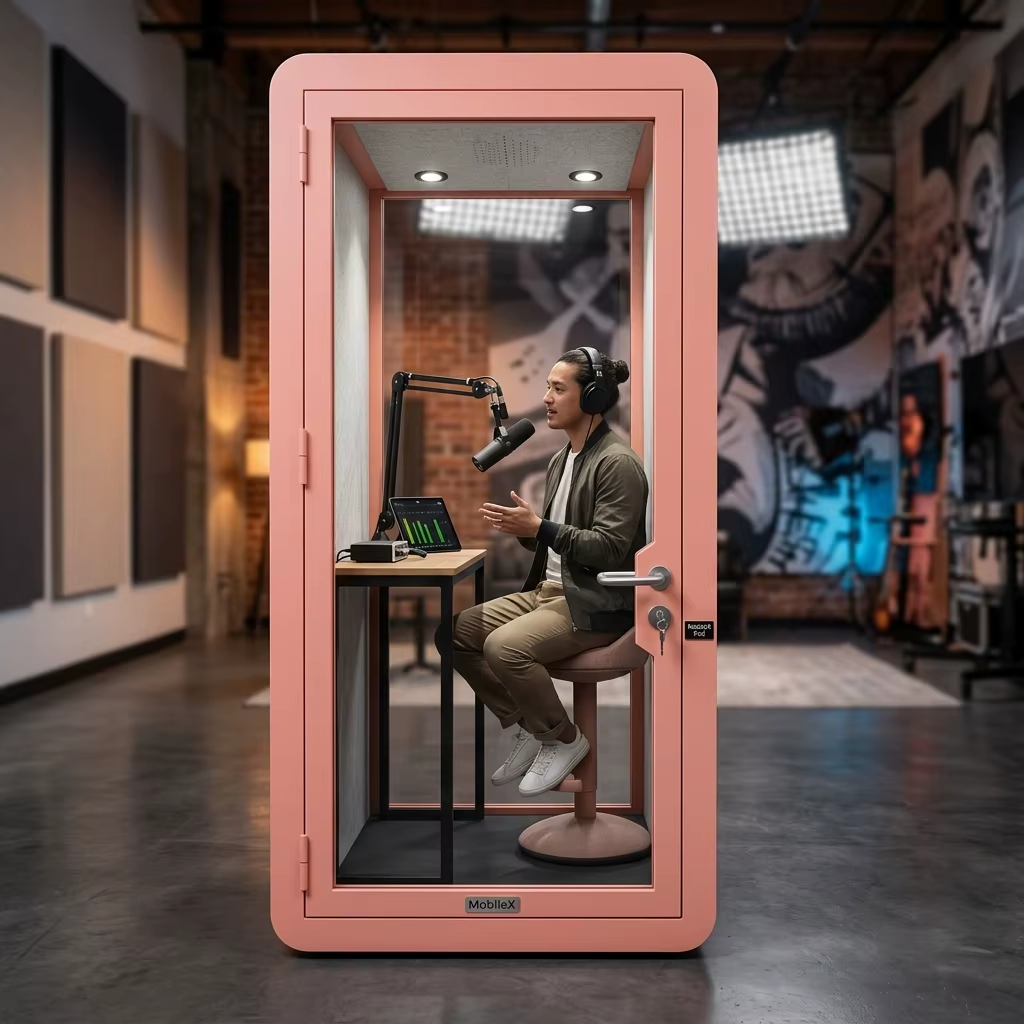
Portable can mean a bag, a frame or a room moved in panels
Specify what must move, how often, and what remains at the destination. Carrying a microphone accessory between rooms, dismantling a fabric frame after a session and relocating a modular room are different operating arrangements. WhisperRoom explicitly describes portability for its vocal booths as disassembly and relocation. That is not the same promise as a device you carry to a different desk for each recording.
For daily pack-away use, compare the stored package, handling, support parts and the space needed to put it back into working position. For a room moved only when an organization relocates, compare the panel route, handling and reassembly responsibilities. A product can be relocatable and still be unsuitable for daily setup. This distinction changes the shortlist before any acoustic number is compared.
Spend on the unresolved problem, not on the largest shell
Consider two planning examples, not customer projects. A narrator has a quiet spare room but hears too much room character in a spoken take. Comparing appropriate microphone-area treatment with a fabric recording corner is a useful first step; buying a complete enclosure does not follow automatically. A training team records beside an active shared workspace and repeatedly loses takes to conversations. A larger absorptive blanket setup may improve the sound inside without resolving that interruption. The team should compare a quieter available room with an evidenced enclosure proposal.
Those buyers should not compare only sticker prices. For the accessory route, include the required stand or mount and any further treatment that makes the chosen position usable. For a fabric route, include the frame or support, specified coverings, entrance arrangement and storage provision. For an enclosure, include the actual shell configuration, interior treatment, occupied ventilation, lighting, electrical interfaces and furniture, then the delivery, handling, assembly and site work needed to use it.
Keep microphones, recording hardware, computers, cameras and production setup separate unless explicitly included. Compare all offers using the same finished task and required operating state. Extra expenditure is justified when it resolves a missing function, a demonstrated sound problem or a recurring handling burden. Decorative treatment, extra seats or a more impressive label are not substitutes for those outcomes.
Take the right kind of brief to the right supplier
For treatment-only purchases, start with the audio or treatment supplier and the intended recording position. For an enclosure, carry forward the recording task, people and equipment layout, surrounding activity and relocation needs. The recording-space equipment and producer-layout guide develops that next stage, including live production and an operator outside the room.
MobileX’s route is a project-specific enclosure review, not a claim to supply microphone shields or acoustic-blanket systems. Office-model acoustic figures do not establish a recording result, and the visualization above does not define a supplied package. A proposed enclosure, furnishings and equipment interfaces must be described in the agreed project scope; audio equipment and specialist setup are included only when expressly quoted.
For an enclosure enquiry, send the project team the required recording, a simple working layout, the unwanted sound you have observed and whether the setup must pack away daily or relocate occasionally. That gives the team a concrete task to assess, rather than an ambiguous request for a portable vocal booth.