Outdoor Valet Booth or Podium? Plan Handover and Key Storage
Choose a valet station by separating the customer handover point, the place where vehicle keys remain while cars are parked, and the staff working base. An open podium can suit a staffed position with suitable shelter and nearby support space. An enclosed booth becomes worth comparing when the operation needs its own working room. Neither form, by itself, defines the key-control system or the complete cost.
This comparison is for valet operators, venue procurement teams, contractors and distributors buying a physical station. It concerns the space and equipment around a staffed service, not autonomous parking technology or a claim that a normal kiosk is a security-rated key store.
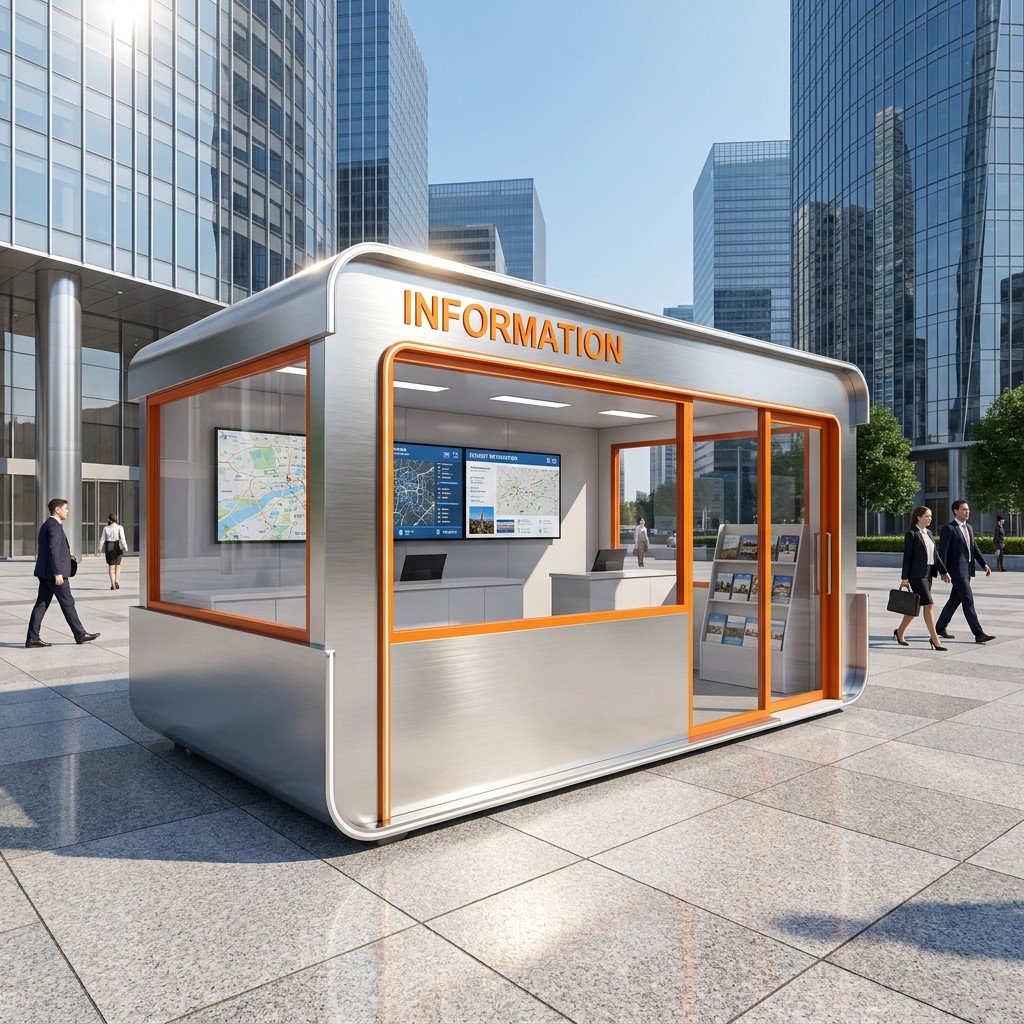
Buy a working position or a complete staff room?
A podium provides a counter-height position and the equipment or storage specified with it. It does not provide an occupied room. The Valet Spot’s Compact Podium illustrates this product form: a transportable stand with internal key hooks. Its features belong to that supplier, not to a MobileX product.
Consider the podium route when staff can complete the guest interaction from that position, the site provides suitable shelter for the people and equipment, and an available staff area handles the work that cannot happen at the stand. Include the podium in use, its open storage door, the operator and the waiting guest in the site layout. A small furniture footprint is not the same as a small operating area.
An enclosed booth provides a different boundary: staff can work inside a room, with a customer-facing opening and a separate entrance. PortaFab’s valet-booth application identifies staff accommodation and key storage as uses for its own enclosed units. That establishes an alternative buying format; it does not establish MobileX dimensions, climate equipment, lifting arrangements or security performance.
Compare a booth when the operation genuinely needs a dedicated internal desk, equipment position or staff base that the existing building cannot provide. Put the working positions and storage into the usable interior before choosing the outer size. Buying a booth only to put the same podium inside it may be unnecessary if a suitable existing room already supplies the missing function.
Separate key capacity from the number of transactions
Keys can remain at the station while vehicles stay parked. Storage therefore depends on the keys held at the same time, not simply the number of customers served per hour. A quiet arrival period can coexist with a large stock of keys left from earlier arrivals. Conversely, a busy handover point does not automatically need to retain every key on site if the operator uses another controlled storage location.
Compare storage in the podium or booth with storage in a separate staff location. Keeping it beside the service position can shorten the route between accepting, retrieving and returning a key. Separate storage can preserve a smaller guest-facing station, but adds a staff journey and dependence on that other location being available throughout service. Map both arrangements against the operator’s actual custody and return process.
Size the proposed storage around the number of vehicle keys expected to be held at the same time, allowing for the operator’s organisation method and staff access. A cabinet’s closed dimensions do not show its usable positions or the space needed to open it. Do not use a picture of a wall of hooks as a capacity specification.
Mechanical storage and an electronic key cabinet are also different equipment purchases. Traka’s key-management range includes intelligent key cabinets and lockers. If the operator requires individual access permissions or movement records, include those functions in the equipment-provider comparison rather than assuming that a lockable booth supplies them. The proposed provider should define the functions, setup and any software or support charges.
Draw guest handover and staff retrieval as different movements
Follow an arrival from greeting to key acceptance, then follow an authorised staff member taking a key for the vehicle movement. Follow the return journey too: a guest asks for the vehicle, staff retrieve the relevant key, and the guest receives the vehicle and any final handover required by the operator’s process. The car’s stopping point and the guest’s waiting position are separate parts of the site plan.
In a podium arrangement, an open key-storage door and the staff member using it must not occupy the same position as the next guest. In a booth arrangement, compare retrieval through the staff entrance with staff returning to the customer window for every internal task. A separate door is useful only when its approach and the interior route work; adding an opening without an operating purpose does not resolve the conflict.
Keep guest-facing signs, transaction devices and paperwork usable without making the key-storage area part of the public counter. Discuss who may reach that storage with the operator and its chosen equipment provider. Glazing, an enclosure door and a storage lock are different components, not interchangeable levels of protection.
Compare the complete staffed arrangement
Price each alternative against the same service hours, working positions and storage arrangement. For a podium proposal, include the stand and chosen cabinet, the shelter or existing room on which it relies, equipment, staff access and the work needed to put it into use. For a booth proposal, include the enclosure, counter, internal furniture and selected environmental provision, as well as the key-storage equipment and site completion work.
Separate factory supply from the operator’s equipment and local work. A booth quotation may cover the shell and agreed fit-out while the key cabinet, access-control system, payment device or communications equipment comes from another provider. Delivery, unloading, positioning, site connections and equipment setup must not disappear from the comparison just because one offer has a single headline price.
Include recurring work where it differs: bringing a stand into an approved storage position after service, accessing another building for keys, maintaining a cabinet or paying for an agreed software service. Use actual operating arrangements and quotations, not an invented retrieval time, labour saving or loss-reduction percentage.
Hypothetical comparison: A hotel has a staffed, sheltered handover position and an available internal key-storage area throughout its valet service. A podium may supply the missing counter without another occupied building. At another site, the main reception closes while valet service continues, and staff need an independent working base. Compare an enclosed booth with the complete alternative of a podium plus another usable staff and storage space. Either format can use nearby or separate key storage; compare the station form and storage location separately, then price the selected combination. These are assumed conditions, not MobileX customer projects.
Start a MobileX enclosure discussion with the operation you know
The MobileX outdoor commercial kiosk range supports discussions about service and security enclosures, with project-specific dimensions, doors, windows, counters, appearance and electrical configuration. For a valet proposal, these are enclosure-design inputs, not a claim that MobileX has a standard valet model, a certified key cabinet or an integrated parking system.
Use the custom project route to compare the proposed staff position, guest handover face and selected storage equipment. The drawing and quotation should identify the agreed factory items, customer-supplied equipment and local completion work. A complete package can be discussed within the agreed project scope; pictured or requested equipment is not automatically included.
Start an enquiry with the information you have: intended service, known staff and key-storage arrangements, available site space and destination. Share a simple sketch or an equipment reference when available. A finished security specification is not required for the first conversation; the relevant operator and equipment specialists can develop their requirements alongside the enclosure review.