Private Changing Space and Locker Storage: One Room or Separate Functions?
A private changing space and a place to leave personal belongings solve different problems. If users take everything away when they finish changing, a bench, shelf and hooks inside an individual enclosure may support the whole visit. If clothing or bags stay behind during a shift or activity, compare separate locker storage with the changing space. Otherwise, a room with nobody inside can remain unavailable because one person’s possessions are locked in it.
For facilities buyers, designers and dealers, the first choice is therefore not the number of lockers or the size of a booth. It is which activities need privacy, how long possessions remain, and whether someone must retrieve them while another person is changing. This comparison concerns ordinary dry clothing changes and personal belongings, not showers, drying facilities or specialist workwear handling.
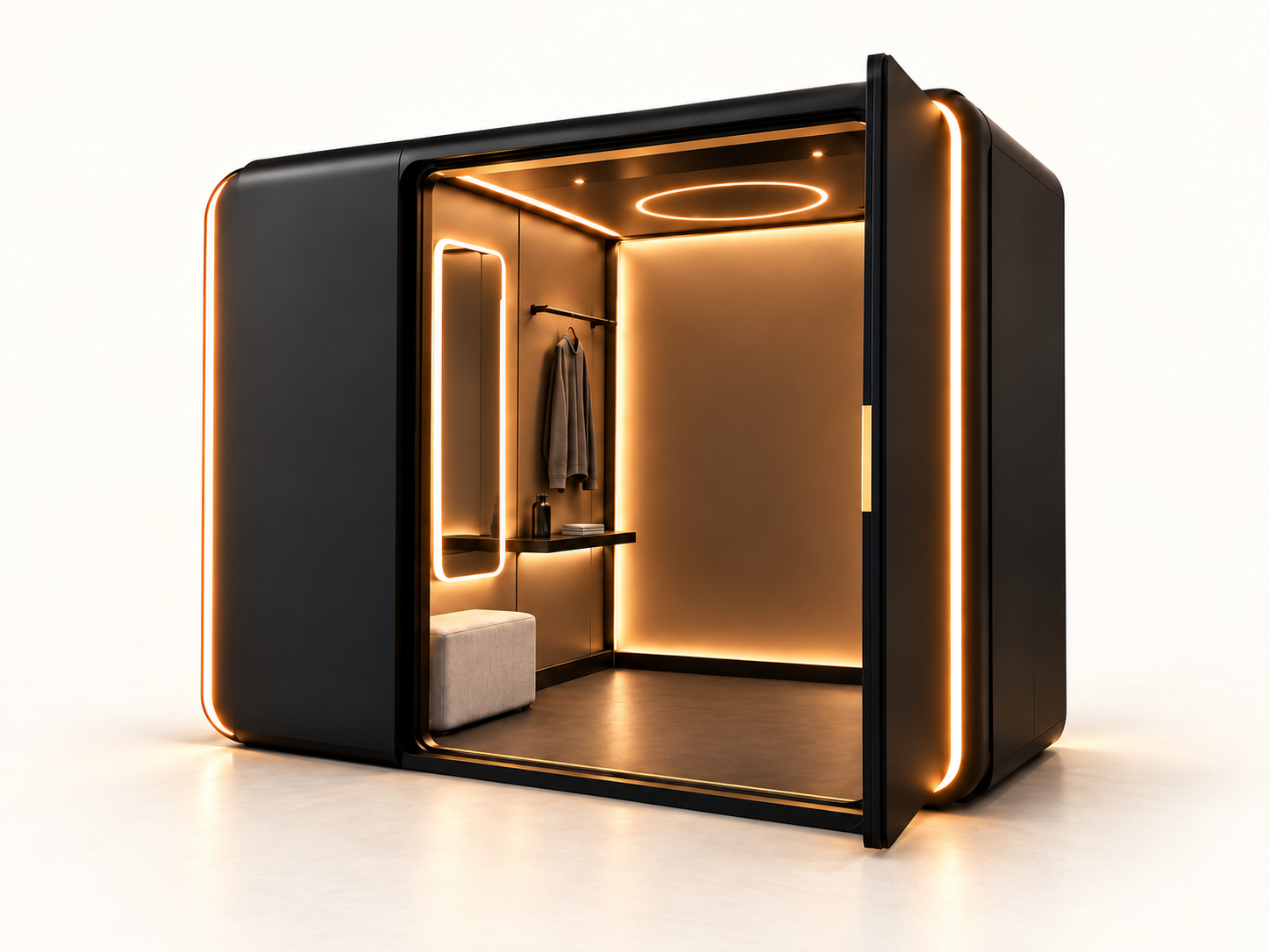
Keep changing capacity separate from storage capacity
A storage allocation may remain occupied long after its user leaves the changing area. A private changing place, by contrast, can serve another person once the first visit and the operator’s required reset are complete. More lockers do not create more places to change at the same time; a larger changing enclosure does not automatically provide the storage each user needs.
Describe these two demands separately. One is how many people need to change during the same busy period. The other is how many sets of belongings remain on site, what those belongings contain and when people retrieve them. Check shift or session overlaps: people collecting possessions can arrive while the next group is storing theirs. Do not replace that review with a fixed locker-to-booth ratio.
Public supplier ranges recognise the distinction between the functions. Portakabin’s locker-room page describes links to other facilities, including changing areas. Venesta lists lockers and changing-room benches as product categories. These are third-party examples of how a facility can be specified, not MobileX configurations or evidence of a particular capacity.
Choose where possessions stay after the door opens
Keep belongings with the person for a self-contained visit
An individual enclosure can be the simpler arrangement when the user enters, puts belongings down, changes, gathers everything and leaves. The shelf or hook supports that visit rather than becoming someone else’s longer-term storage. This keeps changing and temporary placement together, without requiring a separate retrieval trip.
The limitation is the release condition. If an employee leaves a bag inside for the rest of the shift, the facility must decide whether the enclosure remains assigned to that employee. It cannot count the same room as available to everyone while also promising exclusive storage to one user.
Separate storage when belongings outlast the changing visit
Separate lockers can allow possessions to stay on site while the private changing compartment returns to shared use. The locker area and changing compartment can be in the same larger room or in adjacent areas; they do not necessarily require separate buildings. The important separation is access: another user should not have to enter an occupied changing compartment to reach their belongings.
This arrangement adds a transfer between storage and changing. Locate it so a user can collect the items needed, enter the private space, then return other belongings without carrying them through unrelated work areas. Keep a suitable temporary surface or hook inside the compartment for items used during changing, even when long-term storage is outside.
Do not mistake communal bench space for individual privacy
A communal bench-and-locker arrangement may suit an operator’s agreed brief, but it does not provide the same individual separation as a closed compartment. Where private changing is required, adding another bench does not solve that requirement. Compare the actual mix of shared storage and individually private positions before choosing a room format.
Test retrieval while the changing place is occupied
Draw three activities on the same plan: one person changing behind the closed door, another opening a locker, and someone approaching or leaving. The relevant space includes open locker doors, the person reaching inside, any bench being used, and the changing-room entrance. A neat row of closed cabinets can conceal a conflict between these activities.
Test the proposed entrance both open and closed. A locker user or a person waiting nearby should not be placed where normal entry exposes the changing position. Visual privacy, the entry arrangement and belongings storage need separate decisions; a closed enclosure or a lock on a cabinet is not evidence of a security rating. Use the furniture working-envelope method with the actual proposed items, rather than guessing clearances from this concept image.
If users need assistance or a different access arrangement, assess those movements and occupants on their own terms. The single-user planning concept does not establish that another person, mobility aid or different furniture will fit.
A shift-change example: identify the bottleneck before adding a room
Hypothetical planning example, not a MobileX project: a workplace has one private changing enclosure. Users leave personal clothes inside while working, so the enclosure stays assigned even when empty. The buyer is considering purchasing another enclosure.
First compare separate storage that lets the existing room return to shared changing use. This may address the allocation problem without another private room, provided the existing room can handle the actual overlap in changing demand. It does not guarantee that queues disappear.
If belongings are already stored separately and people still need to change simultaneously, more lockers will not resolve the shortage of private changing places. Another changing position, a different room arrangement or an operational change may then deserve comparison. The two purchases solve different constraints, so the buyer should identify which constraint is present before requesting prices.
Price the arrangement, not two different meanings of a furnished room
Compare alternatives for the same changing demand, storage demand and privacy brief. A quote for an enclosure with a bench is not equivalent to one that also includes a locker bank. Equally, a low locker price is not the price of a functioning private changing facility.
Separate the enclosure and its agreed fittings from lockers, benches, locks or access accessories, transport and installation. Include the work to position and fix the selected furniture where its instructions require it, and the site work needed for the agreed room. A locker supplier may provide the storage units while another party supplies the enclosure; the drawing should identify their interface and who completes it.
The operating comparison is also different. Separate storage needs an allocation and retrieval procedure, responsibility for keys or access administration, and a way to handle belongings left behind. A self-contained room needs a clear rule about when possessions leave and the space becomes available again. Price any associated service or replacement arrangements from the actual offers; do not assume either route is always cheaper.
Bring the storage pattern into the custom-space discussion
MobileX’s custom modular project route supports discussion of the enclosure layout, openings, interior configuration and agreed equipment interfaces. This article does not announce a standard locker-room package or a supplied locker range. Identify requested furniture separately from items supplied by your furniture partner, and use the project drawing and quotation to establish the accepted scope.
You can start an enquiry with the information you already have: who will change, whether belongings stay after they leave, the available area and the privacy arrangement you need. The first useful response is an arrangement for review, not an assumed one-booth-per-locker rule or a demand to finish every technical detail before making contact.