Lactation Room Supplies: Separate Built-In Fixtures, Facility Stock and Personal Items
Plan lactation room supplies in three groups: the fixtures that make the space usable, the items your facility buys and replenishes, and the equipment each user brings. Give every item a storage location and an owner before ordering. A room or pod quotation, an opening-day shopping list and an ongoing restocking plan serve different purposes; combine them only after their responsibilities are clear.
For facilities teams buying a lactation pod, this distinction prevents two common planning gaps: assuming everything shown in an interior image is included, or buying supplies without a practical place to keep them. The method below applies to purchasing and operating a space, rather than selecting personal pumping equipment.
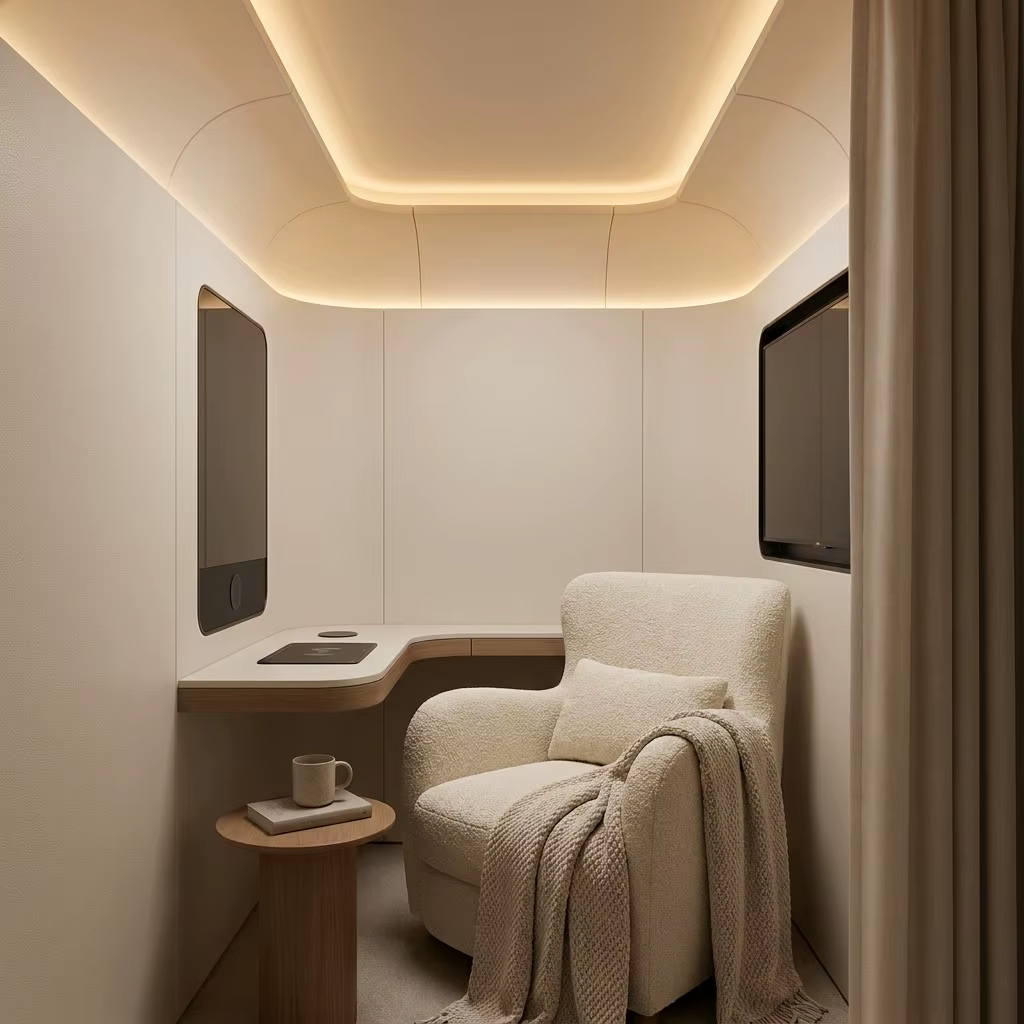
Start with three purchasing lists
Classify items by responsibility, not simply by whether they fit inside the room. A loose chair can still belong to the facility's initial fit-out, while a wall-mounted dispenser also needs someone to buy its refills. The table is a procurement starting point, not a universal equipment standard or a MobileX packing list.
Scroll horizontally to compare all columns.
| Group | Items to consider | Decision to record |
|---|---|---|
| Space and initial fit-out | Privacy enclosure and door hardware; chair; stable equipment surface; lighting; planned power points; ventilation; storage; any selected sink or changing station | Who supplies and installs each item, its usable position, and any site connection required |
| Facility operating stock | Handwashing supplies at the designated washing location; suitable room-surface cleaning products; compatible dispenser refills; waste-bin liners; replenishment labels and user information | Who purchases it, where it is kept, when stock is checked, and who deals with shortages |
| Personal equipment and belongings | Pump and compatible collection parts; personal milk containers; transport or storage items chosen by the user; bags and other personal belongings | What users bring, where they may place or store it, and which cleaning or storage facilities are available |
A changing station is a separate use requirement, not a substitute for a surface on which to place pumping equipment. If the facility also supports baby changing, define its supplies and servicing separately. Avoid turning the pumping workspace into the general storage area for every family-care item.
Make the chair, surface, power and privacy work together
Review the intended sequence from entering the space to leaving it. Where does a person put a bag, sit, place equipment, reach an outlet and pack away? An attractive interior still needs to support those actions without asking the user to balance equipment on a lap or move stocked boxes first.
Assess the chair and equipment surface as a pair. Compare actual furniture dimensions and the position of the seat, armrests and surface. Identify the surface reserved for equipment and keep it available during use. Do not treat a baby-changing pad or a shelf full of consumables as spare worktop capacity.
For powered equipment, give the supplier the destination socket requirements and the planned furniture arrangement. The site team should review outlet positions and connections with the relevant electrical professional. Plan around the intended equipment and its instructions, rather than assuming that a pictured socket proves compatibility with every pump.
Privacy also has an operating side. Specify how a person knows the space is available, how entry is controlled during use, and how staff handle access for cleaning. Keep replenishment access from requiring an interruption while the space is occupied.
For a US workplace, the US Department of Labor's space guidance describes FLSA requirements for covered employees: a functional, non-bathroom space protected from view and intrusion, with seating and a flat surface off the floor for the pump. It also explains the usefulness of access to electricity and a nearby sink. These are US workplace requirements and guidance, not a worldwide pod certification; check the requirements applicable to the actual site.
For the physical arrangement of sinks, changing areas and service access, use the separate lactation pod design details guide. Here, the next step is deciding who will keep that arrangement ready for use.
Buy operating supplies around a replenishment route
Walk through a normal service visit before filling the cupboards. A facility worker needs to bring in approved supplies, check dispensers, remove waste and leave the room ready without mixing cleaning equipment with personal belongings.
Keep ready-to-use stock separate from reserve stock
Place a modest working quantity at its point of use and assign a location for reserves. The reserve does not have to be inside the pod. If a cabinet must be reached by moving the chair, or boxes occupy the equipment surface, reconsider the storage arrangement rather than adding more stock to the same space.
For each dispenser, record its refill type and who purchases it. A stocked opening-day dispenser can become unusable when its refill is incompatible with the next order. Agree a review schedule based on actual use, and assign someone to respond between routine checks when supplies run out. There is no single replenishment interval that fits an office, a transport terminal and a small public facility.
Treat room cleaning and personal equipment care as different jobs
The facilities plan should identify the room surfaces and fixtures to be cleaned, the products compatible with their materials, and the staff responsible. Check cleaning-product instructions and the supplier's care information before standardising a chemical across upholstery, counters, door hardware and other finishes.
Personal pump parts require their own care process. CDC guidance recommends cleaning pump parts after use and allowing clean parts to dry fully before protected storage. The CDC pump hygiene guidance also directs users to the pump manufacturer's instructions for appropriate methods. Stocking wipes for room surfaces does not establish a complete pump-parts cleaning arrangement.
Tell users where they can wash their hands and clean equipment, and what is available there. A sink drawn inside a proposed pod needs an agreed installation and maintenance scope; an existing nearby washing location needs a practical access arrangement. Do not assume a sink is included simply because an interior reference shows one.
Reserve space for personal items without promising shared equipment
A facility can provide a well-organised room while users bring their own pumps, collection parts and storage containers. The procurement list should not silently turn those personal items into products supplied with the pod.
Identify separate places for belongings during a session, any permitted storage between sessions, and the facility's milk-storage arrangement. This might involve an available refrigerator or a user's own cooler, according to the applicable workplace arrangements and relevant guidance. Decide who manages the shared storage area and communicates its rules. Do not assume that an ordinary storage cabinet provides milk refrigeration.
The CDC's return-to-work guidance recommends discussing the pumping location, milk storage and pump-parts cleaning arrangements with the employer. Make those locations and access arrangements clear before opening the space. Use current official guidance and individual equipment instructions for detailed storage and cleaning decisions, rather than printing guessed time or temperature limits on a purchasing checklist.
If an operator separately chooses to provide shared pumping equipment, it needs its own equipment-specific procurement, user-kit and care arrangements. Do not classify an unidentified shared pump as another room accessory. This article does not specify a pump or assume that MobileX supplies one.
Personal Pumps or a Facility-Provided Multi-User Pump?
Choose the equipment arrangement separately from the private space. With personal pumps, the facility provides a usable place for different users to set up and pack away their own equipment. With a facility-provided pump, the operator adds an equipment service to the room: it must manage the selected appliance, compatible personal kits, care instructions and faults. Buying the enclosure does not settle that second purchase.
A personal-equipment arrangement keeps the surface available rather than reserving it for a permanently installed pump. Allow for the equipment in use, a bag and packing away without moving the chair into the doorway. This route suits a facility that will provide the space but not manage shared pumping equipment. Its budget still includes the agreed furniture, power access and storage; it is not an unfurnished-room option.
A facility-provided arrangement can reduce the need to carry a pump between home and work for users who choose that service. It also reserves space for the appliance even between sessions. Position it with its controls, power connection and the user’s collection equipment in reach, while retaining a usable surface for users who bring their own equipment. Do not size a cabinet from the pump alone: separately assigned kits and belongings need their own places.
The FDA’s buying and renting guidance says only pumps designed for multiple users should be shared; the marketing term “hospital-grade” is not a consistently defined FDA designation. Verify the selected device’s intended use and follow its instructions for individual accessories and care. A personal-use pump does not become suitable for sharing because it sits in a shared room. Medela’s Symphony PLUS product information, for example, identifies a multi-user pump and a separately sold pumping kit. That illustrates the separate equipment lines, not a MobileX inclusion or a recommendation of one device for every user.
Compare the room and equipment budgets separately. The facility-provided option adds the appliance purchase or rental, individual kits, applicable replacement parts, care work and a response when the appliance is unavailable. Kit quantities follow the participating users, not the number of rooms. Assign those purchases to the facility or users explicitly. If a pump needs repair, keeping the room usable for personal equipment can preserve the space’s purpose without promising a substitute appliance.
For MobileX, the relevant configuration decisions are the seating, equipment surface, storage and agreed power provisions. Bring the equipment information if selected, or simply say whether users will bring their own pumps or the facility is considering a shared device. Start the lactation-space enquiry with what is known; the equipment owner and room supplier can develop the layout without treating the pump as part of every pod quotation.
Decide Where Milk Storage Belongs Before Buying a Fridge
A refrigerator does not have to sit inside the private pumping space to be useful. Choose its location by when people need to put milk away and collect it, including while someone else is using the pod. Keep that access decision separate from the choice of appliance.
The CDC’s breast-milk storage questions and answers explains that expressed milk can share a refrigerator with other food when the refrigerator is appropriate for food storage. A dedicated appliance can still be an operational choice, but buying a separate fridge is not the only storage arrangement to compare. Follow current storage guidance for the milk itself; the comparison here concerns facility layout and purchasing.
| Arrangement | When it can work well | Effect on layout and purchasing |
|---|---|---|
| Refrigerator inside the pod or private room | Users can put milk away during their session, and later collection can be arranged without interrupting another user. | Allocate room for the actual appliance, opening its door and removing containers, plus the maker’s installation and service space. Separate the appliance price from furniture and electrical provisions. |
| Suitable shared or dedicated refrigerator outside the pod | The intended users can reach it during all relevant shifts, including after a pumping session has ended. | Keep more of the pod interior available for seating and equipment. Include the access route, available storage capacity and management of the shared location in the facility plan. |
| User-supplied insulated cooler arrangement | Users and the facility have agreed a workable personal storage and transport plan using current guidance. | Reserve a place for the cooler without taking over the pump surface or entry path. Communicate what users bring; do not count a normal cupboard as refrigerated storage. |
Test collection separately from pumping
Hypothetical example: one employee finishes a shift while another is using the private pod. If the first employee’s milk is in a fridge inside that pod, collection now competes with the second person’s privacy. A nearby, suitable fridge accessible to both shifts avoids that particular conflict. If the facility chooses an internal fridge instead, its access plan needs to accommodate collection without an unplanned interruption.
Run that same check for early and late shifts, cleaning periods and departure time. A nearby refrigerator behind a locked door is not an equivalent alternative when the intended users cannot reach it. Compare the complete access arrangement, not just the walking distance.
Put the appliance and its provisions on separate quote lines
For an internal appliance, send the actual model information with the layout. Include its overall dimensions, door-opening space, plug and power requirements, and manufacturer-specified ventilation and service access. Show where a person stands to load it without moving the pumping chair or blocking the entrance. Decide the location from that occupied arrangement, rather than the fridge’s external width alone.
Establish whether the proposed outlet stays powered when the pod is vacant and how the facility handles a reported appliance or power fault. Lighting or other occupancy controls should not be assumed to describe the refrigerator’s supply. Keep this electrical question in the agreed equipment schedule.
In the quotation, distinguish the appliance, the pod’s agreed space and electrical provisions, and facility operation. State who supplies each item, who installs it and who manages the storage location. Send MobileX the preferred location, appliance information if selected, intended access hours and the rest of the interior layout through the project inquiry page. This lets the pod scope be priced without treating every appliance in a reference image as included.
Use a short opening-readiness procurement check
The following is a buyer's working tool. Complete it with the supplier and the facility operator; it is not a claim about a manufacturer-wide order system.
- Initial fit-out: Name the chair, equipment surface, privacy hardware, lighting, outlets, ventilation and storage to be provided. Mark each as included, optional or buyer-supplied.
- Site work: Identify responsibility for installation, electrical connections and any selected water or drainage connections. Separate the fixture from the work needed to make it usable.
- Handwashing and equipment-care access: Record the location, access arrangements and supplies provided there. Communicate which items users bring themselves.
- Room-care materials: Confirm surface-care instructions, selected products, storage and the team responsible for cleaning and waste removal.
- Recurring stock: List dispenser refills and other facility-selected consumables, their purchase owner and the shortage-reporting contact.
- Personal belongings and milk storage: Identify permitted locations and the facility's arrangements, keeping them distinct from cleaning materials and general reserve stock.
- Availability: Assign responsibility for access information, in-use status, cleaning interruptions and reopening after servicing.
Then perform a dry walkthrough with empty bags or representative equipment dimensions, not personal milk or a live clinical demonstration. Start at the entrance, sit at the planned position, place equipment, identify power access and pack away. Follow with a separate staff replenishment walkthrough. Record any item that blocks another activity and decide whether to move the item, reduce the stock kept inside or revise the fixture layout.
This distinguishes a supply omission from a layout problem. Missing bin liners need an operating purchase; a cupboard that cannot open past the chair needs a layout decision. A missing sink connection needs a site-work decision. Buying more accessories does not solve all three.
Match the pod quotation to the operating plan
MobileX's current lactation pod scope is project-based. Seating, tables, sinks, changing stations and storage are discussed as project options rather than assumed to be included in every order. The portable nursing station buying guide covers the broader configuration and quotation inputs; add this responsibility split when reviewing the actual offer.
Ask the quotation to distinguish the enclosure and agreed fixtures, optional items, buyer-supplied items and local work. Record who owns ongoing consumable purchases after handover. Where a project includes a fixture shown in a reference image, identify the agreed item and arrangement rather than approving the whole image as a supply list.
For a project discussion, send the intended users and location, available floor area, preferred seating and surface arrangement, proposed power and washing access, and the items your facility will provide itself. Include who will operate and replenish the space. Contact MobileX POD with that brief so the room configuration and the facility's operating purchases can be reviewed separately.