Movable Office Pods: Compare Whole-Unit Moves and Disassembly Before Buying
Choose movable office pods by the move you expect, not by the word "movable" alone. Moving an assembled pod within one room and relocating a dismantled pod to another building require different product details, access routes and services. Before buying, ask which method the selected model permits, what must be removed or disconnected, and who will prepare, transport and reinstall it.
A whole-unit move can avoid reopening some assembly joints when the model and route allow it. Disassembly can make a restricted route more practical, but introduces component protection, reassembly and inspection work. The useful comparison is the complete move from its current working position to a usable installation at the next site.
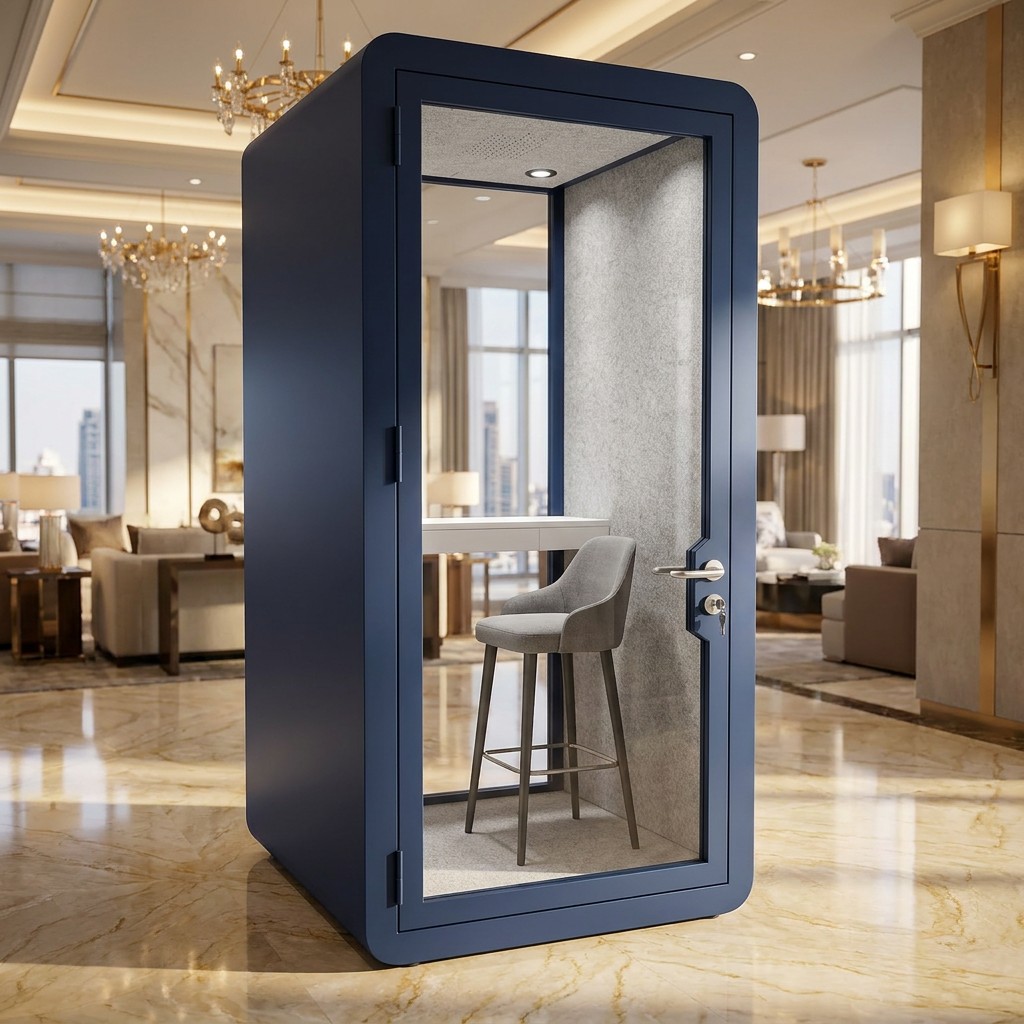
Start With the Move You Actually Expect
Repositioning in the same room: record the complete path between the two positions, including furniture, floor transitions and the space needed by handling equipment. A short distance can still involve an unsuitable threshold, a tight turn or a floor that needs professional assessment. Ask whether the pod can remain assembled for this particular move.
Moving to another room or floor: the limiting point may be a doorway, corridor corner or lift rather than the destination room. Compare the assembled moving envelope with the route, then compare the largest components and their protective packaging if disassembly is proposed. Obtain the lift's usable opening, internal dimensions and load information from the building operator; ask the relocation specialist to assess the complete transported load.
Moving to another building: add loading access, vehicle transport, protection in transit, unloading and the new installation conditions. A pod that was originally delivered in sections should not automatically be quoted for transport as one assembled unit. Original delivery arrangements are useful evidence, but the supplier still needs to confirm the method for the current configuration and condition.
For a likely lease move, describe the next site as far as it is known. For an uncertain future site, compare both methods and identify what cannot be priced or approved until a survey is available. This is more useful than asking for an unconditional promise that the pod will fit anywhere.
Compare Whole-Unit Movement With Disassembly
The following comparison is a purchasing framework, not a lifting or dismantling procedure. Approval of a method belongs to the model supplier and the people responsible for the move and building.
Scroll horizontally to compare all columns.
| Decision | Whole-unit movement | Disassembly and reassembly |
|---|---|---|
| Product permission | Obtain a model-specific method for moving the assembled configuration, including any parts that must first be removed. | Confirm that the model can be dismantled for relocation, which connections may be reopened and which parts may need replacement. |
| Route that must fit | Assess the complete moving envelope, including protection and the proposed handling equipment. | Assess the largest and most awkward components with packaging, not just the dimensions of a flat panel. |
| Handling information | Request the relevant mass, support requirements and any approved lifting or handling provisions. Have a competent specialist select the method. | Request component information, protective packing requirements and an identification plan so the correct parts return to the correct positions. |
| Work retained at the destination | Placement, reconnection and functional checks remain necessary even if the enclosure stays assembled. | Reassembly, connection checks, reconnection and functional checks must be included. |
| Main purchasing uncertainty | Whether the selected model and the entire route permit an assembled move. | Whether local labour, instructions, replacement items and assembly space are available. |
Neither route is automatically cheaper. An assembled move may need specialist handling or access arrangements; dismantling may require more on-site work and packing. Compare quotations for the same start and finish conditions, rather than comparing a transport-only price with a fully reinstalled price.
Ask What the Selected Model Actually Permits
For an office phone booth or meeting booth, ask for the current installation documentation and a relocation assessment tied to the model and configuration. Include the order or drawing reference if the pod is already owned. A different roof, interior fit-out or equipment package can change the information needed for the assessment.
MobileX's installation and electrical checklist describes disassembly and reassembly for office pod relocation, with checks after the move. Use that as the starting point for a model-specific discussion. It is not permission to push, lift or transport every assembled model in the same way.
Request a clear answer on these points before choosing the product:
- Is whole-unit movement permitted for this configuration, or is disassembly required?
- Which instructions apply, and who is expected to carry out the work?
- What must be removed, secured, disconnected or replaced according to those instructions?
- Which seals, fasteners, connectors or finishing items need inspection or renewal when joints are reopened?
- What documentation and support are available for reassembly, and what is included in the quotation?
Do not select handling equipment from a photograph of the pod base. Visible gaps, feet or a pallet nearby do not identify approved forklift points. If lifting is proposed, obtain the necessary model data for a competent lifting specialist to develop the plan. The UK's HSE guidance on planning and organising lifting operations explains the need to assess the load, equipment, environment and responsibilities. It is UK guidance, not a universal pod certification or an instruction to perform a particular lift.
Check the Route and the Next Installation Separately
A useful route survey follows the actual journey: starting position, exit from the room, corridors, turns, lift or other transfer point, loading area, and the reverse sequence at the destination. Mark temporary obstacles as well as permanent restrictions. Share measured drawings and photographs with the supplier and mover instead of using room area alone as evidence of access.
The building or facilities team should provide the floor and lift information the relocation specialist needs. Include changes in level, floor finishes, raised floors where present, and restrictions on access or working hours. Ask who is responsible for assessing loads and protecting the building. The article provides no generic floor-loading limit or approval for a particular route.
Then assess the new operating position. The pod may fit through the route but still have an obstructed door, inaccessible service area or unsuitable connection arrangement after installation. Use the footprint, height and site-fit guide for the destination fit decision; keep the moving method as a separate question.
For example, an open office route on one level may support consideration of an assembled move if the selected model permits it. The same pod's proposed destination behind a narrower doorway may instead require disassembly or a different location. This is a hypothetical comparison, not a report of a completed MobileX relocation.
Include Furniture, Glass and Services in the Scope
An enclosure-only description can miss much of the work. Ask the supplier and relocation team to account for the installed configuration:
Furniture and customer equipment. Identify loose furniture, fixed desks, screens and other equipment. Confirm what is to be removed or secured under the approved method, who handles it, and where it will be protected and stored. Recheck the final arrangement after reinstallation rather than assuming that every item will return to its previous usable position.
Glass, doors and finishes. Request the supplier's requirements for protecting glazing, hardware and panels, and for any removal that the method requires. Record existing condition before handover so new damage can be distinguished from previous wear. Do not improvise removal or lifting instructions from a generic article.
Electrical connections. Identify the power arrangement, attached equipment and any connection to the building. Agree who will disconnect, inspect and reconnect the relevant systems. Work requiring electrical competence should be assigned accordingly; HSE's guidance on work on electrical equipment and installations emphasises planning, competence and secure isolation. Local requirements and the actual installation determine the necessary personnel and checks.
Ventilation and roof components. Identify fans, grilles, housings and any external connections or customer-supplied equipment. Ask how they are protected during the move and checked at the destination. A change in location must also leave the intended airflow paths and maintenance access available. A relocation quotation should not quietly assume that the building services are already suitable.
Define What "Ready to Use Again" Means
Specify the handover checks with the supplier and installer before the move. They should relate to the approved model instructions and the actual work performed, rather than promise a generic performance level after any number of moves.
At minimum, agree who checks assembly connections and reopened joints, seal condition and fit, door alignment and latch operation, glass and panel condition, and completion of the required electrical checks. Include operation of the installed lighting, sockets and ventilation, plus access to controls and serviceable parts. Record any defect and the responsible party before returning the pod to use.
A closing door or a running fan alone does not verify acoustic or ventilation performance. If a specified performance result matters to acceptance, agree the applicable evidence or test and its conditions in advance. Do not infer a restored rating from a visual inspection.
Compare a Complete Relocation Scope in the Quotation
Ask bidders to use the same boundaries: from the pod in its current working position to an inspected installation ready for the agreed use at the destination. Break the offer into route assessment, preparation and disconnection, dismantling where required, protective packing, handling and transport, unloading, reassembly, reconnection, and handover checks.
For each item, identify the supplier, the buyer's contractor or another named party. Separate included work from optional services and unresolved site conditions. State whether replacement seals or other items are included, subject to inspection, or separately quoted. Request clarification of any storage, access equipment or building-protection work needed by the proposed method.
Before ordering a new pod, consider whether a future move is a firm requirement or only a possibility. Frequent repositioning calls for explicit model and site evidence for that intended use. An occasional building move may make a documented dismantling route more relevant than assembled mobility. If the standard configuration cannot meet the route or destination requirements, discuss a different model, another location or a custom modular pod assessment before committing.
Bring the Expected Move Into the Buying Discussion
For a useful project enquiry, provide the intended use and number of occupants, proposed model or existing order reference, current and destination layouts, route measurements, floor and lift information where relevant, installed furniture and equipment, and the expected moving scenario. Explain which local services you can arrange and which you want included in the quotation.
Ask for a response that distinguishes a confirmed method from information still needed. That gives procurement, facilities staff and the relocation contractor the same basis for deciding whether whole-unit movement, disassembly or another product or location is the practical choice.