What Compliance Documents Should Office Pod Buyers Request Before Ordering?
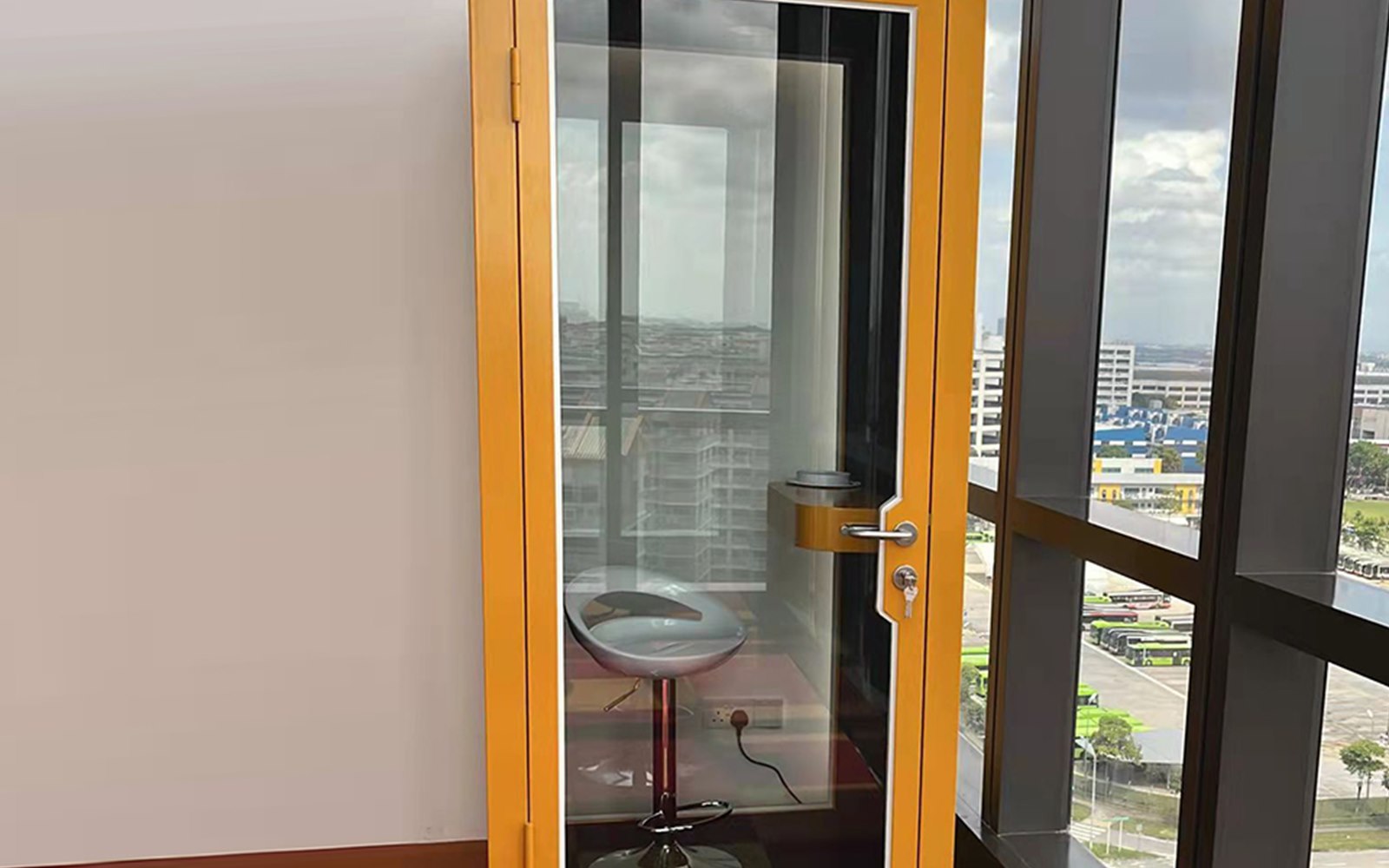
When buyers compare office pod suppliers, the document question usually comes before the final price question.
Dealers, fit-out contractors, architects and facility teams often need to know which files a supplier can actually provide for project review, quotation comparison and internal approval. That is especially true for overseas office pod procurement in the United States, the Middle East, Southeast Asia and Europe.
The practical approach is not to ask for one vague promise such as “fully certified.” The better approach is to ask the supplier to separate factory documents, product-related documents and local approval items that the buyer still needs to verify.
For MobileX POD, this article explains which office pod compliance documents buyers should request, what those documents really mean, and what still needs local project confirmation before ordering.
1. Start with factory-level quality documents
The first layer is factory management and quality-control documentation.
For MobileX POD, buyers can discuss:
- ISO 9001:2015 quality management certification
- factory and production capability information
- export packing and quality-control process support
These documents help buyers understand whether the supplier has a structured production process. They do not replace local building approval, but they are still useful for shortlist comparison and internal supplier review.
Buyers who are comparing several suppliers should request this information early, then review it together with the supplier’s Factory & Quality Control page.
2. Ask for product-related documents tied to the exact office pod series
The second layer is product-specific documentation.
For standard office pod and meeting booth projects, the most useful request is:
- CE documentation for selected office pod series
- model specification sheet
- size, weight, packing size and volume details
- socket and voltage configuration information for the target market
This matters because a buyer may purchase a compact office phone booth, a larger meeting booth or a customized project version. The applicable files and technical details should match the actual model, not a generic product brochure.
If the buyer is still comparing standard models, it helps to review the structured facts on the Office Pod Manufacturer Data page before asking for the final document pack.
3. Understand what CE or ISO documents do not prove by themselves
One of the most common mistakes is treating one document as automatic approval for every country and every site.
That is not how project compliance works.
ISO 9001 is a factory management certification. It helps show that quality procedures exist. It does not mean the office pod is automatically approved for every local project.
CE documentation for selected office pod series is useful project support, but it does not mean every buyer in every destination can skip local checks.
Buyers and local project teams should still verify:
- fire requirements
- local electrical code
- accessibility requirements
- building-management or site approval rules
- any project-submission or import paperwork required in the destination market
This applies whether the project is in the United States office pod market, the Middle East modular pod market, the Southeast Asia modular pod market or the Europe modular pod market.
If the project specifies low-emitting materials
For a fit-out contractor or furniture dealer, the decision is whether the proposed pod configuration can satisfy the project’s material-submission requirement before it is ordered. Start with the actual specification: the required document, accepted method and version, product category, and person who will review it. A request for an emissions report is different from a request for a material list, even when both arrive under the heading “sustainability.”
Keep the factory and product documents described above in the submission. Add the evidence needed for the specific indoor-emissions requirement; do not replace a useful factory certificate with an unrelated report, or treat a factory certificate as the answer to every material question.
Match the document to the purchasing decision
Scroll horizontally to view all columns.
| Document received | What the buyer can use it for | What to match before accepting it |
|---|---|---|
| Material or component specification | Identify the lining, surface, flooring or furniture named in the offer. | Manufacturer, product reference, finish and the part of the quoted pod using it. Identification alone is not an emissions result. |
| Safety data sheet (SDS) | Review the chemical’s hazard and handling information where relevant to the supplied material or installation work. | The exact chemical product and revision. Do not use an SDS as a substitute for a chamber-emissions result for the finished enclosure. |
| Emissions test report or applicable certification | Assess the defined product against the emissions requirement named in the project brief. | Tested item, configuration, method/version, stated evaluation scenario, date and covered variants; then check the project’s acceptance conditions. |
| Environmental product declaration (EPD) | Review the declared environmental information for its covered product and life-cycle scope. | The declared product and assessment boundary. Keep this separate from the project’s indoor chemical-emissions submission. |
OSHA’s SDS guide describes hazard, protective-measure and handling information in the US hazard-communication context. UL’s explanation of BIFMA M7.1 testing describes emissions testing of representative materials, assemblies or finished furniture. Those different test objects are why the report’s specimen description matters. UL GREENGUARD is a chemical-emissions certification programme, not another name for every product or factory certificate.
Separate the enclosure, selected finishes and added furniture
Make one short schedule alongside the quotation: enclosure/model reference; selected lining and finish references; factory-supplied furniture; buyer-supplied furniture; and any materials applied locally. Put the applicable document beside each relevant item. This shows the reviewer which parts have evidence and which still need a response without treating the entire order as one unidentified product.
A report for a lining can answer a requirement about that lining. It does not automatically describe the enclosure, table and seats together. Equally, when a report or certification covers a stated family of configurations, use its actual scope instead of assuming that every colour requires a separate test. The issuer’s coverage and the project’s review criteria determine the next step.
Hypothetical procurement example: a dealer is quoting two MP2 pods. The customer selects a different table from the one in the proposed furniture package and will supply its own chairs. Keep the pod configuration and document references on one line, the replacement table and its supplier documents on another, and the customer-supplied chairs on a third. If the available emissions report names only the original table, ask the reviewer to assess the replacement table’s evidence; do not transfer the original table’s result to it. This is a purchasing example, not a MobileX order or test result.
Resolve each submission as accepted for the named item, awaiting a specific document or clarification, or requiring an alternative configuration. If a mandatory document is unavailable, identify the affected order line and decision deadline before authorising that specification. Avoid changing an already accepted finish or furniture reference without updating its document link.
The materials and environmental-claims guide covers broader reuse and life-cycle comparisons. For this quotation, send MobileX the project requirement, chosen models and finishes, furniture supply split and submission deadline. That lets the available files and any open document items be reviewed against the actual proposed purchase.
4. Request electrical details before production starts
For office pods, compliance discussion is often connected to electrical details.
Buyers should confirm:
- destination country
- voltage
- plug and socket standard
- whether USB, Type-C, network port or other accessories are required
- whether local consultants need component details for review
If these points stay unclear until late in the process, the supplier may not be able to prepare the most useful document set for the project.
Separate the electrical part from the complete powered pod
When a project specification calls for electrical product certification, identify the item that must be covered before comparing offers. A document for a socket, power supply or light helps assess that part. It does not, by itself, establish certification of the complete pod with its internal wiring and installed equipment. Conversely, a complete-product record still needs to match the model and electrical version being ordered.
For US workplace projects, OSHA’s Nationally Recognized Testing Laboratory program recognizes laboratories for particular test standards; each uses its own certification mark. Keep three identities separate: the standard used, the organization issuing the certification, and the product or model covered. The name of a standard alone is not a product certificate. Have the responsible project reviewer identify the applicable requirement rather than treating every destination as the same market.
| Evidence supplied | Useful connection to the offer | Buying decision |
|---|---|---|
| Component record | The named socket, light or other electrical part, its rating and applicable use. | Use it for that component line. Keep a complete-pod requirement open if this is the only evidence supplied. |
| Complete-product certification record | The manufacturer, exact model or covered family, electrical configuration, mark and installation instructions. | Compare the offered version with the issuing body’s record. Resolve a model or configuration mismatch before accepting the certification claim. |
| Site connection or inspection record | The proposed building supply, installation and work at the named site. | Use it for that site decision; do not present it as a transferable product certification for every unit sold. |
UL Solutions’ guidance on prefabricated privacy booths describes UL 962 coverage for occupiable booths, product labeling and local installation review. For an offer that claims a UL listing, its guidance points to the Product iQ record for the applicable product category. Other issuing bodies have their own records. A photograph of a logo without a matching model record is not the same purchasing evidence.
Turn the document difference into a bid decision
Hypothetical example: a fit-out specification expressly requires a complete-product listing for a proposed powered enclosure. Supplier A provides a record covering its offered model and electrical version. Supplier B provides certificates for the socket and lights only. B has supplied useful component information, but has not yet answered that specified complete-product requirement. Do not compare the lower total as an equivalent accepted offer, and do not infer that the supplied parts have failed a test.
Give B one precise open item: identify the record covering the offered complete configuration, or explain what compliant proposal it can actually supply for the project’s review. If it cannot meet the stated requirement, compare a different documented configuration or supplier. A promised later document without a confirmed route, scope and project acceptance does not close the item.
For a MobileX document request, attach the actual project requirement and identify the model, destination and requested electrical version. Match the available model documents to that request while the price and configuration are being agreed. Continue to use the power-planning guide for connected loads and building supply: sufficient supply capacity and the right certification evidence answer different questions.
5. Ask for a document pack that matches the quotation scope
The document request should match the real project scope, not a generic inquiry.
Before asking for a full compliance file set, buyers should send:
1. target model or required size
2. quantity
3. destination country
4. project type, such as dealer stock, office fit-out, coworking, public facility or contractor project
5. required socket and voltage
6. any specific certificate or submission list requested by the local team
That gives the supplier enough context to prepare a practical response instead of sending a broad and incomplete answer.
If the project is not a standard pod and needs a custom structure, buyers should also review the custom modular pod project page because the document and approval discussion may change with the application.
6. Use document clarity as a supplier-quality test
The document discussion is not only about paperwork. It is also a test of supplier communication quality.
A reliable supplier should be able to explain:
- which documents are available now
- which office pod series they apply to
- which technical details still depend on final configuration
- which local approvals remain the buyer’s responsibility
If a supplier only answers with broad marketing claims, the project risk is usually higher later during quotation, production and installation.
Office Pod Compliance FAQ
Does MobileX POD provide ISO 9001 documentation?
MobileX can discuss ISO 9001:2015 quality management certification as part of factory-level supplier review and project communication.
Does MobileX POD have CE documentation for office pods?
MobileX can discuss CE documentation for selected office pod series. Buyers should confirm which model or series the project is reviewing so the file discussion stays accurate.
Does CE documentation mean automatic approval for every country?
No. Local fire, electrical, accessibility and site-approval requirements should still be checked by the buyer or local project team.
What should buyers send before requesting compliance documents and quotation?
Send the target model or size, quantity, destination country, voltage or socket standard, project use case and any required certificate list from the local team.
Conclusion
Office pod compliance review works best when buyers separate factory documents, product documents and local approval responsibilities.
For MobileX POD, the practical discussion can include ISO 9001 factory documentation, CE documentation for selected office pod series and model-specific technical details. At the same time, buyers should still verify the local project requirements that no overseas supplier can universalize for every market.
If you want a quotation plus a document-ready response, send your project details through the MobileX POD contact page. You can also share quantity, destination country, target model and required document list by email at [nick@mobilex-pod.com](mailto:nick@mobilex-pod.com) or WhatsApp at +86 186 6599 6445.