Buying a Karaoke Booth: Room, Sound System and Operating Scope
A commercial karaoke space needs both a suitable room and a working entertainment system. If an existing room can accommodate the guests, equipment and intended operating conditions, buying another enclosure may add cost without solving a problem. A separate booth becomes worth comparing when the venue lacks suitable private space. A complete package is useful when its supplier clearly takes responsibility for the room, AV integration and handover, not simply because the offer calls itself a karaoke booth.
Start with the service you want guests to use: choosing songs, singing through microphones, hearing amplified music, watching lyrics and sharing the space. That is a different purchase from a quiet practice booth or a room intended to capture clean recordings. The decision is not just which box to buy, but which parts of the working experience each supplier will deliver.
Choose the room route before buying the equipment package
| Route | Choose it when | What can rule it out |
|---|---|---|
| Existing room plus a karaoke system | The room is available at the required times, accommodates the occupied layout and can support the intended sound and building arrangements. Spend on the system and the specific room work that is actually needed. | The room cannot be taken out of other use, the guest layout obstructs access, or sound transmission requires disproportionate building work. Adding AV will not correct those constraints. |
| Independent enclosure plus separately supplied AV | The venue needs a new enclosed space and can appoint someone to coordinate the enclosure, equipment, connections and commissioning. It allows room and AV choices to be evaluated separately. | No one owns the interface between the two packages, or the enclosure cannot accommodate the working equipment layout. A booth-only price is not a ready-to-operate price. |
| Supplier-defined complete package | The documented package covers the desired guest experience and allocates installation, setup, training and support. A clear single point of responsibility can reduce integration work for the venue. | The package cannot support the required operating workflow, or important items are excluded. A bundled enclosure and equipment list alone does not establish ongoing content access or operating support. |
Do not pay for a second shell simply to obtain a private-looking room that you already have. Conversely, an unused meeting room is not automatically a suitable karaoke room: its door, surrounding spaces, amplified sound, ventilation and operating hours need to work for entertainment use. Compare the changes required to that actual room with the changes required to install and operate a separate enclosure.
Plan for occupied space, not an empty floor plan
A seat count leaves out much of the usable layout. Guests need somewhere to sit and stand while singing; a display must be visible from those positions; microphones and their storage need to be reachable; speakers need workable locations; and a controller needs a usable position without creating a cable or circulation obstacle. Equipment racks and staff access can also consume space that a drawing labels as spare.
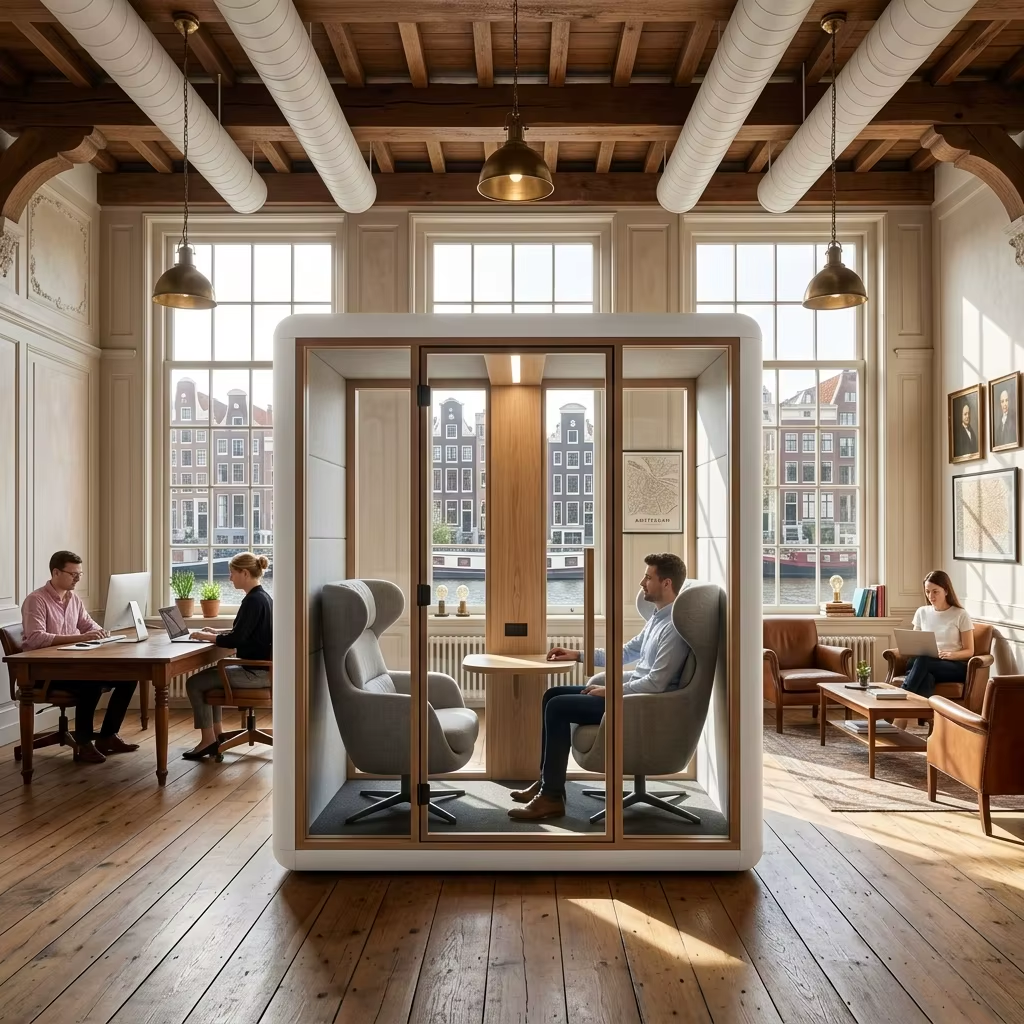
For example, imagine a venue comparing an existing lounge with a new compact enclosure. Both drawings may show the intended seats. If the compact layout places the singer in the doorway, leaves no useful screen sightline or puts a microphone’s normal operating position directly in front of a speaker, equal seat counts do not make the two spaces equivalent. Repositioning equipment or changing furniture may be enough; otherwise a different room shape or a larger working envelope may be justified. This is a planning example, not a capacity specification.
Draw the seats in use, the intended singing positions and the equipment at its actual proposed size. Include door movement, equipment servicing and the staff route for cleaning and reset. Test screen visibility from the least convenient seat, not only from the center of the drawing. A larger enclosure is worth paying for when it enables this working arrangement; it is not automatically better if the same operation fits in a smaller suitable room.
Separate three sound problems
Sound reaching people outside
This is a sound-isolation question involving the complete room or enclosure and its connections: walls, door assembly, ventilation and service openings, plus any other transmission paths at the site. Absorbent foam inside a room is not evidence that amplified music will be acceptably contained. Office speech results also do not establish performance for music, bass or a particular neighboring space.
A meaningful evaluation uses the intended system and operating settings, normal ventilation and the relevant listening positions outside the room. A demonstration that uses quiet speech instead of the proposed music system does not answer the same question. Decide what operation the venue needs before choosing the evidence used to assess it; this guide does not set a universal noise limit.
How amplified sound behaves inside
A room can limit transmission yet still have an unhelpful internal sound. Reflections, speaker coverage and the balance between music and microphones affect what guests hear. Appropriate room treatment and AV setup address those issues; they are not substitutes for an isolation design. Avoid buying an extra enclosure layer when the unresolved problem is instead an unsuitable speaker arrangement or a highly reflective interior.
Microphone feedback
Feedback occurs when sound from a loudspeaker is picked up by a microphone and repeatedly amplified through the system. Microphone and speaker placement, levels and the number of open microphones matter. A claimed soundproof wall does not prevent this loop. Commissioning should assess the actual guest positions and controls, including what happens when users move microphones or change levels, rather than only demonstrate a system operated by its installer.
Self-service and staff-assisted rooms are different purchases
For a self-service room, the guest interface is part of the product. Guests need a clear way to start a session, choose songs, use microphones and finish. The venue still needs a reset process: return controls to their intended state, restore equipment to its place, inspect consumables or damage and make the room ready for the next group. A consumer-style device arrangement that works under supervision may be unsuitable when guests operate it alone.
Staff-assisted use can accept more involved setup when trained people are available to do it. That can reduce the need for some automation, but it transfers work into each session. Compare who performs setup, handles a disconnected device, explains the interface and restores normal operation. Do not assume that a software subscription includes onsite AV support, or that an enclosure supplier will troubleshoot song selection.
A useful handover demonstration follows one complete guest session and one staff reset. It also shows the documented response to an unavailable service or a failed microphone. This tests the division of responsibilities without inventing a guarantee of unattended operation.
Compare complete costs at the same operating scope
| Cost area | Include in the comparison | Avoid this false comparison |
|---|---|---|
| Room and site | Existing-room alterations or enclosure supply; delivery, access, assembly, necessary building services and reinstatement; any site-specific assessment. | A booth’s supply price against a finished existing-room conversion. |
| AV and furniture | Displays, microphones, speakers, mixing/control equipment, mounting, cables, storage and the actual seating arrangement. | A picture showing equipment against a written offer that excludes it. |
| Integration and handover | System design, installation, setup, commissioning, user instructions, staff training and allocation of support responsibilities. | Separately purchased compatible-looking components against a commissioned package. |
| Continuing services | Software, content services, renewals, updates and any separately applicable rights or permissions for the intended location and use. | A one-time hardware payment against an offer whose operation depends on recurring services. |
| Venue operation | Cleaning and reset time, equipment upkeep, consumables, repairs and the operational consequences of downtime. | Self-service marketing language against an assumption of no staff work. |
Keep one-time costs and recurring costs separate, then compare them over the same chosen period and number of rooms. Include only priced items; leave an unpriced obligation visibly unresolved rather than inventing an allowance and presenting it as a quotation. If one supplier covers commissioning and another does not, add the separately quoted integration scope before treating the totals as comparable.
Content access and permission to use it are also different purchasing questions. Identify what the service agreement covers, what remains the venue’s responsibility and which location and use the agreement addresses. This is a scope check, not a claim that one licensing arrangement applies in every jurisdiction.
Make the next decision about the missing part
Keep the existing-room route when the occupied layout and intended operation are feasible and the necessary alterations are proportionate. Compare a separate enclosure when suitable private space is the missing part. Prefer a defined complete package when integration and operational handover are the missing capabilities, provided its exclusions and continuing obligations are acceptable.
If the task is private rehearsal rather than guest entertainment, start with the music-practice booth guide. If the main output is a recording or live production, use the recording-space and equipment brief instead.
For an enclosure discussion, the MobileX custom-project route is a place to describe the proposed room and integration boundary. Bring a guest-and-equipment layout, the intended operating hours, site access information and the responsibilities already assigned to an AV provider to a project enquiry. This guide does not establish that MobileX supplies a karaoke system, song catalogue, content permissions, venue operation or a particular compatible AV package.