Office Pod Suppliers: Connect Factory Evidence to Your Quotation and Delivery Plan
Before choosing a factory-direct office pod supplier, connect three things: the company you will order from, the exact configuration being quoted, and the people responsible for delivering a usable pod at your site. A convincing factory photograph helps answer one question. It does not settle the order scope, local installation or support arrangements.
For dealers, fit-out contractors and facilities buyers, the practical test is whether the supplier can link its evidence to your proposed purchase. Start with an initial manufacturer check, then use the questions below to compare the offers that remain. Keep unresolved items visible instead of treating silence in a quotation as an included service.
Match the Supplier Identity to the Proposed Order
Record the brand, legal selling entity, production location and project contact separately. Compare the company name on the quotation with the proposed invoice and contract. If a trading company, manufacturer or local installer has a different role, ask who takes responsibility for each part of the order and how the parties relate.
For MobileX, the brand is MobileX POD and the legal company is Shenzhen MobileX Technology Co., Ltd., registered in Shenzhen. The factory, office and showroom operating address is No. 22 Yuhe Road, Dongshan Village, Qishi Town, Dongguan, Guangdong, China. The Dongguan operating address is not the Shenzhen registered address.
For the first-stage document review, use the China office pod manufacturer verification guide. At quotation stage, go one step further: ask which entity will supply the goods, which contact can resolve scope questions, and who will coordinate matters after shipment. A factory-direct purchase can still involve a freight forwarder and local service providers.
Ask for Evidence That Matches the Configuration
Ask what each document or image actually establishes. A product drawing describes a configuration. A production photograph shows a process or assembly at a particular moment. A test report has a defined test object and method. These are useful for different decisions and should not substitute for one another.
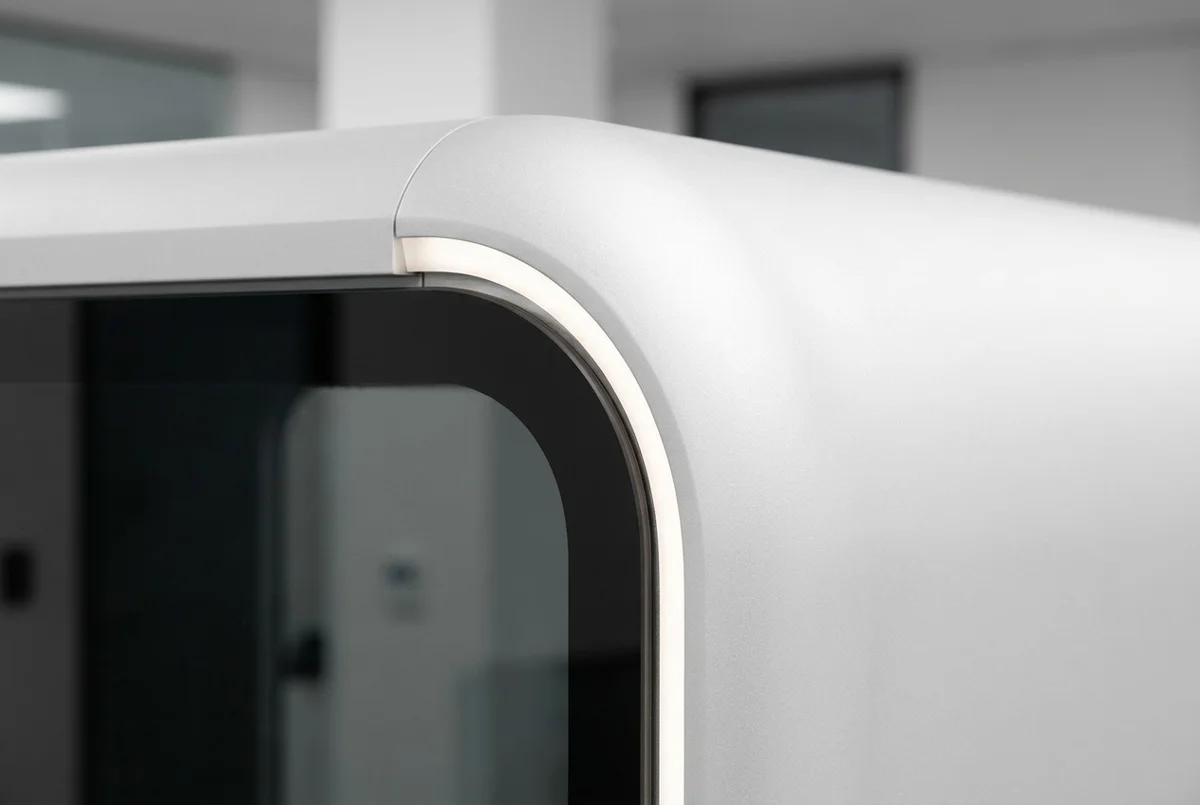
Use the public factory and quality reference page to understand the evidence available for discussion. Before committing an order, request current material relevant to the proposed model, configuration and shipment. If batch delivery matters, ask how the proposed schedule will be supported for your quantity and configuration rather than relying on a general monthly-capacity figure.
Scroll horizontally to compare all columns.
| Evidence to request | What to connect it to | Question still to resolve |
|---|---|---|
| Company and order documents | Legal seller, production location and quotation reference | Who is responsible if supply or support involves another company? |
| Model sheet and configuration drawing | Size, furniture, openings, finishes and equipment provisions | Does the quoted revision match the configuration you intend to buy? |
| Production or inspection references | The relevant product and the process shown | Which order-specific checks and records will be available before dispatch? |
| Test or conformity documents, where applicable | Named product, configuration, issuer, method and scope | Does the document apply to this configuration and destination requirement? |
| Packing and installation documents | Package schedule, component identification and assembly arrangement | Who will receive, unload, assemble and check the actual shipment? |
For an acoustic claim, request the original report and identify what was tested, under which method and in which configuration. Do not treat an unlabeled dB figure as a guaranteed result at your site. Where the intended use requires a professional assessment, follow the site-specific speech privacy review guide and agree the evidence needed with an appropriate specialist.
Make the Quotation Refer to One Defined Configuration
Two offers are comparable only when the goods and responsibilities are comparable. Establish the model or approved drawing reference, quantity, destination and intended use before comparing totals. Use the current office pod model range to shortlist a configuration; request current size, packed-shipment and commercial information for the final choice.
The quotation should distinguish the base supply, optional additions or substitutions, buyer-provided items and unresolved requirements. If a table or seat changes, establish whether it replaces the base furniture or adds a separate charge. If the buyer provides a screen, identify the mounting and connection provisions rather than assuming that the screen or its installation is included.
MobileX's custom modular pod page describes project discussions covering size, layout, finishes, branding and electrical requirements. Use those capabilities to formulate a request, then obtain written confirmation of the configuration actually offered. Specify socket and voltage requirements, and identify any proposed USB, data or equipment interfaces separately. An interface request is not evidence that every model includes that interface.
For a custom quotation, confirm the configuration, quantity, destination and required project date. The quotation should state the agreed supply scope, price and lead time. Confirm sample or minimum-order requirements and payment arrangements in the applicable quotation or contract. Historical catalog figures are useful references, not replacements for that document.
The base-scope and options comparison guide provides the detailed offer-comparison method. This supplier review adds a separate question: can the supplier substantiate and take responsibility for the scope it is quoting?
Follow the Responsibilities All the Way to the Site
A delivered package and an installed, checked pod are different handover points. Ask each party to identify where its work ends and what the next party needs to proceed. This matters especially when the purchaser, receiving site and installer are different organizations.
Scroll horizontally to compare all columns.
| Stage | Written information to obtain | Responsibility to name |
|---|---|---|
| Production and dispatch | Approved configuration, shipment schedule and pre-dispatch evidence | Supplier contact and buyer's approval contact |
| Transport and import arrangements | Agreed delivery basis, named destination and included transport services | Actual transport and import parties for the order |
| Unloading and internal movement | Packed dimensions and weights, route information and handling requirements | Site coordinator and suitably equipped local provider |
| Assembly and site connections | Model-specific instructions, supplied hardware and required local work | Assembly provider and appropriate qualified personnel for specialist work |
| Initial checks and handover | Relevant inspection instructions, issue record and acceptance responsibilities | Buyer/site representative and the responsible supplier or installer |
| After-sales work | Reporting route, applicable coverage, parts supply and replacement arrangements | Remote support contact and local inspection or replacement provider |
Agree the delivery basis and named place precisely. Ask the supplier and the actual logistics provider to explain any exclusions, destination charges and unloading arrangements in their documents. Do not compare a factory collection offer with a delivered offer as though the totals cover the same work.
For package details and site preparation, use the shipping and delivery-scope guide. For assembly questions, request the instructions for the model being quoted and discuss the installation requirements. Confirm the actual destination team and its responsibilities. Video guidance or remote support should not be interpreted as a local installation crew or a promise that any buyer can assemble any configuration without assistance.
Clarify Support Before It Becomes an Urgent Problem
Ask where to send an issue report, which identifiers are needed, and who decides whether the next step is an operating check, local inspection or a replacement part. Name the party that will carry out any physical work at the destination. Also confirm who pays for parts, transport and local labor under the applicable agreement.
Warranty coverage, its period, exclusions and the remedy offered should be stated in the actual quotation, contract or referenced warranty document. Parts availability and compatibility need to be checked for the particular configuration. A general support statement does not establish a permanent spare-parts supply or worldwide on-site service.
Use the after-sales support guide to prepare a reporting and responsibility discussion. This keeps the supplier-selection decision connected to a support arrangement the site can actually use.
A Short Decision Record for the Final Shortlist
Before selecting a supplier, create a single record that the purchasing team and site team can both read:
- Supplier and legal seller: [company names and roles].
- Quotation and configuration: [reference, revision, quantity and included items].
- Evidence reviewed: [document or image reference, date and applicable configuration].
- Delivery endpoint: [named place, agreed scope and remaining site work].
- Local responsibilities: [unloading, internal movement, assembly, connections and checks].
- Support arrangement: [contacts, applicable documents and local replacement responsibilities].
- Open items: [question, responsible person and required decision date].
If a supplier cannot resolve a material gap, compare a revised offer, a different configuration or another supplier. A lower initial figure is not necessarily a better purchase when essential work remains unassigned. Conversely, a clearly scoped offer need not include every service: it can be suitable when the buyer has knowingly arranged the remaining work.
Request a Configuration-Based Quotation
Send MobileX POD your intended use, preferred model or drawing, quantity, destination, electrical and equipment requirements, and required project date. Add what your local team will handle and where you need the supplier to clarify its scope. Include reference drawings or photos where they explain the requirement.
Request a project quotation with these details. The next useful step is a written configuration and supply-scope discussion, followed by the documents needed for your procurement decision.