OEM Office Pods: What to Approve in a Pilot Unit Before a Repeat Order
An OEM office pod pilot is useful when it answers a defined purchasing question. Before ordering it, agree which configuration it represents, what the buyer needs to inspect, and which decisions must be closed before a repeat order. A sample that looks good in a showroom is not, by itself, a complete specification for the next batch.
For furniture dealers, fit-out contractors and project procurement teams, the aim is to turn one reviewed unit into an identifiable purchasing reference. The pilot may help assess finish, assembly, everyday use or a particular customer configuration. Decide which of those purposes matters before paying for a sample.
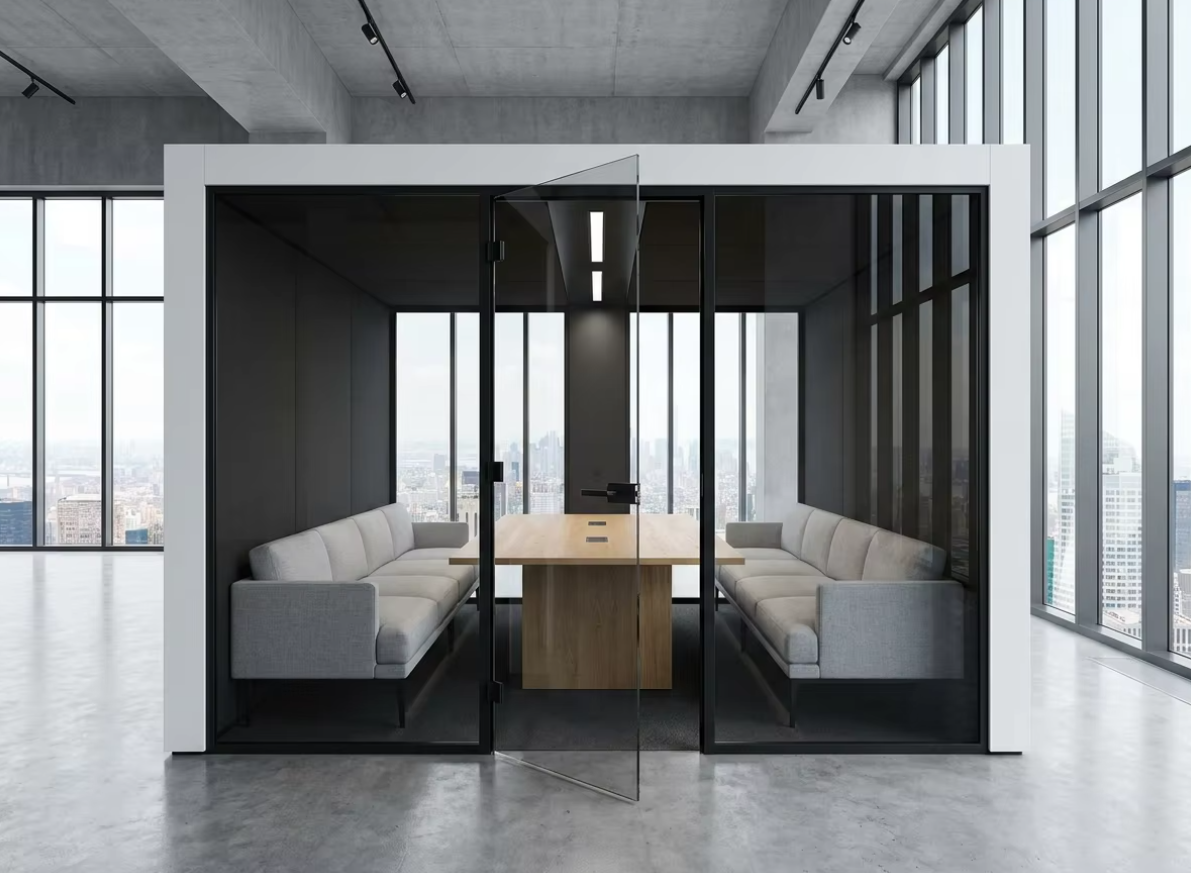
Choose the right kind of sample
A standard demonstration booth and a project-specific pilot can answer different questions.
Scroll horizontally to compare all columns on a narrow screen.
| Sample approach | Useful question | What still needs a separate decision |
|---|---|---|
| Existing standard configuration | Does the basic product suit our customers' intended use? | Any custom dimensions, finish, branding or equipment interface |
| Material or component sample | Is this particular finish or detail suitable? | The complete assembled pod and its operation |
| Project-configured pilot | Does the agreed configuration meet the buyer's review criteria? | Outstanding changes and the conditions for subsequent orders |
Choose the smallest practical sample scope that resolves the real uncertainty. If the concern is only a surface finish, a whole pod may not be necessary. If the concern is the relationship between furniture, door movement and equipment, a loose sample cannot answer it.
Confirm sample pricing, ownership, shipping, review arrangements and any later-order terms in the quotation. Do not assume that a pilot fee will be credited against a batch order or that a standard sample proves a modified configuration.
Freeze the reference before the review starts
Ask the supplier and the buying team to identify the same reference package:
- Pod model or project configuration and revision.
- Approved drawing reference and agreed supply scope.
- Finish and branding references.
- Furniture and customer-supplied equipment included in the review.
- Destination electrical requirements relevant to the supplied configuration.
- Items deliberately left outside the pilot scope.
The custom office pod drawing guide covers the earlier design decisions. The pilot review starts with those decisions and asks whether the physical unit corresponds to them. It should not become an informal redesign meeting with no record of what changed.
Give each reviewer a specific job
A dealer may concentrate on presentation and repeat-order identification. Facilities staff may focus on use and maintenance access. An installer may notice an unclear assembly step that is not obvious in a finished showroom photograph.
Use reviewers who represent the actual project, and record the configuration and conditions in which each check was made.
Check identity and supplied scope
Confirm that the unit, loose accessories and documents match the agreed package. Identify any temporary demonstration equipment. A monitor or chair used during a presentation should not silently become an assumed item in the production order.
Review assembly and physical operation
Use the applicable installation instructions and appropriately qualified people for the work involved. Record unclear instructions, missing part identification, door or furniture interference, and any access issue that needs a decision. For the earlier layout check, use the furniture working-envelope guide; the pilot review checks the physical arrangement against that agreed layout.
For planned buyer assembly, ask the intended local team to review the instructions rather than relying only on a factory demonstration. Refer to the installation requirements guide for the division between pod assembly and local site responsibilities.
Test the intended activity
Carry out the activity the buyer is purchasing the pod for: a private call, an interview, a small meeting or a particular customer workflow. Use the intended furniture and equipment where practical. Record what was used and what the participants observed.
Keep observations and performance evidence separate. A satisfactory conversation inside a demonstration booth is useful user feedback; a claimed acoustic rating needs an applicable test report and configuration. Where a rating matters to the contract, agree the evidence to review alongside the pilot instead of treating a casual listening test as certification. For example, ISO 23351-1 describes a laboratory method for comparing speech-level reduction of furniture ensembles and enclosures. Ask which method and tested configuration support the particular claim in the quotation.
Inspect finish and branding against their references
Use the agreed sample and artwork revision. The finish-approval guide covers how to establish those references. Record differences by component and location rather than writing “finish needs improvement.” A photograph can identify an issue, while the retained finish reference provides the agreed basis for judging it.
Turn findings into decisions, not an endless defect list
For each finding, choose a clear outcome:
Scroll horizontally to compare all columns on a narrow screen.
| Outcome | Meaning for the next order |
|---|---|
| Accepted as reviewed | Identify the reference that can be reused |
| Change required | Describe the change, responsible party and evidence needed to close it |
| Further information required | Identify the missing document, dimension or answer |
| Outside the agreed scope | Decide whether to request a separately quoted addition |
Keep one issue per record. Include the affected component, photograph or drawing reference, expected condition, observed condition, owner and review date. An item remains open until the buying team can identify the agreed resolution.
If the supplier changes a part or process after the review, ask whether the accepted evidence still applies. Recheck the affected feature and its interfaces. The fact that an earlier unit was accepted should not silently approve a different configuration.
Define the release for repeat orders
The final decision should say what is approved, not simply that the sample is approved.
Record the accepted configuration revision, agreed exceptions, finish references, branding files, included accessories, packing requirements and documents required with the order. Identify which open items prevent release and who has authority to close them.
Discuss how later substitutions or buyer-requested changes will be communicated. Decide which identification should appear on the order and packing records so a local support team can connect a delivered unit to the right specification.
A successful pilot supports a purchasing decision about that reference configuration. Ongoing production checks and the review of later changes remain separate parts of managing repeat orders. Buyers can review MobileX factory and quality information when deciding what project-specific evidence to request.
For resale rather than a named customer project, compare buying finished office pod stock with ordering for each project before treating an accepted pilot as a reason to commit to unallocated units.
Copy this pilot review brief
- Intended customer and use: [describe the activity]
- Reference configuration and drawing: [model, revision and date]
- Why a pilot is needed: [name the uncertainty]
- Review location and participants: [roles and arrangements]
- Supplied items and customer equipment: [identify both]
- Checks and evidence required: [list only relevant checks]
- Findings and decision owner: [record each open item]
- Repeat-order release condition: [state what must be approved]
Plan the pilot with the manufacturer
MobileX POD discusses sample, dealer and private-label projects through its custom modular project service. Whether the appropriate starting point is a standard sample, a component sample or a configured pilot depends on the proposed product and the question being tested.
Send the intended use, configuration, quantity, destination and the purpose of the pilot through Contact MobileX POD. Explain what must be known before a repeat order, and ask for the sample scope and subsequent decision process to be stated in the quotation.