Walk-Up or Drive-Through Kiosk? Choose the Service Format Before the Shell
A walk-up kiosk serves customers on foot. A drive-through kiosk serves customers who remain in their vehicles. A combined site offers both, but needs a clear handover arrangement for each. Choose between them from how customers reach the site and how an order moves to them, not from the kiosk’s exterior alone.
These are genuine product and operating choices: ROXBOX’s cafe range includes walk-up and drive-thru formats, while Dutch Bros’ order-ahead instructions distinguish collecting from a pickup window from joining a drive-thru lane. The right format for a new project still depends on its own site and service plan.
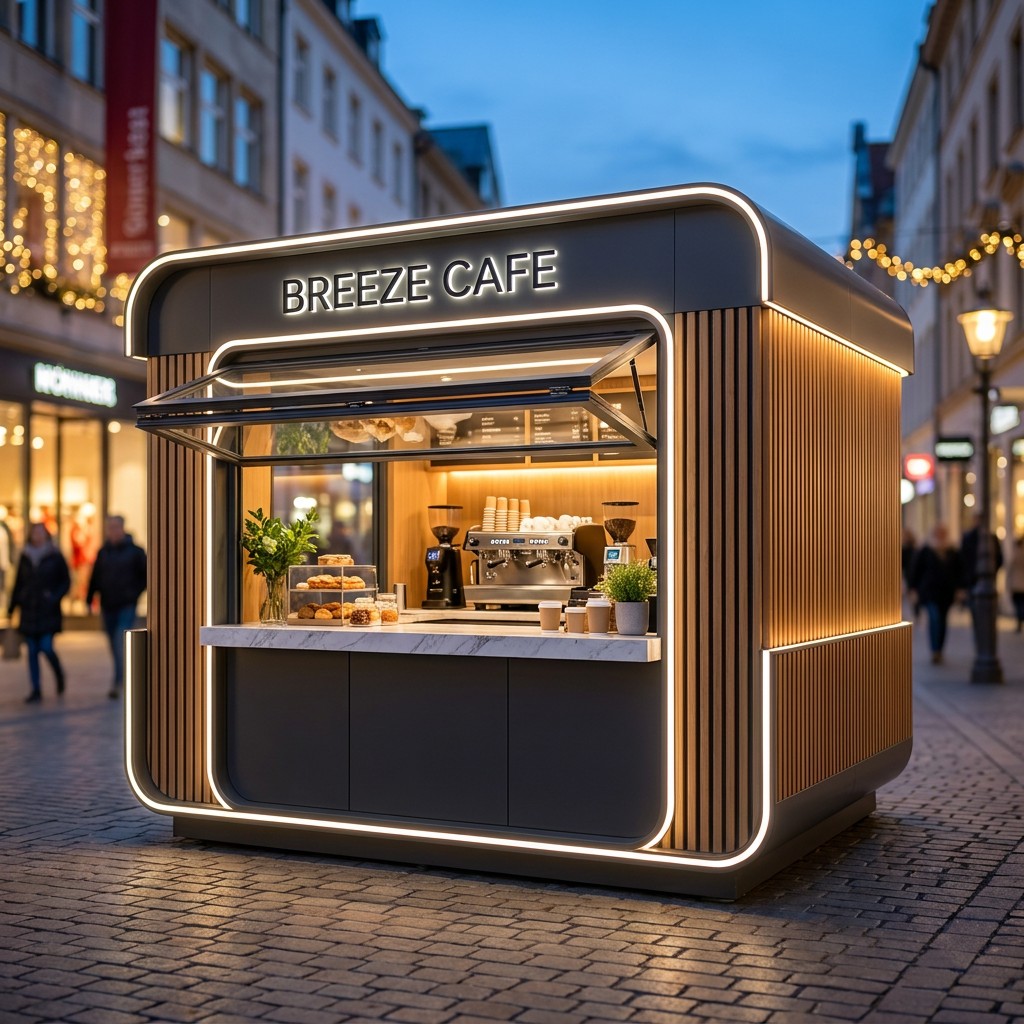
Choose the format around the customer’s arrival
Walk-up: put the counter on the pedestrian route
Walk-up service suits a location where customers already arrive on foot, such as a commercial plaza or a pedestrian approach to a workplace. It can also serve motorists who park and walk over. The useful space is not only the kiosk footprint: people need somewhere to order, wait and collect without blocking the main route or the staff door.
A broad counter frontage may help separate ordering from collection. It does not solve a poor approach: a counter facing parking movements rather than the pedestrian path can make a small purchase unnecessarily awkward.
Drive-through: design the vehicle route and service face together
Drive-through service is worth comparing when staying in the vehicle is part of the intended customer experience and the site can accommodate arrival, waiting, handover and departure. Plot those movements before choosing which wall carries the service opening. The approach direction, driver’s position and handover reach affect the window arrangement; a walk-up counter should not simply be relabelled as a drive-through window.
A compact kiosk can still require a substantial site arrangement. A longer vehicle queue cannot be accommodated by enlarging the shell alone. This is also a different decision from buying a food truck or trailer: the customer vehicle moves through the site; the selling unit need not be road-going.
Combined service: two customer routes, one deliberate operating plan
Choose a combined format when there is a useful pedestrian customer base as well as vehicle demand. Give each group an identifiable collection point and establish how staff serve both. Sharing a preparation area can be practical, but adding a second opening does not automatically double production or handover capacity.
Avoid making pedestrians cross a waiting vehicle lane simply to collect an order. The UK HSE’s vehicle and pedestrian guidance recommends separate routes wherever possible. It is a useful layout principle, not a substitute for the requirements and site design at the project destination.
Separate ordering from handing over
Draw a short sequence for each customer route: order, pay, wait, collect. Decide which steps happen before arrival and which need a staff interaction. Advance ordering can move the ordering step away from the counter, but it does not remove collection space. Dutch Bros, for example, still directs drive-thru advance-order customers into the lane, while pickup-window customers park and walk to the window.
This sequence helps select the service openings and staff positions. A single handover point may be enough for a simple operation; a separate ordering point changes how customers and orders move. Choose the arrangement from the operation, rather than treating more windows as proof of faster service.
The same menu can lead to different kiosk choices
Hypothetical comparison: an operator proposes the same drinks and prepared snacks at two sites. At a plaza, customers approach on foot and there is space beside the counter for collection. A walk-up layout keeps service facing that flow; a vehicle-facing window would add no useful customer route.
At a second plot beside a vehicle entrance, customers are expected to collect without parking. A drive-through option becomes worth assessing only if waiting and departing vehicles can be accommodated without blocking access. If a combined proposal puts the pedestrian pickup route across the queue, moving the pickup face or choosing another site arrangement is more useful than merely ordering a larger kiosk. These are planning examples, not MobileX customer projects.
Compare the kiosk quotation and the site budget separately
Hold the menu and equipment scope constant when comparing formats. Then identify what changes in the kiosk itself: service-opening positions, counter arrangement, staff circulation and equipment interfaces. Separately compare the destination-site work, such as vehicle access, waiting space, pedestrian routes, utility connections and any order or payment system selected for the operation.
A lower shell price does not establish a lower completed-project cost when one proposal depends on more site work. Conversely, vehicle demand alone does not make drive-through the better investment if customers can conveniently park and use a well-positioned walk-up counter. Compare the two as operating proposals for the same site, not just two facade images.
Develop the kiosk around the selected format
MobileX can customize outdoor kiosk dimensions, exterior and working layout. The factory can prepare agreed interfaces for customer-supplied equipment, or supply the shell, interior fit-out and operating equipment within an agreed project scope. The project drawing and quotation define the actual supply; equipment shown in a concept image is not automatically included.
View the custom outdoor kiosk range. For a project enquiry, send the proposed customer arrival route, available site dimensions, menu, main equipment and destination, together with the work you want MobileX to include. This gives the kiosk discussion a defined service format before detailed layout and pricing begin.