Office Pod Shipping Plans: Confirm the Packed Shipment and Delivery Scope
Plan an office pod shipment from the actual packed order, not only from the assembled product dimensions. Before booking transport, obtain the package count, each package's external dimensions and gross weight, the packing list and the agreed delivery boundary. Then check that the receiving site and the people responsible for unloading, internal movement and installation can handle that shipment.
Those details connect a product quotation to a workable arrival plan. A model name is a useful starting point, but changes to furniture, equipment, finishes or the way components are packed can require different shipment information. Keep the order reference attached to the logistics data so that the forwarder, site team and supplier are discussing the same configuration.
Start With the Transport Form and the Order
Ask whether the quoted pod will travel as an assembled unit, partly assembled sections or components for site assembly. Confirm this for the selected model and order; do not assume that every enclosure has the same shipping arrangement.
For a component shipment, find out which parts share a package and which travel separately. Doors, glazing, furniture, electrical accessories and fitting kits need a clear place in the packing list. For an assembled or partly assembled shipment, obtain the applicable handling and access information before deciding whether that form suits the destination.
If the product configuration is still open, use the office pod and meeting booth range to narrow the model and intended use first. Keep a provisional shipping estimate labelled as provisional until the supplier confirms the packed configuration. A product dimension on a drawing is not a package dimension, and an enclosure weight is not automatically the shipment's gross weight.
Request Package-Level Data, Not Just a Total Volume
A total cubic volume helps describe a shipment, but it does not show whether the longest package can pass through a doorway or whether one heavy package suits the planned unloading equipment. Request a numbered package schedule and keep the units explicit.
Scroll horizontally to compare all columns.
| Information to request | What the supplier should identify | What the buyer uses it for |
|---|---|---|
| Order and packing revision | Model, quantity, agreed configuration and date of the packing information | Keep the freight quote tied to the actual order. |
| Transport form and package count | Assembled, sectional or component arrangement; total packages and any separate accessories | Arrange collection, receipt and a completeness check. |
| Package identity | A distinct package reference linked to the packing list | Recognize an individual crate without guessing its contents. |
| External dimensions | Length, width and height of each packed item, including its packaging | Review vehicle, doorway, lift and temporary storage constraints. |
| Net and gross weight | Clearly labelled values, with gross weight for each package and the shipment total | Give the handling team the relevant loads. |
| Handling and storage conditions | Applicable orientation, lifting or handling information, stacking restrictions and storage requirements | Let the responsible contractor plan suitable equipment and methods. |
| Contents and documents | Component list, accessory locations and the corresponding assembly instructions | Reconcile the shipment with the configuration and installation plan. |
| Current status | Estimated or confirmed data; outstanding items and the date final information will be issued | Avoid treating early freight assumptions as final release information. |
Ask the forwarder to explain how the shipment data is used in its quotation, including any minimums, chargeable-volume method or service exclusions that apply. Do not derive a freight charge or container quantity from a historical model table alone.
If the configuration changes after the first freight quotation, send the revised package schedule to the parties relying on it. They should confirm whether the vehicle, equipment, route or price needs review. A revised total alone may conceal a change to the largest or heaviest package.
Connect the Packing List to the Parts Needed on Site
The packing list should let the receiving team relate package references to the ordered configuration. For several pods, ask how shared-looking panels, furniture and fitting kits will be distinguished. The goal is to avoid discovering during assembly that a required accessory is in an unrecognized package or assigned to another unit.
Request the assembly document reference and identify where installation information will be available. If a video or remote guidance is included in the agreed scope, confirm which configuration it covers and who will coordinate questions. Access to guidance and provision of an on-site installation crew are separate arrangements.
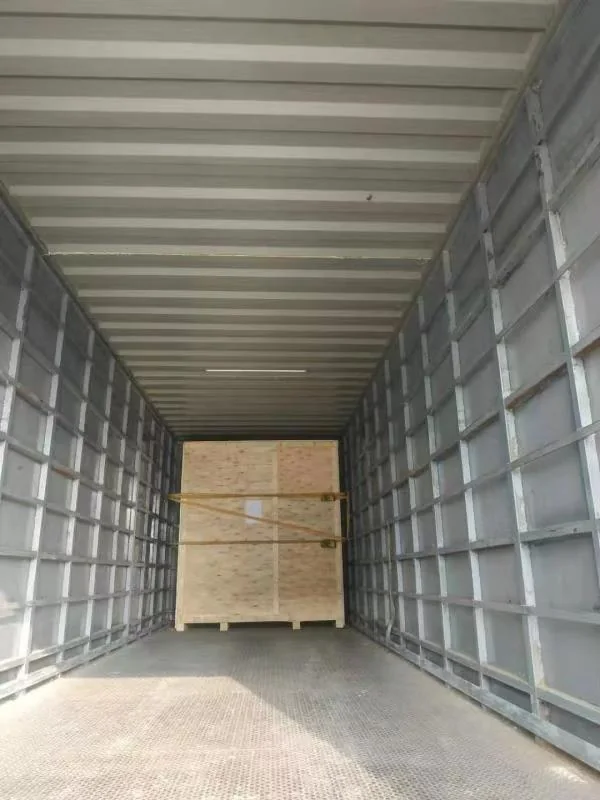
Agree which shipment photographs would be useful: package exteriors and references, the arrangement of components before closure where available, or a view that relates the completed packing to the list. Treat these as records for the identified order. A general factory photograph cannot establish what is inside your crates or whether all accessories have been included.
Keep original documents available to the people handling the order, but share customer details and shipment identifiers only with those who need them. Public product-reference pictures are not a substitute for order-specific logistics records.
Ask What the Packaging Is Designed to Address
Discuss the intended route, handling stages and expected storage with the supplier and logistics provider. Ask for the packaging specification and applicable instructions for the actual goods, including protection of exposed surfaces, edges and fragile components. A wooden exterior alone does not establish resistance to impact, water exposure or repeated handling.
Where wood packaging is involved, ask what materials are used in the cases, pallets, supports and dunnage. The IPPC's ISPM 15 addresses pest risks associated with wood packaging in international trade. It includes specified exemptions for packaging made wholly from processed wood materials such as plywood. That distinction depends on the materials actually used, not on a photograph or on calling the whole package a "plywood box."
Have the responsible supplier or packing provider identify the applicable treatment or marking evidence, and have the importer or customs adviser check destination requirements. A statement about one material does not settle the status of additional solid-wood supports or dunnage. Phytosanitary requirements and physical protection are different questions; neither should be presented as a guarantee of damage-free transport.
Do not open, alter or reinforce a package on an improvised basis to make it fit a route. If the plan requires unpacking or repacking before the final location, agree the protection, responsibility and updated handling information first.
Separate Freight Delivery From Getting the Pod Into Use
Write the delivery boundary precisely. A port, a building address, an unloading area and an installation room are different destinations for planning purposes. List the work that remains after the contracted transport endpoint.
The ICC's Incoterms 2020 guidance explains the allocation of delivery obligations, costs and risks. Where an Incoterms rule is used, record the rule, the named place or point and the agreed edition in the contract. For example, ICC distinguishes DAP from DPU by the seller's unloading obligation. A phrase such as "door delivery" is less precise than the actual agreed scope.
Ask the contracting parties or their trade advisers to select and explain the applicable term. Do not assume that a term offered for one destination is available for another, or that transport to an address includes internal movement, assembly or electrical work. Record any additional service explicitly rather than relying on shorthand.
Scroll horizontally to compare all columns.
| Stage | Responsibility to name | Information needed before the arrangement is confirmed |
|---|---|---|
| Collection and export handover | [Party arranging collection and loading; export contact] | Collection point, package schedule, access and shipment documents. |
| Main transport and destination formalities | [Transport arranger; importer or broker] | Route, agreed trade term, destination requirements and included charges. |
| Arrival and unloading | [Carrier contact; receiving-site lead; unloading provider] | Appointment, vehicle access, package weights, unloading area and agreed equipment. |
| Internal movement and storage | [Local handling contractor; facilities contact] | Route through the building, restrictions, storage conditions and protection of the premises. |
| Assembly and site connections | [Installation lead; appropriate local trades] | Correct assembly information, included services and site electrical requirements. |
| Receipt exceptions and missing items | [Buyer coordinator; supplier; carrier or insurer as applicable] | Reporting channels, applicable documents and deadlines from the actual arrangements. |
Use the quotation-scope comparison guide to separate the base product, options and buyer-responsible work. This shipment table adds the parties and information needed at each physical handover; it is not a substitute for the contract.
Check the Receiving Route Before the Vehicle Arrives
Walk the intended route with the people responsible for the premises and handling work. Use the confirmed packed dimensions first. Then, where unpacking is proposed, use the relevant component dimensions and handling instructions for the remaining route.
Check the delivery entrance, turning points, corridors, lift door and car, changes in level and the final installation area. Obtain the applicable lift and floor information from the building operator. Package size alone does not establish that a lift, floor or handling device is suitable: the responsible team also needs the load and its planned handling arrangement.
Identify a receiving area that fits the delivery appointment and does not conflict with normal building activity. Arrange a suitable place for temporary storage and enough access to identify the packages. Confirm who provides local personnel, approved handling equipment, protection for the premises and disposal of packaging after its records are no longer needed.
In Great Britain, HSE's loading and unloading guidance emphasizes advance agreement between companies and exchange of load information. Apply the requirements and competent handling arrangements appropriate to the project location. The shipment data should enable that planning; this article does not specify lifting points, equipment capacities or a loading method for a particular pod.
Before the delivery date is committed, ask the site team to identify any unresolved access or handling issue. Separate expected dispatch, transport arrival, the site receiving appointment and readiness for installation. Request dates applicable to the order instead of treating a previous production or transit estimate as a promise.
Record Receipt Without Guessing What Happened in Transit
Name a receiving coordinator and agree how they can reach the supplier and transport contacts. On arrival, follow the applicable carrier and site procedure, identify the shipment and compare the package references and count with the documents. Where it is safe to do so, record the exterior condition and any visible exception before it is obscured by further handling.
Useful records include the delivery date, affected package reference, a clear overall view and a closer view of the visible issue. Describe the observation precisely, such as an opening in a case or a wet area on its exterior. Do not infer the condition of hidden contents from the exterior alone, and do not attribute responsibility without evidence.
If the load or packaging appears unstable or unsafe, keep people clear and have the responsible handling personnel assess it. Do not remove restraints or open a damaged package simply to obtain a photograph. Follow the actual contract, carrier and insurance process for noting exceptions, notification and any inspection; do not assume one reporting deadline applies to every shipment.
Retain relevant packaging and records when required by that process, subject to safe storage and the responsible party's instructions. Record where each package is placed so that the assembly team can reconcile its contents and report a discrepancy against the correct reference.
Once receiving and access are settled, use the installation and electrical guide for the next-stage discussion. A future move of an existing pod belongs in the relocation-method comparison; evaluation of a particular pre-owned unit belongs in the used-versus-new comparison.
Send a Delivery Brief That Can Be Confirmed
Copy these fields into your project correspondence and attach the relevant documents. This is a buyer's tool, not a statement that every order follows one fixed internal form.
- Order, configuration and quantity: [reference and revision]
- Destination and exact transport endpoint: [country, address, agreed place or point]
- Trade term and edition, if used: [contract reference]
- Shipment data: [package schedule; estimated or confirmed; document date]
- Receiving route: [entrance, turns, lift, levels and known restrictions]
- Unloading and internal movement: [responsible parties; proposed arrangements for their review]
- Storage and installation: [location, readiness, assembly and local-trade responsibilities]
- Documents and records required: [packing list, component references, instructions and applicable destination evidence]
- Dates and open items: [required receiving date; unresolved information; owner and response date]
- Receipt exception contacts: [supplier, carrier and other responsible contacts]
For a new MobileX order, send the brief through the contact page. Refer to the manufacturer data page for product context and the custom modular pod page when the configuration needs discussion. Ask for the packing and delivery scope applicable to that quotation, then share the confirmed information with the people who will receive and install it.