Coffee Kiosk, Food Truck or Trailer? Choose for the Way You Trade
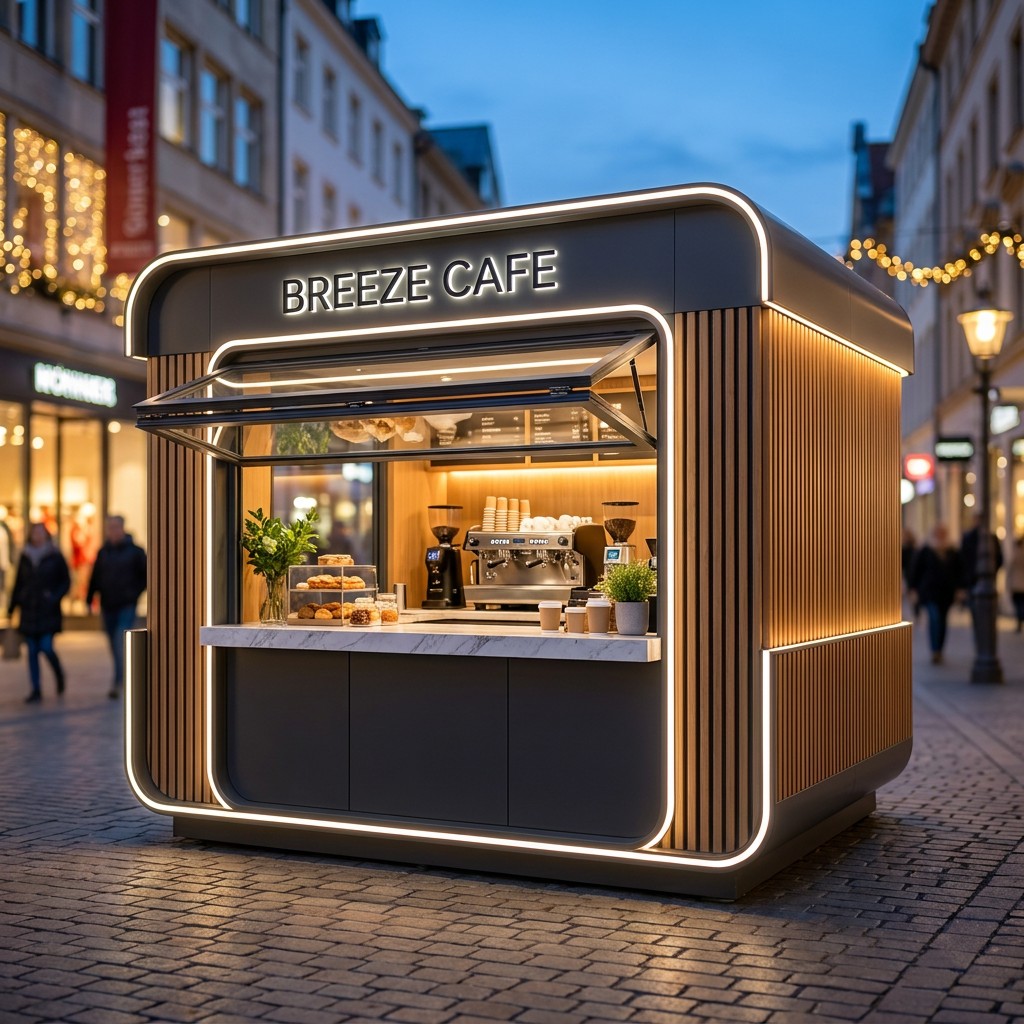
Choose a site-based modular kiosk when the sales location is the centre of the plan. Compare a food truck or concession trailer when moving between trading locations is part of the operation. The useful starting point is your trading calendar, menu and equipment, not which empty shell has the lowest advertised price.
A kiosk delivered to a site and a kitchen designed to travel on the road are different purchases. Occasional relocation at the end of a lease is also different from moving every trading day. This guide helps operators and commercial-site buyers compare those decisions before developing the detailed counter layout.
Start with where the business will trade
Write down the intended trading locations, how long you will stay at each one, and where the unit goes when closed. Separate a confirmed location from a possible future event. A plan that depends on moving twice a week needs a different comparison from a six-month concession at one address.
| Format | When to shortlist it | What belongs in the comparison |
|---|---|---|
| Site-based modular kiosk | A dedicated serving point at an agreed location, with delivery and any later removal planned as project operations. | The enclosure and work layout, placement, site connections and end-of-term removal. A transportable enclosure is not automatically a road-towable unit. |
| Food truck | A route or event schedule where the kitchen travels as part of a powered vehicle. | Both the kitchen and the vehicle: driving arrangements, parking, servicing and a plan for interruption when either needs work. |
| Concession trailer | Trading requires a towable unit and suitable towing arrangements are available. | The kitchen plus the towing vehicle or service, movement and parking space, setup work and storage when not trading. |
The basic vehicle distinction is described in Concession Nation’s truck and trailer comparison: a truck combines the vehicle and kitchen, while a trailer is hauled by another vehicle. Its product specifications and prices belong to that supplier; compare your own shortlisted offers on the same operating brief.
If the site owner requires removal outside opening hours, a fixed-position kiosk may not fit the operating arrangement. If the unit can remain on site for the whole concession, road mobility may have little day-to-day value. Establish that practical constraint before paying to refine three different designs.
Keep the menu and working setup equal
Use one equipment schedule for every offer. For a coffee operation, that might identify the selected espresso machine, grinder, refrigeration, wash facilities and storage, with each item’s dimensions and service requirements. A drinks-only proposal and one designed for cooking are not equivalent merely because both have a serving window.
Place the same staff tasks in each plan: taking payment, making the order, handing it over and replenishing stock. Include equipment with doors open and the route used for restocking. A larger advertised outside length does not settle whether two people can carry out those tasks together.
The kiosk customer-flow and restocking guide develops that working-layout test. Here, use the result as a common requirement across the kiosk, truck and trailer offers instead of relaxing it to make one headline price look better.
Compare one trading period, not three shell prices
Choose a comparison period that matches the actual plan, such as the first season or the initial site agreement. Build each total from the same four groups:
- Ready-to-use purchase: the quoted enclosure or vehicle, selected equipment, fit-out and any completion work still outside the offer.
- Getting into position: delivery, placement or collection, site preparation and initial service connections. For a trailer, include the towing arrangement rather than assuming it is already available.
- Running the planned locations: the applicable site fees, utilities, travel, storage, maintenance and labour spent setting up and closing down.
- Leaving or changing location: disconnection, removal, transport and reinstatement where included in the agreement. Count resale income only as a separate assumption, not as a guaranteed deduction.
For repeated moves, multiply the quoted or measured cost of one move-and-setup cycle by the planned number of cycles. Keep travel and staff time visible even when no separate invoice is issued. For a kiosk staying in one place, budget its initial placement and eventual removal rather than applying a road-vehicle travel assumption.
Keep unresolved amounts outside the confirmed subtotal. The result should show both the priced total and the items still capable of changing the decision. Neither a truck’s mobility nor a kiosk’s fixed position proves that it will be cheaper, faster to open or more profitable.
Two hypothetical plans, two different priorities
One location for the season
A buyer plans to serve coffee at one agreed commercial site for six months. The unit can remain overnight, and the same two-person task layout is used for all offers. A modular kiosk and a parked trailer are both shortlisted. The buyer compares completed equipment scope, placement and connections, plus the cost of removing each option when the agreement ends. The trailer’s wheels alone do not settle the choice.
A changing event schedule
A different buyer plans twelve events at several locations. Travel and repeated setup are part of the business, so a truck or trailer is the stronger starting point for the comparison. A site-delivered kiosk would need a separately established transport and setup plan for that schedule. These are planning examples, not MobileX customer projects or forecasts of sales.
Turn the site-based option into a MobileX quotation
MobileX manufactures custom outdoor commercial kiosks for coffee and beverage service and other commercial uses. Size, doors, service windows, counters, layout, exterior colour, branding and electrical configuration can be discussed around the project. The quotation identifies the supplied configuration and the equipment or local work provided separately.
For this route, send the proposed location and trading period, menu, equipment schedule, staff tasks, site plan, quantity and required date. Include whether the kiosk stays overnight and whether later relocation is part of the plan. Use the equipment and supply-scope checklist to organize the detailed quotation inputs.
Send MobileX your kiosk project brief with the destination and the scope you want supplied. This gives the team a specific site-based proposal to price alongside the other trading formats you are considering.