Office Pod ROI: Compare Costs, Usage and Business Value
MobileX POD insights for modular office pods, lactation pods, outdoor kiosks and custom project buyers.
Do not estimate office-pod ROI from the pod price or a universal productivity percentage. Start with the workplace problem the purchase is meant to change, then keep three things separate: project cash expenditure, actual use of the new space, and benefits that may matter without having a defensible monetary value.
For a current purchase decision, the useful data is the buyer’s current quotation, current site costs and observed demand. A fixed payback period from another office cannot replace those inputs.
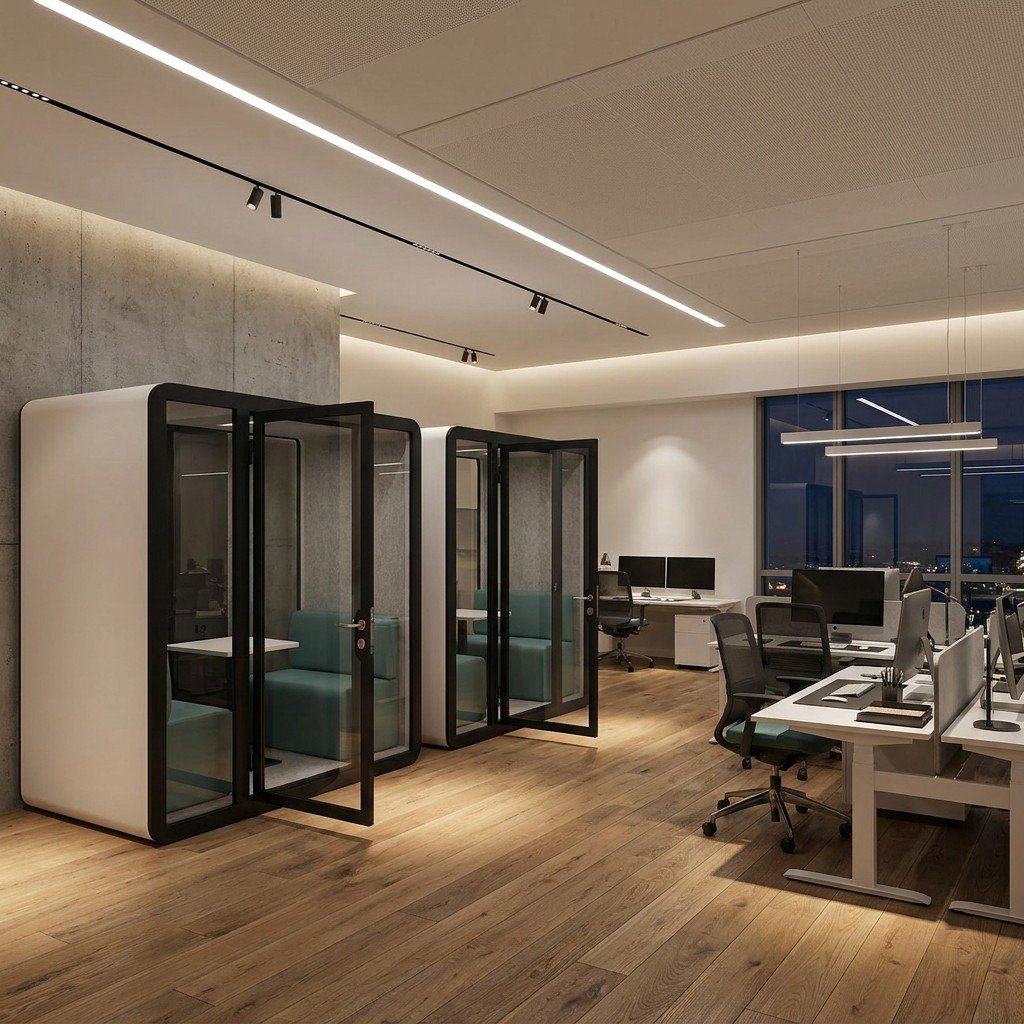
First define what the purchase should change
An office pod is not automatically an investment just because it is used. The buyer should first identify a recurring shortage of suitable enclosed space: for example, private calls repeatedly occupying larger meeting rooms, one-person video calls competing with group meetings, or focused tasks that cannot be completed in the available rooms.
If suitable rooms already have enough capacity at the relevant times, changing booking rules or using those rooms may be sufficient. The office-pod quantity guide shows how to compare simultaneous demand with usable existing rooms before adding capacity.
Keep three value categories separate
1. Cash expenditure
Pod, options, freight, import charges where applicable, unloading, assembly, electrical or other site work, energy, maintenance and any planned relocation.
2. Space use
The number of suitable sessions the pod can serve, when those sessions occur, and whether it releases an existing room for work that needs more seats.
3. Hard-to-monetize outcomes
Less disruption, easier access to an enclosed destination, user choice and future layout flexibility. Track these separately unless finance accepts a valuation method.
This separation prevents a common error: converting every booking into a productivity saving even when no financial benefit has been demonstrated.
Build the cost boundary from named sources
The comparison is only useful when both the pod option and its alternatives include the same project boundary. Use the current supplier quotation for the pod scope, logistics documents for delivery costs, and local quotations for site work. Do not mix an EXW product reference with a fully installed room cost.
Scroll horizontally to view all columns.
| Input | Use this source | How to treat it |
|---|---|---|
| Pod and selected options | Current supplier quotation for the exact model, quantity and trade term | Cash expenditure; keep optional items separate |
| Freight, import and delivery | Current forwarder, customs and local delivery information for the destination | Cash expenditure; state what is included and excluded |
| Unloading, assembly and site work | Named local service or contractor quotation for the actual site | Cash expenditure; do not assume it is included in the pod price |
| Energy and maintenance | Agreed operating modes, local tariff and a stated maintenance assumption | Operating cost; keep unknowns visible |
| Sessions that need enclosed space | Room conflicts, bookings or a short observation period at the relevant busy times | Usage evidence; distinguish separate sessions from seats |
| Financial benefit | A finance-approved method, such as an avoided cost with a documented alternative | Monetize only when the link to cash or a recognized cost is supportable |
For operating energy, define the running modes before applying a tariff. The office-pod energy budgeting guide explains that calculation without assuming one universal duty cycle.
Use scenarios before calling the result ROI
A scenario can show which assumptions matter without pretending to predict a guaranteed return.
Hypothetical example only: a buyer compares a two-pod package with a three-year evaluation period. The assumed project cash is USD 18,000: USD 12,000 for the quoted product and options, USD 3,000 for freight and destination costs, USD 2,000 for unloading, assembly and site work, and USD 1,000 as the total operating-cost allowance for the entire three years. These are round teaching assumptions, not a MobileX quotation or a customer result.
The usage volumes are pre-purchase assumptions, not verified customer records. At 10 qualifying sessions per week across both pods combined for 46 working weeks each year, the package is estimated to serve 1,380 sessions in three years. The estimated cash cost is about USD 13.04 per qualifying session. At four qualifying sessions per week across both pods combined, it is estimated to serve 552 sessions and the estimated cash cost is about USD 32.61 per qualifying session.
Estimated cash cost per qualifying session =
estimated total project cash cost over the evaluation period /
estimated qualifying sessions over the same period
A qualifying session is one that genuinely needs the new enclosed destination and is not already served by a suitable room. Estimated cash cost per qualifying session is neither ROI nor a price charged for one use. After deployment, the buyer can update the estimate with actual costs and actual usage records; comparisons should keep session duration and task definitions reasonably comparable.
To calculate a projected or verified ROI percentage, the buyer also needs a defensible monetary benefit. Forecast benefits and benefits verified after deployment should be labelled separately.
ROI (%) =
(monetary benefits over the evaluation period − total project costs over that period) /
total project costs over that period × 100%
This is a simple cumulative ROI over one evaluation period, not an annualized return. Monetary benefits should be entered before project costs are deducted; otherwise the same costs would be subtracted twice. If the monetary benefit cannot be supported, report utilization, estimated cash cost per qualifying session and the separate non-financial outcomes instead of manufacturing an ROI percentage.
Compare the alternatives on the same boundary
The relevant alternative may be an existing room, a scheduling change, another pod mix or a built room. Compare options that can perform the same job. The pod and drywall comparison explains why both proposals need the same usable-space scope, while the office-pod options guide helps remove features that do not solve the stated task.
MobileX’s standard office-pod range uses a six-face assembly with 12 structural connection screws; complete installation also includes the agreed power connection and installation of interior acoustic material. That construction can be relevant when comparing installation scope or future disassembly, but it does not establish a universal labor time, relocation cost or financial return. Special custom products may use a different method.
Measure the outcome without inventing a productivity gain
Before purchase, record the busy periods, the sessions that lack a suitable destination and the alternatives people currently use. After installation, compare the same measures. Useful observations can include whether room conflicts changed, whether the pod is used for the intended task, and whether larger rooms became available for group work.
Employee feedback on interruption, choice and usability can inform the decision, but it should not be converted into labor savings unless the organization has an accepted method. An acoustic test report can describe acoustic performance under its stated method; it does not prove a productivity percentage, retention result or payback period.
Send the inputs that make the comparison possible
For a project-specific quotation, provide the intended tasks, expected simultaneous sessions, available rooms, preferred model or available footprint, quantity, destination, selected options and the cost boundary you want quoted. MobileX can return the supplier scope as a separate input to the buyer’s wider business case.
The final business case belongs to the buyer because local logistics, site work, operating assumptions and the value of alternative space differ by project.
Need a custom modular pod solution?
Send your product type, size, quantity, destination country and customization needs. MobileX team will recommend a suitable model and quotation.
Use the current MobileX POD buyer resources before quoting
This article is kept as an older workplace insight. For current office pod, phone booth, office phone booth and soundproof booth buying decisions, use the updated model data, comparison guide, catalogs and quotation path below.