How Many Office Pods? Balance Calls and Meeting Capacity
Choose the number of office pods by the private activities that must happen at the same time, not by the number of desks in the office or the total seats shown in a pod catalog. Two unrelated calls need two separate spaces. A four-seat meeting booth is one shared room, not four independent phone booths. Start with those competing uses, subtract suitable rooms that are genuinely available, and compare the remaining need with a mix of single-person and meeting booths.
This is a buying decision about the mix of spaces. It is different from choosing a particular model’s dimensions or deciding how users book it. The aim is to avoid both a shortage of separate call spaces and a larger meeting enclosure that is bought for an occasional event but mostly used by one caller.
Count independent sessions before seats
List the activities that need an enclosure: individual calls, online meetings, two-person conversations and small-group discussions. People joining the same conversation can share a suitable room. People taking unrelated calls generally cannot share it without changing the task. Do not count an open lounge or a four-seat pod as several separate private rooms simply because it has several seats.
Also distinguish a genuine need for an enclosed space from work that can use an existing desk or quiet area. If a person needs a surface for focused desk work but does not need to speak, reserving the last call booth for that session may leave nowhere for a scheduled call. The calls versus focused desk work guide explains the setup differences; here, the question is which activities compete for the same purchase.
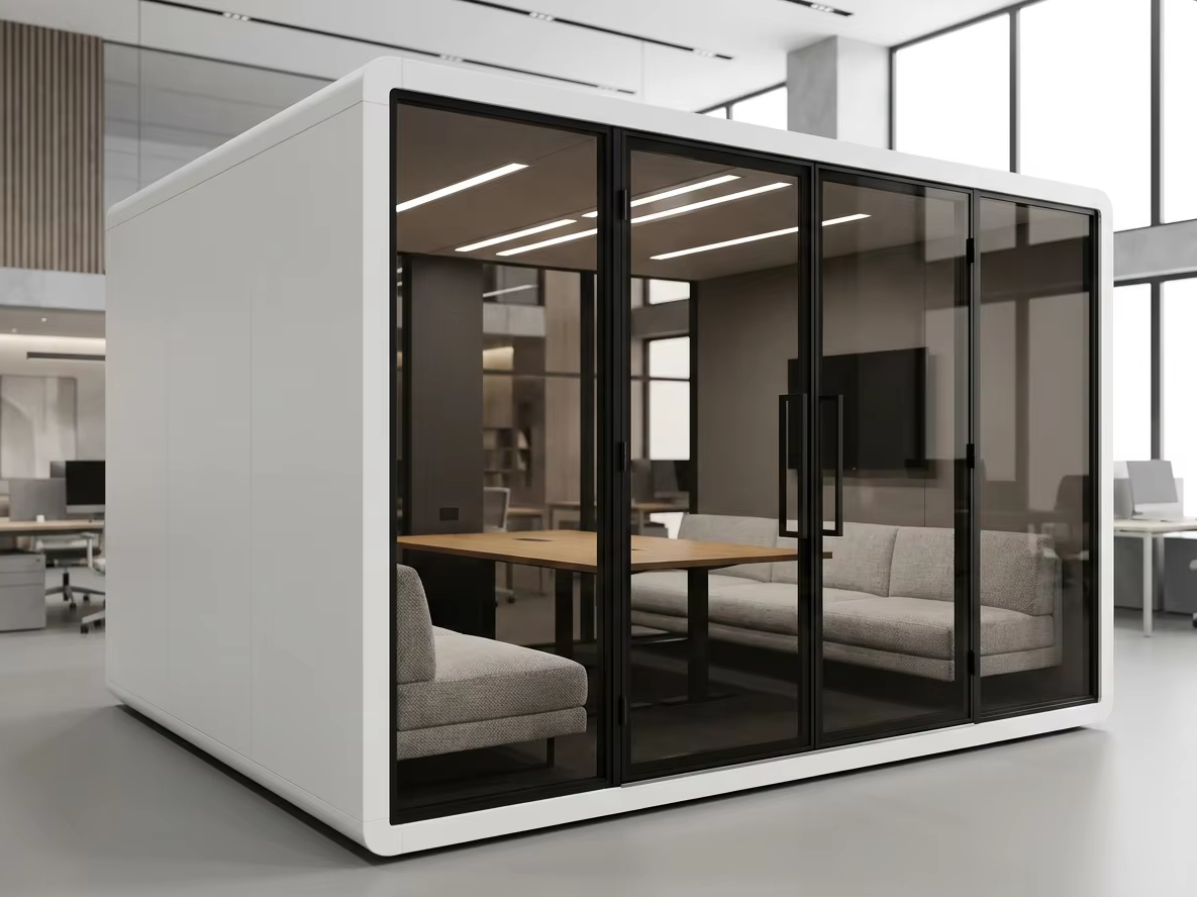
Use the same busy period for every type of demand
Look at representative busy periods for the teams using the space, including the days when more people attend the office. Record the start and end of each needed session and the kind of enclosure it requires. An observation of an occupied booth alone misses calls that moved to a corridor, a meeting that was postponed or someone who chose not to request a room because none was available.
Keep those unmet needs separate from bookings that nobody used. Record the activity and whether a suitable space was available; the exercise does not require recording conversation content, names or audio. Use a range of plausible busy periods rather than treating one unusually quiet or exceptionally busy day as a permanent requirement.
Most importantly, compare concurrent uses on the same timeline. Do not add Monday’s maximum call count to Friday’s maximum meeting count if they never happen together. Conversely, a daily total or an average duration will not reveal a short period when several people all need separate rooms. Add time between sessions only where the actual operating plan needs it, and make that allowance explicit.
| Observed pattern | What to count | Purchase implication | What could change the decision |
|---|---|---|---|
| Several unrelated calls overlap | Separate sessions during the same time window, including unmet requests. | Evaluate more single-person spaces, rather than only adding seats in one enclosure. | Calls that can genuinely use another suitable room or take place at a different time. |
| Calls overlap with two-person conversations | The simultaneous demand for single-person spaces and a shared room. | Compare a mixed package with an all-single-person package. | A nearby meeting room that is actually available during those same periods. |
| A larger group meets occasionally | How often that group requires the space, and what would be displaced. | Evaluate a group pod if existing rooms cannot serve that need; do not size every pod for the rarest event. | A reliable existing room, a different meeting time, or recurring group use that makes it a daily requirement. |
| One person occupies a meeting space for a long session | Whether that task needs the meeting layout or only a suitable single-person workspace. | A separate workspace may release the shared enclosure for meetings. | Equipment, working-surface or access needs that rule out the smaller option. |
| Different teams peak at different times | Whether users can reach and use the same spaces when needed. | Shared capacity may serve both teams without adding their separate peaks. | Distance, restricted access or overlapping schedules that make the sharing assumption unrealistic. |
Subtract usable alternatives, not rooms on a floor plan
A conference room can reduce the number of new pods needed only if it suits the activity and is available at the relevant time. A room occupied by another team, beyond a restricted access point or too far from the work area may not be a practical alternative. A quiet corner is not automatically suitable for a spoken meeting, and an empty room with unsuitable equipment may not serve a video call.
Compare two cases before adding units: the current arrangement, and an arrangement that makes appropriate existing rooms available for the work. This may reveal that one additional single-person space is more useful than another group room, or that meeting capacity is the real gap despite many calls being visible. Do not assume existing rooms are free just because they already exist; any necessary changes belong in the project comparison.
A hypothetical comparison: three packages with four seats
The following is a planning example, not a MobileX project or a capacity recommendation. Between 10:05 and 10:20, an office needs two unrelated individual calls and one two-person conversation. No existing room is available for that window. A four-person workshop later in the day already has a suitable conference room. Assume each proposed enclosure fits its stated activity; this table does not establish any model’s dimensions or included seating.
| Package | Separate spaces | What it can serve in the stated window | Remaining limitation |
|---|---|---|---|
| A: four single-person pods | Four enclosures, each intended for one person. | The two individual calls can each use a separate pod. | The two-person conversation still needs a shared room. Two empty single-person pods cannot be combined into one conversation space. |
| B: two single-person pods and one two-person pod | Three enclosures with four planned seats in total. | Two separate calls and the two-person conversation can take place concurrently. | A later group of four still needs another room; in this example the existing conference room provides it. |
| C: one four-person meeting booth | One shared enclosure with four planned seats. | The two-person conversation, or one of the unrelated calls, can use the enclosure. | Four seats do not provide three independent conversations. More separate spaces would still be needed. |
Package B matches this particular demand pattern. It is not automatically the cheapest, smallest or best package for another office. If the two-person conversation disappears, package A becomes more relevant. If regular four-person meetings lose access to the existing conference room, package B no longer resolves the whole requirement. Compare the task coverage first, then compare the space and full quoted scope of the packages that remain viable.
Choose the mix, then shortlist the models
Prioritize more single-person pods when separate calls are the recurring shortage and the existing meeting rooms cover shared conversations. Prioritize meeting capacity when people already have adequate call spaces but pairs or groups regularly cannot find a suitable shared room. A mixed purchase makes sense when both needs occur together; it does not require every department to receive an identical set.
For MobileX’s standard office range, MP1 and MP1+ provide single-person starting points, while MP2 and MP3 are the meeting booth starting points. Use the four-model comparison after deciding which kinds of space are needed. A model label or a product image does not establish the final furniture, equipment or usable internal layout.
When one enclosure must serve both daily pairs and occasional groups, the two-person versus four-person guide addresses that choice. This quantity exercise instead asks how many separate enclosures are needed alongside it. If none of the standard configurations fits the necessary activity, discuss a custom modular configuration; custom size does not turn a single room into several independent spaces.
Compare viable packages within the space and budget
Only compare prices after rejecting packages that cannot serve the required activities. A cheaper package is not equivalent if it leaves the main meeting demand unresolved. Equally, extra group seats may not justify the purchase when the unmet need is separate calls.
Place each viable package on the actual plan. Compare its enclosures together with door operation, the space needed to approach and use them, and the remaining circulation. More small enclosures mean more separate entrances; a larger enclosure changes the available layout in a different way. Do not infer the usable project footprint from the sum of catalog external dimensions alone. Once the mix is set, compare each shortlisted model’s external width, depth and height on the office phone booth product page with the marked floor positions and the site’s lowest relevant overhead obstruction. Trace the route to the placement area and check assembly access for the proposed configuration; the site-fit guide explains when a different position, standard model or custom dimension merits review.
Use the price guide for reference model prices and the quotation-scope guide to compare equivalent equipment and delivery scope. This article does not assign prices, a space-saving percentage or a return on investment to the hypothetical packages.
Make the first purchase answer a clear question
Where future office attendance is uncertain, compare a first purchase that resolves the known shortage with a later expansion option. Do not assume that a trial, discounted sample, reserved production slot or a repeat configuration is included; commercial terms remain part of the actual offer. The useful purchasing question is specific: does the proposed mix cover the identified concurrent activities without displacing another necessary use?
After the spaces are in use, compare unmet requests with the same demand categories used for the purchase. If calls still lack rooms while the meeting booth is empty, first examine whether people can access the right spaces and whether the original mix fitted their tasks. If every suitable space is consistently occupied during the required periods, additional capacity may be the relevant next purchase. This is a decision check, not a claimed utilization target or a promise of improved productivity.
After the first spaces are in use, our office-pod rollout review shows how to separate an access or task-fit problem from a genuine need for another pod.
A short brief for comparing the purchase
Use the following fields to request comparable packages, without sending confidential meeting content:
- Required activities: separate calls, pairs and groups; distinguish routine needs from occasional events.
- Concurrent demand: the activity mix in each representative busy period, not separate peaks added together.
- Existing alternatives: rooms that are suitable and available during those same periods, plus any unresolved access assumption.
- Proposed packages: number of separate enclosures and intended activity in each, with the demand each package leaves unmet.
- Project limits: available locations, usable access and circulation, required equipment and a budget range if established.
- Purchase decision: which need must be solved now, and what change would justify a later addition.
Send the activity mix and location plan for an office-pod quotation. Ask for packages that meet the same stated demand before comparing their price. That produces a more useful shortlist than either a universal pod-to-employee ratio or a catalog seat count.