Rent or Buy Office Pods? Compare the Full Project Term, Not the Monthly Figure
Choose between renting and buying office pods by comparing the same usable configuration over the same project period, including how it arrives, who supports it and what happens when the project ends. A low monthly figure does not settle the decision if return transport, an extension or missing installation work remains unpriced. Equally, owning a pod is useful only if it fits the task and there is a practical plan for its continued use.
Start with the work the pod must support and the period you can genuinely commit to. Then test the offers against an on-time finish, an extension and a move to another site. This approach gives facilities teams, project buyers and dealers a clearer decision than comparing a rental instalment with a factory purchase price.
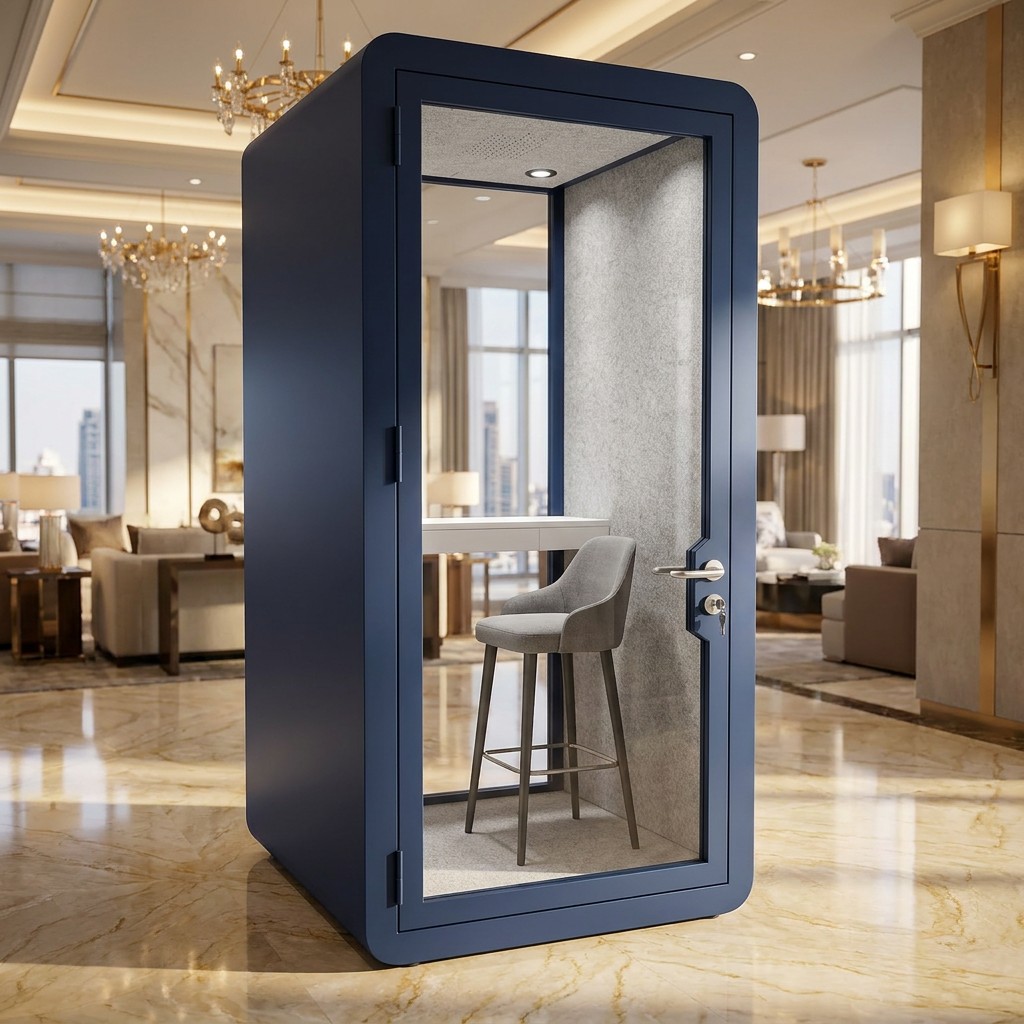
Decide what must remain useful, and for how long
Write down three separate dates: when the pod must be ready to use, when the team expects to leave, and when the space must be cleared. A project completion date and an equipment collection date may not be the same. For a rental proposal, ask which event starts and stops the charges. For a purchase, ask which delivery and installation milestones the supplier is actually quoting.
Next, identify what is likely to change. A stable team at a long-term location has a different decision from a temporary team whose next address is unknown. If headcount could increase, distinguish an extra unit from replacing a single-person configuration with a meeting booth. Ask about the availability and terms of that change rather than assuming a rental contract includes upgrades.
Rental deserves close consideration when a suitable offered unit meets the task, the occupation period is defined and the return arrangements are workable. Purchase deserves close consideration when the configuration will remain useful, continued ownership has a clear purpose and delivery and support can be arranged. These are screening conditions, not a universal duration at which one option becomes cheaper.
The Australian Government's equipment leasing and buying guide highlights equipment choice, ongoing commitments and maintenance as comparison points. It is general Australian business guidance, not a statement of office-pod rental terms in your market. Use the actual provider's documents to complete the decision.
Compare the usable setup before comparing payment schedules
Two offers should describe the same task, not simply the same number of pods. Check the intended occupancy, furniture, required equipment and available site services. Record differences that affect use: a standing-height shelf is not the same working arrangement as a desk and adjustable chair, and an equipment-ready opening is not installed equipment.
For a rental unit, request the configuration actually available for the required period, including its condition and the accessories supplied. For a purchase, establish the quoted configuration and distinguish standard items from project-specific changes. Begin with the relevant office pod product options and put both proposals against the same requirement list.
If one option lacks an essential feature, obtain a permitted, priced solution before including it in the comparison. Do not silently assume that the buyer can add a screen bracket, change the door hardware or alter panels on someone else's equipment.
Separate the pod from getting it operational
Ask each provider where its work starts and ends: delivery vehicle, unloading point, final position, assembly, connection or handover. Describe the same destination, access route and building restrictions to both. A rental offer delivered into position and a purchase offer supplied for export are different scopes until the missing work is identified.
Name the party responsible for access checks, booking loading facilities, local labour and any required site services. If another contractor supplies a task, include that contractor's quotation or leave it visibly pending. The base scope, options and unresolved items guide provides a way to separate these items without counting an optional replacement twice.
Read the rental exit arrangements before accepting the rate
Treat extension, early ending and return as different events. Request the minimum commitment, notice dates, charging periods and the written method for pricing an extension. Ask whether the same unit can remain in place, who confirms continued availability and what applies if the provider cannot extend. A short office tenancy does not itself make an equipment agreement equally flexible.
For early completion, obtain the applicable settlement terms rather than assuming charges stop when use stops. The U.S. Small Business Administration's asset and equipment guidance notes that leaving a lease early can carry penalties and recommends reviewing unclear terms before signing. That is a reason to obtain your own terms, not to assign a standard penalty to every pod rental.
For the return, ask for the collection location, who disconnects and prepares the pod, who supplies packaging, and how failed access or a delayed collection is handled. Establish when the buyer's responsibility for the unit ends. If the provider arranges transport, identify whether its price includes taking the pod out of the building or only collecting it after someone else has done so.
Finally, request the agreed condition requirements, cleaning obligations and damage-assessment process. Ask how the starting condition will be recorded and how any difference at return will be documented. Record deposits separately from charges: a potentially refundable deposit affects cash needed, but should not automatically be treated as a final expense or a guaranteed refund.
For a purchase, plan ownership beyond delivery
A purchase comparison needs the complete delivered and usable scope, not just the pod price. Identify freight, any separately quoted import or local charges, unloading, installation and site work. Use a common currency and a clearly stated tax basis when comparing written offers; ask the finance team to review financing and tax treatment separately.
Then decide who will deal with a fault after handover. Factory assistance, local inspection, parts transport and physical replacement are distinct tasks. Obtain the applicable support and warranty terms and identify local help where required. The after-sales support guide explains the information and responsibilities to resolve before ordering. Neither a purchase warranty nor a rental service description should be treated as automatic coverage for every site visit.
Ownership does not by itself establish that a pod can move intact, fit the next building or be dismantled repeatedly. If future reuse is part of the buying case, describe the likely move and seek model-specific guidance. Use the whole-unit and disassembly comparison to identify the route, packing and reinstallation questions. Record a future sale or buyback only if there is a credible, applicable basis; otherwise leave recovery value unknown rather than using an optimistic figure to make purchase win.
If an ownership exit depends on a third party, compare buyback, consignment and paid removal arrangements before treating collection or an advertised resale price as money available for a replacement.
Decide whether customisation changes the comparison
List essential requirements separately from preferences. A particular desk arrangement or equipment interface may be necessary; a preferred colour may allow more flexibility. Compare the offered rental stock with that distinction in mind. Ask the rental provider what changes it permits, who performs them and what restoration or return conditions would apply.
For a new purchase, discuss the necessary dimensions, appearance and interfaces through the custom modular pod enquiry. Have the supplier confirm feasibility and the supply scope for the project. A customised proposal may solve a genuine mismatch, but its value should be tied to the work it enables, not assumed from the word "custom".
Check whether a change substitutes for the base configuration or adds another item. Include its effect on preparation, installation and possible reuse. The drawing and equipment-interface guide handles the detailed design brief; this comparison only needs enough information to establish whether both options are usable.
Test three project outcomes with the same evidence
Consider a hypothetical project team using temporary office space while a permanent location is prepared. This is a comparison exercise, not a customer case or a claim about actual costs.
The project ends as planned. Compare the rental commitment through its agreed end, removal and return scope with the purchase outlay and the buyer's documented next use or exit work. If there is no known next use, leave that problem visible. Do not subtract an assumed resale price.
The project is extended. Obtain the extension rate, notice deadline and continued availability from the rental provider. For ownership, check whether the existing setup still fits the team and what additional operation or support would be required. Neither option is ready for comparison if a larger team needs a different configuration that has not been quoted.
The team moves to another building. Ask the rental provider whether transfer is permitted and on what service and commercial terms. For a purchased pod, confirm the proposed move with the manufacturer and the relevant site contractors. Compare the complete route from leaving the current site to being usable at the next one. A unit that fits the new room may still require a different transport or installation plan.
Do not collapse these outcomes into a single predicted saving when the probabilities and costs are unknown. Show the decision under each one. An unresolved condition that changes the preferred option is the next question to answer, not a blank to replace with zero.
Complete a project-term comparison sheet
Copy this buyer-side worksheet into your purchasing file. Fill it from written proposals for the same quantity, configuration, location and usable period. Replace prompts with confirmed values, mark explicitly included items as included, and leave unresolved entries as pending. It is a comparison tool, not a MobileX quotation or rental agreement.
Scroll horizontally to compare all columns.
| Comparison item | Rental offer | Purchase offer | Evidence to obtain |
|---|---|---|---|
| Quantity, configuration and available date | [offered units and date] | [quoted build and date] | Itemised configuration and availability confirmation |
| Upfront cash and deposits | [initial charges; deposit separately] | [agreed payments] | Payment schedule; deposit return conditions where applicable |
| Delivery and usable handover | [included work; extras] | [included work; extras] | Unloading, position, assembly and connection scope |
| Agreed project period | [rate, periods and fees] | [purchase price; project running items] | Same start/end assumptions; currency and tax basis |
| Support and maintenance | [provider/local split; exclusions] | [supplier/local split; exclusions] | Applicable service terms, parts and labour responsibility |
| Extension or early ending | [written terms and pending costs] | [continued-use or exit work] | Notice dates, charges and changed configuration needs |
| Move, return or next use | [permission, removal and return] | [packing, move, storage or next use] | Site route and responsible contractors; known costs |
| Unresolved exposure | [unknown item and owner] | [unknown item and owner] | Question, responsible party and answer needed before decision |
Keep the cash schedule beside the cost comparison. Do not count a financed purchase price and all principal repayments as separate purchase costs, or combine a refundable deposit with final charges without explaining the treatment. Have the finance team check that both columns use a consistent method. A simple purchase-price-divided-by-monthly-rent calculation leaves too many of the above items outside the decision.
Request the missing proposal, not just a cheaper headline
Send prospective providers the same short brief:
- Project and intended tasks: [add details]
- People and pod quantity: [current requirement and possible change]
- Required usable date and expected end: [dates and confidence]
- Site and access: [country, floor plan and delivery restrictions]
- Essential configuration: [desk, seating, equipment and interfaces]
- Possible outcome: [finish, extend or relocate; likely destination if known]
- Work required from the provider: [delivery, installation, support and exit tasks]
- Commercial information needed: [itemised price, inclusions, exclusions and applicable terms]
For a MobileX POD purchase proposal, send the project brief with the configuration, quantity, destination and required date. This guide does not offer a MobileX rental service; obtain rental availability and agreement terms directly from an actual rental provider.
The stronger proposal is the one that fits the task and remains workable across the project's credible outcomes, with the important costs and responsibilities visible. Resolve the few unknowns that can change that conclusion before choosing a payment format.