Noise-Cancelling Headphones or an Office Pod? Choose by Who Needs Quiet
If one person needs less background noise while working silently, try suitable headphones at the existing desk first. If people need to speak on calls without disturbing nearby desks, or their conversation needs a separate space, headphones address only part of the problem. Compare an available room or an office pod for those spoken sessions. The key is whose sound needs to change: the wearer’s, a remote participant’s, or the people nearby.
When headphones are enough
For reading, drafting or reviewing a document without speaking, headphones may reduce the noise the wearer hears without taking floor space or adding an enclosure. Test them during the actual work, not only against a steady background hum. Fit and the changing sound of nearby conversation affect the result; Bose’s explanation of noise cancelling notes that speech can still come through.
That is a good first purchase when the person can stay at a workable desk and the problem is mainly incoming distraction. It is a poor substitute for a private speaking space. The headphones do not contain the wearer’s voice or stop a colleague at the next desk from hearing the conversation.
When the call is the problem
A headset and meeting software can improve the audio sent to remote participants. For example, Microsoft Teams noise suppression works on background sound picked up by the microphone. It does not make the speaker inaudible to colleagues sitting in the same office. Keep the remote listener’s experience separate from the local office’s need for quiet and the caller’s need for speech privacy.
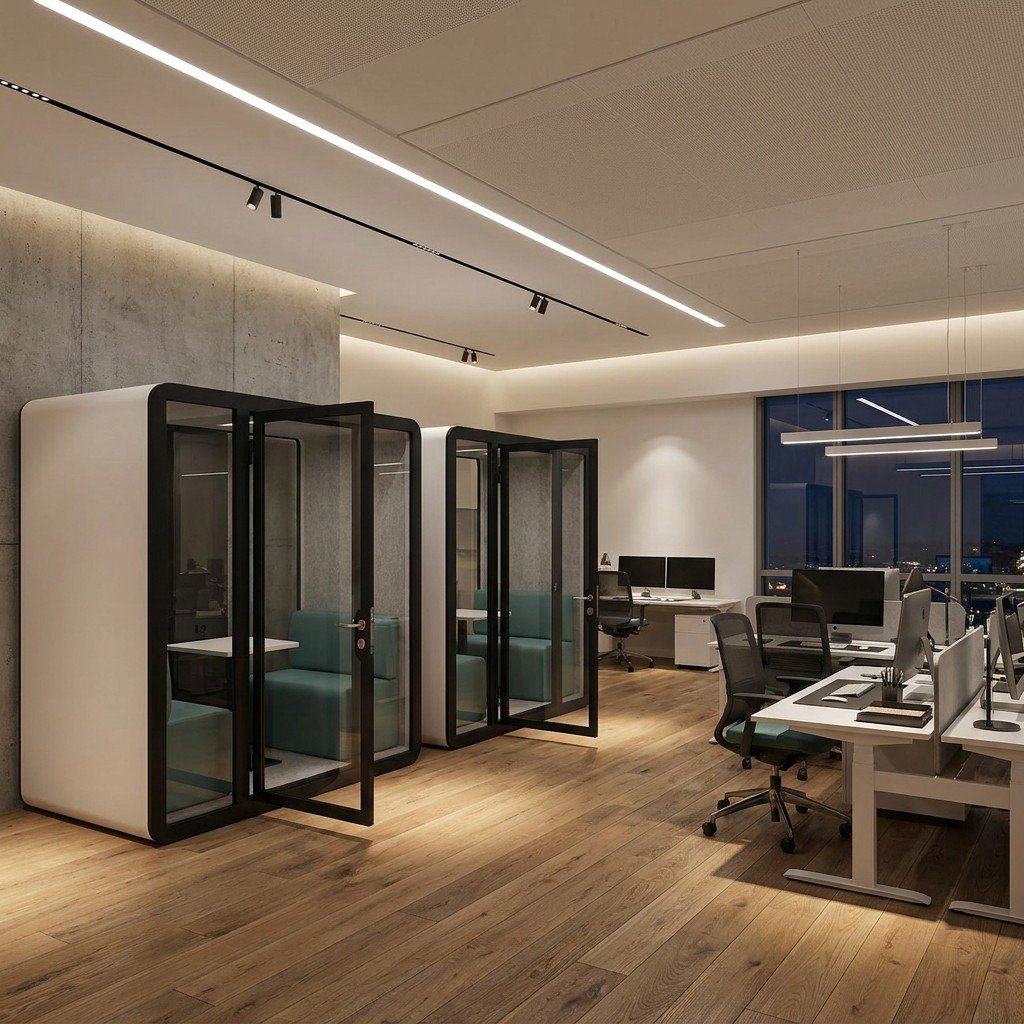
For occasional calls, first see whether an existing room is available when those calls actually occur. If not, a single-person office pod can provide a separate place to speak without converting an entire room. That does not guarantee a particular level of speech isolation: compare the proposed enclosure and location against the conversations and nearby listening positions that matter. The confidential-conversation guide covers that more demanding review.
MobileX’s office pod range includes single-person options for calls and larger meeting booths. A standard model uses a six-face assembly, including the floor; it still needs a workable site, power arrangement and suitable interior layout. A special size or configuration needs a separate review rather than assuming a standard booth will serve every use.
Compare two ordinary office days
Hypothetical case A: An employee writes reports at an open desk and rarely speaks during focus periods. Background office noise is distracting, but a suitable room is available for the occasional sensitive call. Try headphones at the desk and use the room for those calls. Buying a pod solely for quieter listening may add cost and occupy space without solving a missing-room problem.
Hypothetical case B: Several employees take independent client calls at overlapping times. Headsets improve what remote clients hear, yet coworkers still hear the callers and the only room is regularly in use. A separate call space now addresses a different need. Compare the number of simultaneous spoken sessions, available rooms and proposed pod locations before choosing how many single-person spaces to quote; the pod quantity guide develops that capacity decision.
Run one useful trial before committing
During a representative work period, have the intended user try the proposed headset at the desk and make a normal call. Ask the user whether incoming office sound disrupts the task, a remote participant whether the transmitted audio is clear, and a nearby colleague whether the speaker’s voice disrupts their work. If an existing room is the alternative, test its availability at the same busy time. These are separate observations, not one score called “quiet.”
If the remaining problem is spoken activity, bring the call pattern, expected simultaneous users, available rooms, floor plan, quantity and destination to MobileX POD. Ask for a configuration and quote suited to that use, with any proposed custom size or interior arrangement identified separately. If the headset and room already solve the problem, there is no need to add a pod just because it looks convenient in a catalogue.