How Many Telemedicine Pods Does a Site Need? Count Overlapping Visits
Count the private spaces needed at the busiest overlapping appointment time, not the total visits in a day. Start with suitable rooms that are reliably available. A compact pod becomes a purchasing option only for visits that fit its occupied layout; a visit involving a clinician, companion or substantial equipment may need a larger room. One site may need no new enclosure, one pod or several spaces, depending on the real schedule and service.
For a pharmacy or clinic, the useful unit is a period of room occupation: from the first person entering to the space being ready for the next visit. Booking, assistance and room reset affect that period. The US HHS telehealth workflow guidance asks providers to plan scheduling, staffing, technology and patient assistance together. It does not prescribe a number of pods; the operator must supply its own appointment pattern.
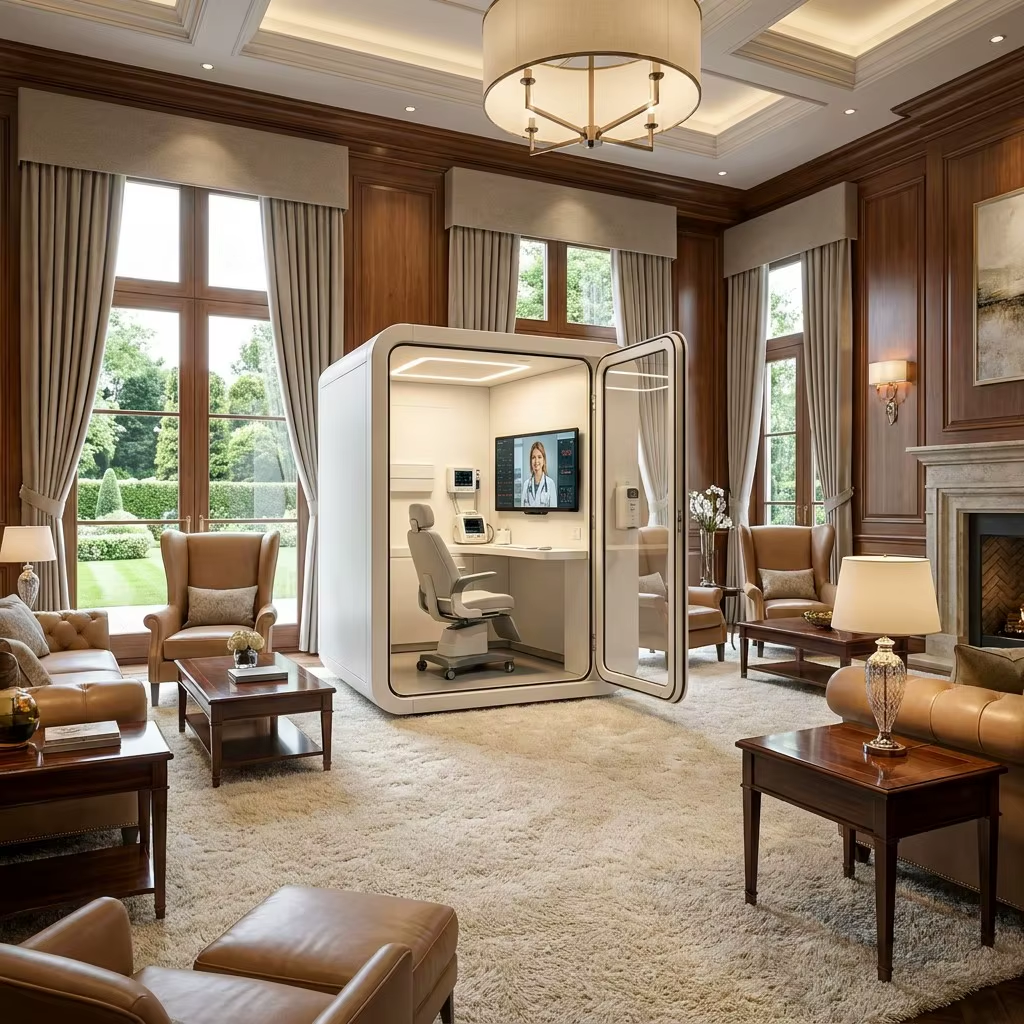
Find the peak that cannot share one space
Draw each appointment as a block on a daily schedule. Start the block when the space must become available for preparation or entry, and end it when the operator expects the space to be ready again. Use the operating team’s planned times, not a universal visit length. Where blocks overlap, count how many suitable spaces must be in use at once. Four visits across a morning do not require four pods if they can use one suitable space in sequence.
Separate visits that can use the same room layout from those that cannot. A seated, one-person video consultation is a different space brief from a visit requiring an assistant or companion inside, or equipment that changes the working position. Our room-versus-pod guide addresses that choice. Do not count an unsuitable room as spare capacity simply because it appears on the floor plan.
Hypothetical planning example: Visit A occupies a suitable private space from 9:00 to 9:40, including the site’s planned preparation and reset. Visit B needs another suitable space from 9:30 to 10:10. The ten-minute overlap means two spaces are needed if both bookings remain. If an existing consultation room is available for one visit, the buyer may need only one additional pod. If the operator can move Visit B to 9:40 without disrupting the service, one space may handle both. These times illustrate a scheduling method, not MobileX customer usage or a recommended clinical appointment length.
Turn the space count into a product decision
First test whether existing rooms cover the peak and are actually available at those times. Then examine the uncovered visits: who enters, which furniture and devices occupy the space, where assistance happens and whether the door and surrounding waiting area work with that arrangement. A pod is not a substitute for the provider’s network, software, clinical equipment or operating service. The MobileX telemedicine pod range is a starting point for an enclosure proposal; the selected configuration and included items belong in the project quotation.
For multiple locations, make a separate peak diagram for each site. A quiet Tuesday at one pharmacy does not cancel a simultaneous demand at another location, and a room shared with another service is only available during the hours that service releases it. If the schedule remains uncertain, consider a pilot or an existing-room arrangement before specifying several identical enclosures. The telemedicine procurement guide covers the visit workflow, equipment interfaces and handover after the space quantity is clear.
Request a proposal for the uncovered visits
Send MobileX the destination and number of sites, the peak schedule with any existing rooms marked, the visits proposed for a pod, expected occupants, furniture and device dimensions, and the available installation positions. State which equipment and services the buyer or local partners will supply. Request a configuration-specific proposal for the spaces the schedule cannot already serve, rather than asking for a pod count based only on total appointments.