Ticket Booth Buying Guide: Match Service Windows to Visitor Demand
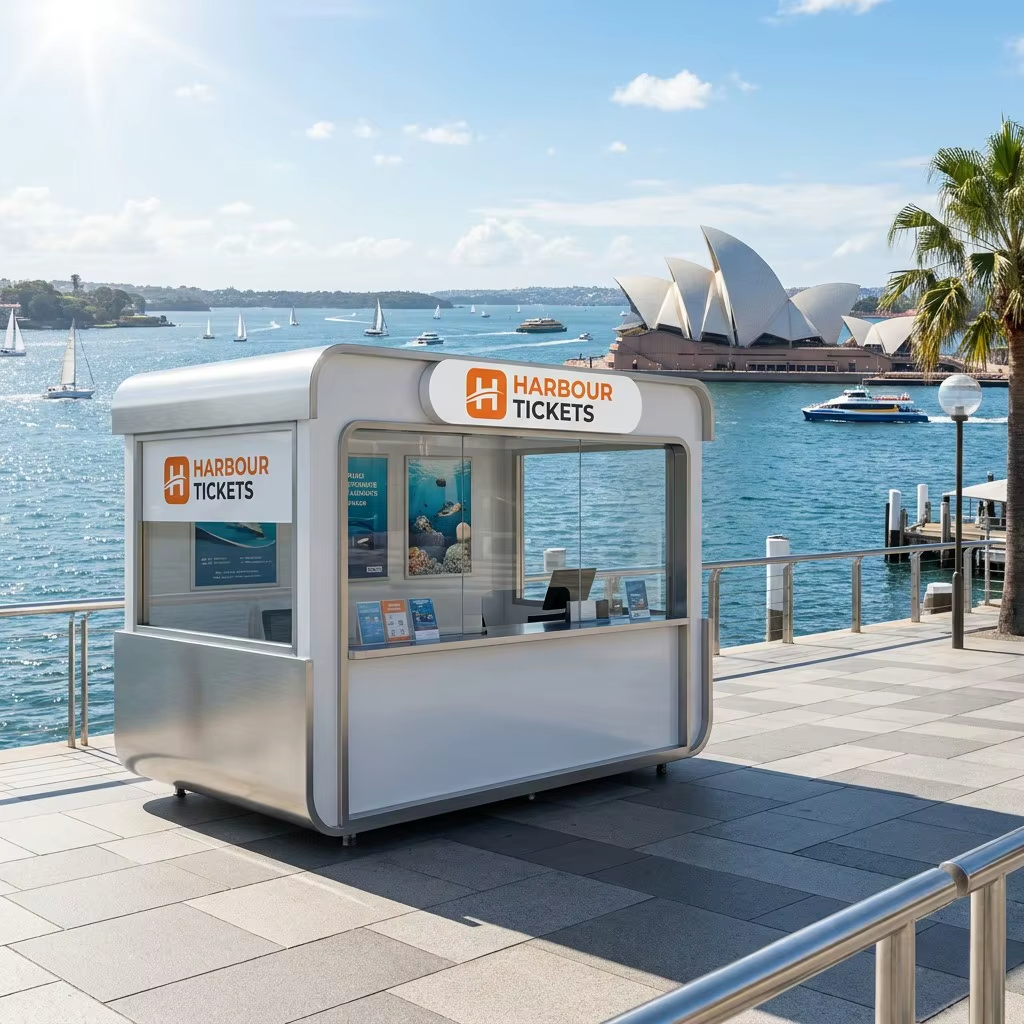
Specify a ticket booth by the service positions that must work at the same time, not by the number of windows in an exterior picture. One staffed position may handle sales and occasional questions in sequence. If ticket collection and longer visitor enquiries must continue together, compare separately equipped working positions and a queue arrangement that lets each function operate.
This guide is for attraction operators, commercial venues and contractors buying a physical ticket or visitor-service enclosure. It assumes that staff will provide the service. Choosing a self-service system is a separate decision covered in the staffed and self-service operating-model guide.
Count requests, not only visitors
List the work arriving at the booth: buying tickets, collecting a reservation, changing a booking, asking directions or resolving an exception. One family may make a single purchase for several people; one visitor may need a lengthy explanation. Total attendance therefore does not directly tell a buyer how many simultaneous selling positions to provide.
Observe the busiest relevant arrival period, such as the half-hour before a timed activity, rather than dividing daily attendance by opening hours. For an existing operation, record request types and service durations without collecting unnecessary visitor identities. For a new venue, label estimates as assumptions and rehearse representative tasks with the intended operator and equipment.
Seasonal service arrangements can change as well. The National Park Service’s Jewel Cave ticket-kiosk page describes advance reservations, on-site ticket sales and off-season sales that may move to the visitor centre. It is an example of a real operating pattern, not a MobileX project or a current procurement notice. A booth brief should reflect which of those tasks actually remain at the proposed location.
Use a workload check before buying more windows
For an initial comparison, multiply the number of requests of each type by its assumed or observed service time, then add the results. Compare that workload with the staff time genuinely available in the same period. The calculation identifies an obvious mismatch; it does not predict queue length or guarantee a waiting time.
Hypothetical 30-minute arrival period: twelve purchase or collection requests take two staff-minutes each, and three visitor enquiries take six staff-minutes each. The total is 24 + 18 = 42 staff-minutes. These figures are invented planning inputs, not measured MobileX performance.
| Arrangement | What the arithmetic shows | Procurement consequence |
|---|---|---|
| One operator alternating between two windows | Still only 30 staff-minutes available against 42 required, even before interruptions | An additional opening alone does not solve the mismatch; revise the service allocation, staffing or arrival plan |
| Two operators sharing a queue, each equipped for both tasks | 60 staff-minutes in total; a combined workload of 42 leaves theoretical headroom | Draw two usable workstations and provide the equipment and permissions each operator needs; check bursts and breaks separately |
| One sales/collection operator and one information operator | 24 of 30 minutes at the sales position; 18 of 30 at information | Give each queue a clear destination and decide whether the information operator can help sales when its queue grows |
The total spare time in the last arrangement is not automatically available to the sales queue. Cross-cover needs a usable position, access to the relevant system and an operating decision. Equally, two operators cannot deliver two parallel services if they share a single terminal or must repeatedly cross the same working space.
Repeat the calculation for the quieter period when only one person is on duty. A two-position booth can use one position at quiet times, but signage and queue routing should make it clear where service is available. Neither the peak case nor the quiet case should depend on a window that staff cannot reach safely and comfortably.
Define a complete service position
A window is an opening; a service position includes the operator, customer approach, counter, transaction equipment and the space needed to complete the task. Place the chosen printer, scanner, payment device, monitor and ticket or map storage on the plan. Include only the devices your service uses. Show reloads, drawers and cables as well as the equipment when closed.
Real product ranges illustrate why window count needs interpretation: Little Buildings offers several ticket-window arrangements, while PortaFab distinguishes viewing, sliding and transaction-window options. Those are their own products, not MobileX specifications. In your drawing, label each opening as viewing, transaction or another defined function rather than counting all glazing as a staffed station.
Put the staff entrance where its use does not take an operator through an active customer position. Where two operators work together, walk through a printer refill, a shift change and a visitor question while sales continue. The service-counter and restocking layout guide develops the access and movement checks, including the public approach to each service function.
Keep ticket service separate from admission control
Mark where people go after receiving a ticket or answer. Selling a ticket, checking a reservation and admitting someone through a controlled entrance may happen at different locations. A booth beside a gate is not evidence that one operator can perform all three tasks concurrently.
Give pre-booked visitors a clearly identified route if they do not need a sales conversation. Give unresolved requests a place to wait without occupying the next service position. Keep the exit from each queue clear of the staff door and the route used by visitors who have finished. Test the intended routes with the site’s actual arrival pattern rather than assuming that a second window automatically creates a second usable queue.
Ticketing software, payment systems, communications and any access-control equipment need named supply and integration scope. MobileX can discuss their physical interfaces in the enclosure proposal; they are not automatically supplied because the booth is labelled “ticketing” or “smart.”
Turn the service plan into a comparable booth quotation
MobileX’s outdoor kiosk range includes ticketing and visitor-service applications, with project-specific size, doors, windows, counter, branding and electrical configuration. Begin with the intended number of simultaneous operators and the functions of their positions, then review the enclosure and equipment arrangement together.
Send a short service schedule showing the peak arrival period, request types, available staff and which functions share equipment. Attach the customer approach and departure routes, the operator layout, equipment information, destination and quantity. For two alternatives, keep the same service workload and site boundary: for example, one shared queue with two capable positions versus separate sales and information positions.
Use the kiosk quote checklist to separate factory enclosure, chosen devices and local completion work. Send MobileX your ticket-booth service plan so the proposal addresses the work your visitors need, rather than an unsupported promise based on window count.