Two-Person Podcast Booths: One Shared Room or Separate Recording Spaces?
For an interview built around natural face-to-face conversation, start by comparing one shared recording room with your existing room. Choose separate recording spaces when independently editable voices matter enough to justify a different conversation, monitoring and camera arrangement. Buying a booth for each person is not automatically better, and recording two microphone tracks does not by itself keep the two voices apart.
The purchase is not simply a choice between a two-seat enclosure and two single-seat enclosures. You are choosing how the programme will be performed and recorded. An informal interview, an unscripted discussion with frequent interruptions and a dialogue assembled from separately recorded lines can need different arrangements even with the same two people.
Two tracks are not two isolated voices
A separate track preserves the signal from each microphone. That signal can contain both the intended speaker and sound arriving from the other person. Shure calls this unwanted pickup bleed or leakage. Turning down one track cannot remove the second voice already captured in the other microphone. Separate tracks are still valuable for balancing and editing, but the recording route and the acoustic separation solve different problems.
Listen to a short exchange in which each person speaks alone, then to an interruption and a shared laugh. Solo each track and then play them together. This reveals whether the recording meets your editorial needs more effectively than inspecting two separate waveforms. A programme edited mainly as a continuous conversation may tolerate a result that is inconvenient for an editor moving individual words independently.
Do this before selecting an enclosure. If the problem is that your recorder saves only a combined mix, a suitable multitrack recording route may be the relevant purchase. If each track already contains the other person’s voice, changing the file format does not address the acoustic cause.
Choose the conversation you want to preserve
| Arrangement | Best reason to consider it | What it does not buy | Additional purchasing scope |
|---|---|---|---|
| Use an existing quiet room together | The show depends on eye contact, shared reactions and a simple setup; the room is reliably available. | Guaranteed clean separation between voices or protection from surrounding activity. | Microphones, supports, headphone feeds and any justified interior treatment. |
| One shared enclosed recording space | You need a repeatable place for the same conversation, with a defined occupied layout and less dependence on an open office. | Isolation between the people sitting inside it. | Usable recording positions, camera views, interior acoustic provision and enclosure delivery. |
| Separate rooms or individual enclosures | The production needs greater independence between simultaneously captured sources, and a trial supports the chosen separation. | Automatic protection against sound transmitted between the rooms, or an effortless conversation. | A listening connection, sightlines or video, recording coordination and two usable positions. |
| Record each contribution at a different time | The programme is scripted or assembled from narration and responses. | The timing and spontaneity of a live interview. | Consistent recording conditions, direction and editing time rather than two simultaneous rooms. |
Do not buy two enclosures merely because a guest sometimes interrupts. First decide whether those interruptions are part of the show or something the editor must remove. Conversely, do not promise a highly editable dialogue from a tightly packed shared setup without hearing representative overlapping speech.
Make the shared-room option work as a complete arrangement
Microphone direction, distance from the intended speaker and room reflections affect unwanted pickup. A microphone selected for directional pickup can help when used correctly; it does not create an invisible wall around its user. The relevant comparison is the actual occupied arrangement, not the microphone brand printed on the quotation.
Place two chairs, the table, microphone supports, notes and any cameras in working positions. Both people should be able to look at each other without repeatedly turning away from their microphones. A desk that fits two laptops may still leave the microphone arms competing with the camera view. A larger shell is worth considering when it permits a demonstrably better arrangement, not simply because it has a higher advertised seat count.
Use headphones for the recording check rather than feeding the conversation back through loudspeakers. Neumann’s vocal-recording guidance treats headphone monitoring and room noise as part of the capture setup. Keep ventilation and normally used equipment operating. A sample recorded in an artificially silent, empty enclosure cannot settle the purchase for an occupied session.
The existing recording and live-production workspace guide covers the wider equipment and operator workflow. Here, the additional decision is whether sharing the acoustic space supports the way the two voices will be edited.
Separate spaces change the production, not just the floor plan
In separate spaces, each person needs a dependable way to hear the other and receive direction. If the guests cannot see one another directly, decide whether a video connection is acceptable for timing and reactions. Include the connection and recording workflow in the trial, not just a solo voice test in each enclosure.
An illustrative purchasing case is a two-host programme with frequent line replacements after the interview. The team may find independent spaces worth the additional equipment and coordination because it wants to edit one person’s contribution without carrying the other person’s reaction. A different team producing a continuous filmed conversation may prefer a shared room because eye contact and the two-person shot are central to the programme. These are production choices, not claims about a particular pod’s isolation.
Where separate existing rooms are available, compare those before ordering two new pods. Where a single shared room already produces an acceptable result, money may be better spent on stable microphone supports and a workable table than on a second enclosure.
Compare the cost of a working show
Request three separate scopes: the enclosure or room work; the audio, camera and control package; and delivery, assembly and commissioning at the site. For separate spaces, add the second complete recording position, the communication route between them and any additional setup or operating work. For a shared space, identify the interior acoustic work and furniture arrangement actually demonstrated.
Keep editing labour visible without pretending that a booth purchase guarantees a saving. If a representative trial takes less cleanup, record what was changed and what work remains. Do not turn a vendor’s processed sample or an optimistic time estimate into a promised payback.
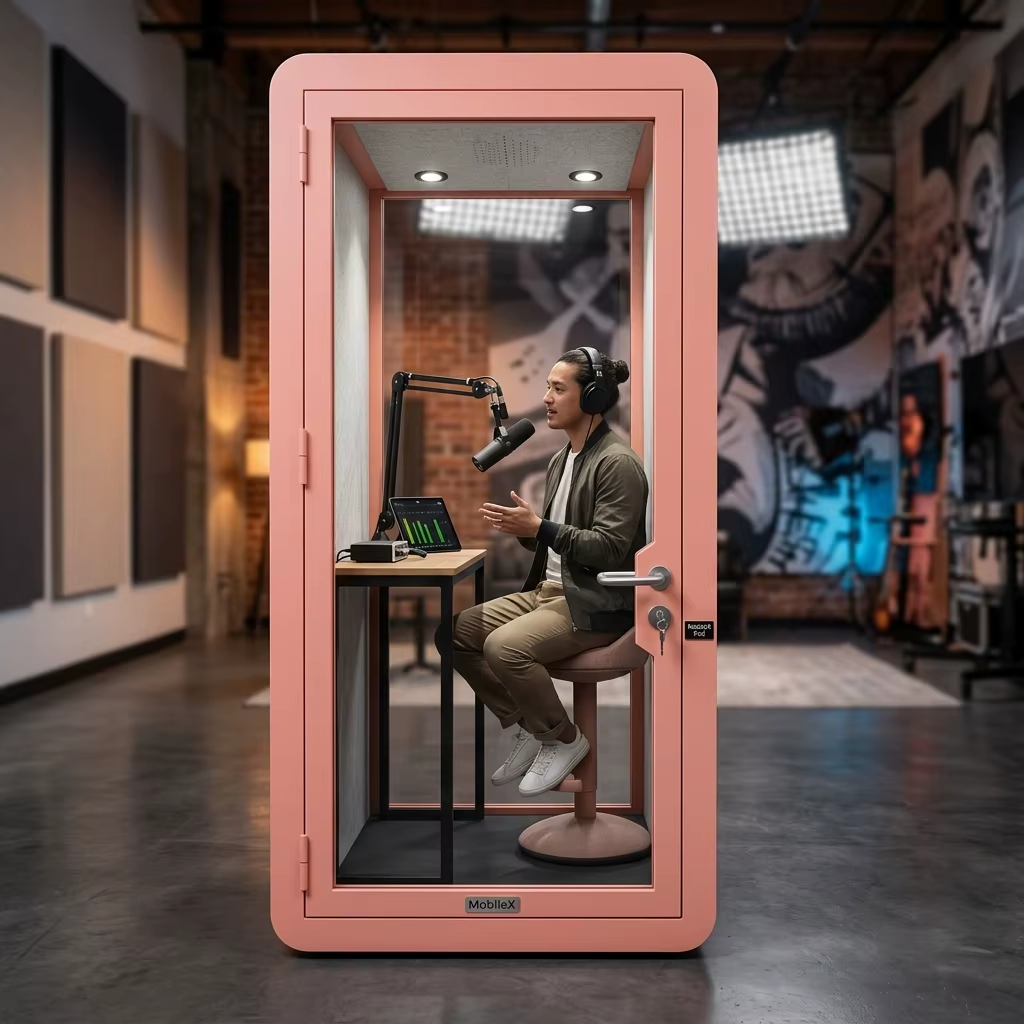
Start with the MobileX meeting pod range when the layout requires a shared occupied space. Use the custom project route for an enclosure and furniture brief that differs from the standard starting point. The pictured furniture and recording equipment are not a fixed recording-system package, and office speech-isolation information does not demonstrate microphone separation inside a shared room.
For a project enquiry, provide the two working positions, equipment footprints and the type of exchange you need to record. State whether you need natural shared conversation, independently editable simultaneous voices or separately recorded contributions. That decision gives the enclosure comparison a useful starting point.