Multi-Site Modular Pod Orders: Compare Site Readiness Before Releasing Each Batch
Release a multi-site modular pod order against the readiness of each receiving location, not just the completion of a common design. The same configuration can arrive at three buildings with different access routes, installers, service connections and receiving windows. Decide what can travel together only after those differences are visible and the parties have agreed what happens if one site is not ready.
A common purchasing program can still use different delivery groups. Equally, separate locations do not automatically require separate shipments. Compare the complete route from the factory to an installable position, including any intermediate storage, rather than treating the shipping date as the end of the decision.
Choose the Configuration Mix Before Grouping the Shipments
Standardize the arrangement that serves the work, not every pod in the program. A company can keep a shared finish palette and purchasing process while using different configurations for individual calls and two-person discussions. Conversely, two sites with the same task and accepted configuration do not need different product versions simply because their addresses differ.
Furniture dealers such as MBI describe standards programs that combine repeatable product choices with site-specific needs. For a pod purchase, turn that principle into a short configuration schedule before asking for one combined price. Keep three layers separate:
- Program requirements: the tasks to serve, the accepted appearance references and the information each quotation must contain.
- Purchased configuration: the model, layout, finish, furniture and supplied interfaces that distinguish one order line from another.
- Site allocation: how many of each configuration go to each location, followed by the receiving arrangements below.
Use the MobileX four-model comparison to establish the product starting points. Group sites together only after their required working arrangement and proposed supply match. A common finish can make a mixed model range visually consistent; it does not make the models interchangeable.

A Twelve-Pod Planning Example
Hypothetical planning example: Sites A, B and C need twelve pods in total. After reviewing their tasks, the team proposes two purchase configurations. C01 and C02 are buyer planning labels, not MobileX model numbers or approved layouts.
| Planning line | Working arrangement to review | Site A | Site B | Site C | Total to quote |
|---|---|---|---|---|---|
| C01 | One-person call setup, with the same accepted layout and supplied scope | 4 | 2 | 4 | 10 |
| C02 | Two-person discussion setup, with its own accepted layout and supplied scope | 0 | 2 | 0 | 2 |
| Site total | Physical pods, not seat totals | 4 | 4 | 4 | 12 |
This is two product configurations serving three sites, not twelve separate designs and not one identical product ordered twelve times. The single-person requirement at B stays on C01; it does not become a meeting configuration just because B also needs shared rooms.
Now suppose two of C’s four callers also need an agreed workstation arrangement that C01 cannot support. Compare the appropriate model and layout for those two positions, then create C03 if a different configuration is needed. The revised quantities become C01: eight, C02: two and C03: two. There are still twelve pods. Only the affected requirement changes; A and B do not automatically need the larger arrangement.
Split Real Product Differences, Not Every Site Detail
A different receiving date or installer belongs to the site allocation, not a new product configuration. A different supplied finish, furniture arrangement, door arrangement or electrical specification needs its own identifiable variant in the quotation. Use the destination electrical brief when that is the difference; common appearance is not evidence that the electrical supply is the same.
Before merging two lines, compare their model and drawing revision, included items and actual variant choices. If those match, retain a common purchase configuration with separate site quantities. If they do not, keep the difference visible even when both lines share one marketing name. The configuration identity guide explains how to retain that mapping for later orders and support.
Send the supplier both views: quantities by configuration for the product quotation, and quantities by site for delivery and installation planning. Ask for separately identified unit prices, variant adjustments and any proposed quantity pricing. A combined twelve-pod request does not establish that different configurations share a price or a discount. Once the product mix is clear, use the readiness checks below to decide which units can actually be released together.
Separate Product Readiness From Receiving-Site Readiness
Keep the approved configuration reference for each site, but do not use it as proof that delivery can proceed. Product readiness concerns what will be supplied and whether the agreed release requirements have been met. Site readiness concerns whether the shipment can be received, protected, moved to position and installed under the actual arrangements.
Ask the site contact to verify the final route for the proposed packed shipment. A doorway measurement for an assembled room is not a substitute for checking the delivery packages. Include turns, receiving restrictions, lifts where relevant, temporary obstacles and the route from unloading to the installation area. The packing and delivery guide covers the shipment documents and measurements in detail; use those confirmed inputs for each site.
Check who will unload and who will install. A local contact agreeing to accept a vehicle is not necessarily providing unloading equipment, trained personnel or installation labor. Establish availability for the planned window and the consequences of a changed arrival date. Do not infer a local installation service from a supplier's ability to ship internationally.
Compare the Sites on One Readiness Sheet
Use one row per site, then attach the supporting information. Record a decision, its evidence and its owner. A label such as "ready" without those details can conceal a pending contractor appointment or an inaccessible storage area.
Per-site receiving readiness.
| Readiness question | Evidence to obtain for each site | Why identical pods can have different answers |
|---|---|---|
| Can the shipment reach the receiving point? | Packed dimensions, route information, delivery restrictions and agreed unloading arrangements | Entrances, turns, vehicle access and receiving hours may differ |
| Can the packages reach the installation position? | Checked internal route, lift information where relevant, temporary storage and movement arrangements | A suitable room can still have an unsuitable delivery route |
| Is the work area available? | Site works status, clear installation area and access permission | Building works or continuing operations may restrict when work can happen |
| Are site services and installers ready? | Relevant connection information, appointed personnel and confirmed scope | Local services, equipment interfaces and contractor responsibilities are not determined by a shared model name |
| Can the site protect a shipment if work pauses? | Agreed storage conditions, space, handling responsibility and duration basis | Some locations have suitable space; others would need an external arrangement |
| Is someone authorized to accept the delivery decision? | Named receiving and project contacts, unresolved conditions and escalation route | Central procurement and local facilities may control different decisions |
Keep electrical and installation questions with the responsible qualified parties. The installation and electrical planning guide helps define the information to request. This readiness sheet is not an installation method, a lifting plan or permission to connect equipment.
In Great Britain, HSE guidance on cooperation for safe deliveries addresses information exchange between suppliers, carriers and recipients and agreement before delivery. Use it within its workplace-transport context. For other destinations, have the responsible local parties identify applicable requirements; a central purchasing team cannot resolve site safety simply by issuing a common delivery date.
Compare Three Delivery Arrangements
Evaluate the arrangements that the actual suppliers and logistics providers can offer. A consolidated load may still require several onward movements, while phased release may require goods to be held somewhere. Neither choice should hide a storage commitment or an extra handling step.
Compare delivery group arrangements.
| Arrangement | When it is worth evaluating | Questions that determine the real tradeoff |
|---|---|---|
| Consolidated shipment to an agreed receiving point | The group is ready, or a suitable intermediate facility is genuinely available | Who receives, stores and redistributes it? Are onward transport, handling and local deliveries included? |
| Separate release groups linked to site readiness | Sites have materially different confirmed windows or unresolved constraints | Can production and dispatch be grouped this way? What are the separate shipment charges, notice requirements and consequences of changing a group? |
| Consolidated shipment followed by staged local delivery | A logistics provider can support a defined holding and onward-delivery arrangement | What storage conditions, capacity, insurance arrangements, fees and release instructions are agreed? Who checks condition at each handover? |
Compare like-for-like scope. List factory dispatch, main transport, receiving, temporary holding, onward movement, unloading and installation separately. Ask whether an amount applies per shipment, per site, per handling event or per agreed storage period. Keep unquoted items blank or marked unresolved, rather than treating them as free.
The scope comparison article explains base supply and optional work. Here the additional question is which location or release group each item applies to. Do not assume that a saving in one transport line offsets additional handling, site disruption or an unconfirmed storage arrangement.
A Hypothetical Three-Site Decision
Consider an illustrative program using the same approved pod configuration at Sites A, B and C. This is a purchasing example, not a MobileX customer project. Site A has confirmed access, an available installation area and an appointed installer. Site B still has building work in the receiving area. Site C can receive only in a restricted window that has not yet been booked.
The first proposal is to dispatch all three together. It remains a viable option only if the receiving and any holding arrangements are actually available and agreed. Sending B's packages to A is not a neutral change: A would need suitable space, handling arrangements, responsibility for protection and an onward-delivery plan. Those conditions must be checked rather than inferred from A being ready for its own room.
The second proposal is to release A first and hold B and C pending their specific conditions. Ask where the held goods would be located, what state they would be in, what charges and notice periods apply, and whether the supplier accepts that sequence. Do not assume finished goods can remain at the factory without an agreement.
The third proposal groups A with C after C's receiving window is confirmed and treats B separately. Compare it only against an achievable window and the agreed production and logistics arrangements. If waiting for C disrupts A's requirement, that cost or operational effect belongs in the comparison even when it does not appear as a freight charge.
The decision is therefore conditional: choose the grouping whose site evidence and complete scope support the required outcome. Do not conclude that phasing is always cheaper or consolidation is always faster. Record which unresolved event would require the grouping to be reconsidered.
Agree What Happens When a Site Slips
Before dispatch, identify who can place the affected group on hold and who can confirm a new receiving window. Define the point at which a change needs a new transport or storage arrangement. Ask the relevant provider what commitments already exist; avoid assuming that an unshipped order is free of costs or constraints.
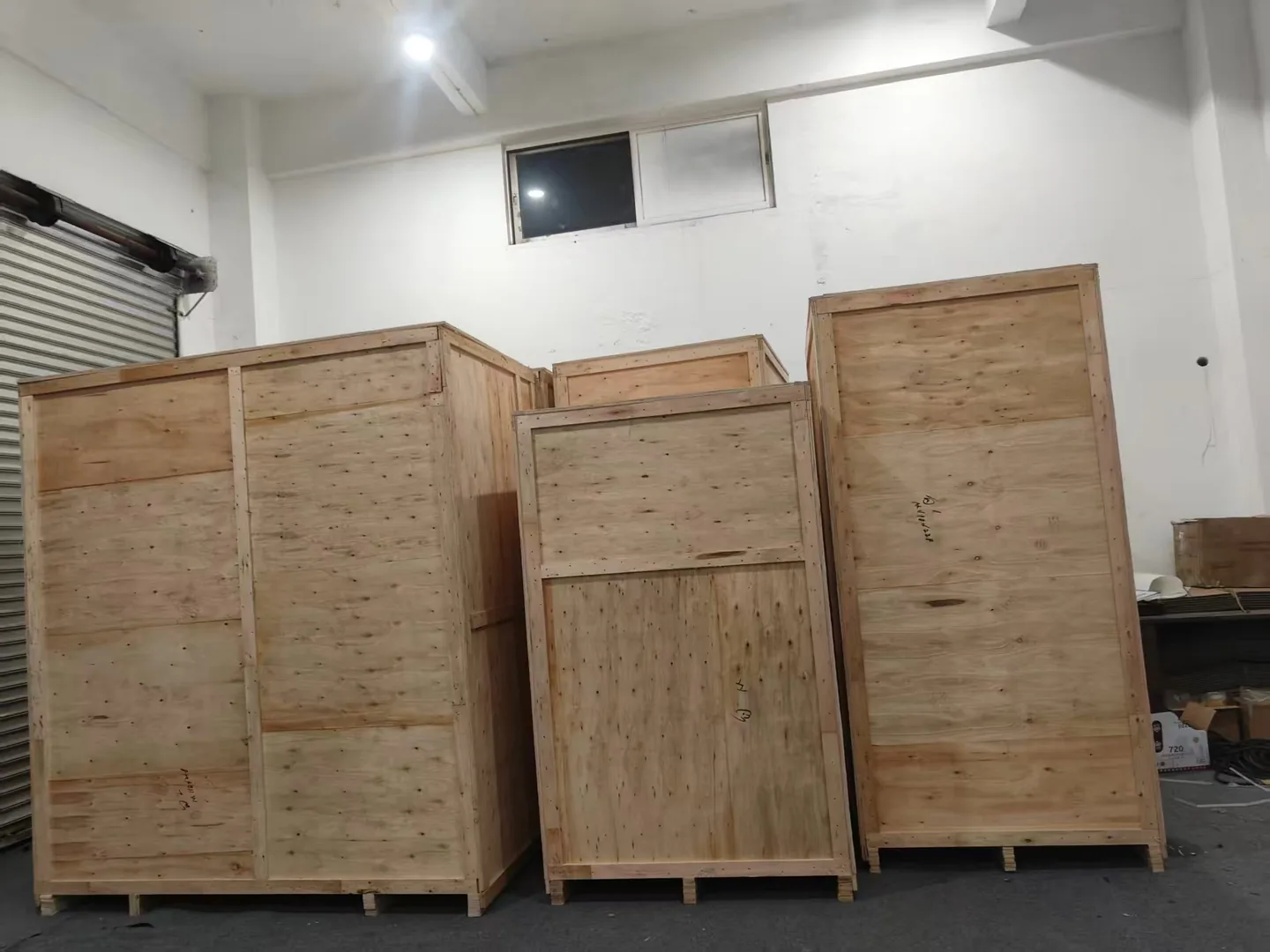
For a proposed holding location, obtain the actual packaging and product storage requirements, available space, access controls and handling arrangements. State who checks packages on arrival, reports visible changes, authorizes movement and pays the agreed charges. A photograph of wooden crates cannot establish the protection conditions or duration suitable for the goods inside.
If a delayed site requests a configuration change, use the drawing-change review for the affected units. A schedule discussion should not silently become a redesign of every site. Likewise, keep any agreed pilot review and identity records with their existing references instead of reproducing the full approval process in the logistics brief.
Use a Batch Decision Brief
Give the supplier and appointed logistics providers enough information to compare feasible groupings. The following is a blank buyer tool, not a claim that MobileX operates a particular multi-site delivery system:
- Program and intended uses: [describe]; common configuration and genuine site-specific differences: [identify].
- Sites and quantities: [list]; requested receiving windows and their confirmation status: [state separately].
- Per-site readiness evidence: [access, receiving, installation area, services and appointed personnel].
- Grouping options to price: [consolidated, phased or intermediate holding]; work included in each option: [list].
- Unready-site arrangement: [location, conditions, responsibility, charges and decision deadline, or unresolved].
- Contacts and release authority: [central buyer, local recipient, supplier, carrier and installer as applicable].
- Change trigger: [event that stops or revises a group's release]; next decision and missing input: [state].
Ask for a response that identifies accepted arrangements, exclusions and remaining conditions for each group. Recheck those conditions before authorizing dispatch; a previously agreed plan is not evidence that a blocked route or absent installer has been resolved.
If the product lots may go to different vendors, compare one office-pod supplier with a mixed fleet before fixing the site-release plan.
For a modular pod configuration discussion, send the shared requirements with the site-readiness sheet. Use the project contact page to request a project-specific supply review. Local transport, storage and installation responsibilities should remain explicit in the resulting offer, not implied by the number of locations in the order.