Office Pod Reviews: Turn Conflicting Opinions into a Buying Shortlist
Use office pod reviews to identify a model that suits your work, not to select the highest star rating. First separate comments about the enclosure from comments about its furniture, equipment and seller. Then give the most weight to experiences that resemble your intended use. A serious mismatch with your main task matters more than several attractive features.
This is a manufacturer’s buying guide, not an independent product ranking or a collection of customer testimonials. It explains how to use reviews when comparing a shortlist, including MobileX configurations, without treating opinions as test results.
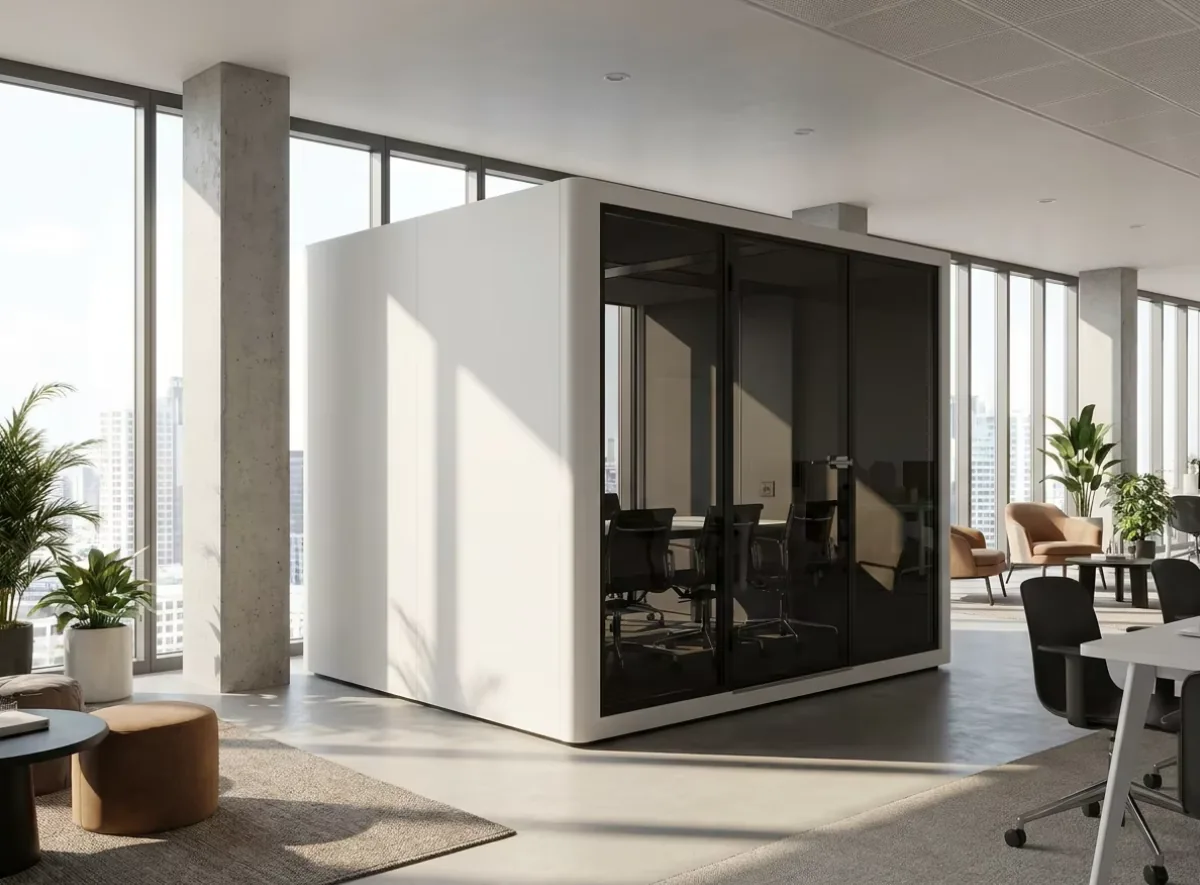
Decide what a favourable review would need to describe
A pod can suit a brief laptop call and still be the wrong choice for your regular work. Before reading rankings, write one sentence about the job you are buying it to do: one person taking calls between desk sessions, two colleagues working on a shared document, or a group talking to remote participants. Add the equipment people will actually bring.
This changes which comments are useful. A reviewer praising easy entry and a convenient laptop surface may be relevant to occasional calls. A buyer who needs a monitor, keyboard and working papers needs evidence of that arrangement instead. A meeting team needs all intended participants to use the furniture and shared equipment together. An empty interior photograph answers none of those tasks on its own.
If the space type is still undecided, start with office pod, phone booth and meeting booth selection. Here, assume you have a use in mind and are deciding which product evidence deserves your attention.
Separate four things that reviews often combine
| What the review describes | What it can help you decide | What it does not establish |
|---|---|---|
| The enclosure in use: entering, closing the door, sitting and moving | Whether the demonstrated arrangement resembles your work and suggests a layout worth exploring | Internal dimensions, access suitability or performance of a different model |
| A desk, seat, screen or call device | Whether that particular setup looks workable for the task | That those items come with every quotation, or that the enclosure caused an equipment problem |
| Delivery, installation or support | Which seller or service arrangement needs closer scrutiny | The service available from another seller, in another destination or under another contract |
| A rating, measured result or certification claim | Which original report or supporting document to examine | That a reviewer measured it, or that it applies to the complete pod you are considering |
A useful review can cover more than one category. Keep its findings separate when making a decision. For example, a delayed delivery is important to a deadline-sensitive purchase, but it is not a measurement of the enclosure’s sound isolation. Equally, an attractive shell does not resolve a service arrangement that cannot meet your project requirements.
Why two apparently conflicting reviews can both be useful
Different work: one person may value a short interruption-free call, while another expects to spend a working session using a full desk setup. Compare the activities, furniture and equipment before deciding that one opinion cancels the other.
Different surroundings: an enclosure in a quiet demonstration area and the same type beside a busy circulation route do not present the same listening or visual conditions. A comment about perceived quietness needs that context. It cannot establish speech confidentiality at your site. The acoustic ratings guide explains how to examine the test object, method and configuration when a numerical claim matters.
Different causes: a poor video call can involve microphone selection, camera framing, lighting or the network as well as the enclosure. A review that identifies what failed is more useful than a general verdict. Use the existing video-call buying checks for that task; do not assume a more expensive shell will correct an unspecified connection problem.
Different purchases: a reviewer may be describing another model, furniture package or seller. Product names can survive configuration changes. Establish that the item discussed resembles the one offered to you before carrying an old complaint or compliment into the shortlist.
Read the source, not just the score
Open the underlying review where possible. Look for who produced it, whether the product was used, and whether a commercial relationship is disclosed. A manufacturer’s overview, a retailer comparison, a sponsored demonstration and an independent user’s account can all contain useful information, but they are not interchangeable evidence.
The US Federal Trade Commission’s guidance on evaluating online reviews recommends considering the source and using more than one source. It also cautions that appearance alone cannot reliably distinguish genuine reviews from fake ones. This is general US consumer guidance, not a certification of a particular reviewer, pod or supplier.
Do not label an unfavourable review fake because it conflicts with a sales page, or treat a disclosed incentive as proof that every observation is false. Instead, identify what can be checked. A clear view of a door opening can help examine a layout; an unexplained star score cannot. Several pages repeating one claim do not become several independent demonstrations.
Use a veto before a points score
Start with the requirement that would make the purchase fail. If a shared meeting is the reason for buying, a highly rated single-person configuration is not rescued by its finish or convenient controls. If the proposed layout cannot accommodate the necessary work, remove it from that shortlist even when the reviews are positive.
Next, distinguish a potentially solvable mismatch from a reason to choose a different product. A furniture arrangement might be revised within a suitable enclosure. A requirement for a different number of people or a different spatial arrangement may call for another model or a custom discussion. Do not assume either change is available merely because a review suggests it.
Hypothetical comparison: a buyer needs two colleagues to work together on a laptop and documents. One candidate has many favourable comments about solo calls. Another has fewer reviews but shows a two-person working arrangement with the relevant equipment. Neither has won yet. The second offers more relevant layout evidence; the first needs a convincing demonstration of the shared task before it belongs on the same shortlist. Popularity is not a substitute for task fit.
Only after the essential task is credible should preferences such as finish, appearance and optional conveniences separate the remaining choices. This avoids inventing a weighted score in which several minor advantages hide one decisive problem.
Compare real packages, not just brand names
For a single-person phone-booth shortlist, start with the working arrangement you need: a desk-and-seat package, a work surface that changes height, or a high fixed table with optional seating. These are different purchases even when all three products appear in a list of the “best office phone booths.” A popular model with the wrong working arrangement should not outrank a less familiar one that fits the task.
The examples below compare published configurations, not hands-on reviews or acoustic performance. Third-party details were checked on 16 October 2026. MobileX prices are the approved 19 July 2026 reference figures, not current delivered quotations. This is a small configuration comparison, not an exhaustive market ranking.
| Published package | Workspace and furniture | Price basis | What changes the shortlist? |
|---|---|---|---|
| MobileX MP1 | Desk and seat included. Internal envelope: 880 W × 920 D × 2080 H mm. | USD 1,380 EXW reference; transport and site completion are not included in that price basis. | Keep it in consideration for a compact solo-call task when the actual desk, seat and equipment arrangement fits. Do not pay for a larger shell merely because it has a higher model number. |
| MobileX MP1+ | Desk and seat included. Internal envelope: 1120 W × 1080 D × 2080 H mm. | USD 1,650 EXW reference on the same dated basis. | The USD 270 reference difference buys a larger internal envelope. It does not establish space for a second user, a height-adjustable desk or better sound isolation. |
| Zenbooth Solo | Standard stationary desk; optional electric height-adjustable desk. | US product page lists USD 5,490; adjustable desk adds USD 400. Published contiguous-US shipping is USD 650 per booth, with location exceptions. | Consider the adjustable option when changing work-surface height is a genuine requirement. It is a different feature from adjusting only the seat. |
| Framery One Compact Base / Essentials | Both use a fixed table, 76.5 × 36 cm, at 102 cm height. Base has no stool; Essentials includes a height-adjustable stool. | Use a package-specific quotation; the technical page does not provide a verified price for this comparison. | Choose the seating package deliberately. A stool adjustment does not turn the fixed table into a sit-stand desk. |
Remove the wrong arrangement before comparing the bill
For occasional calls between desk sessions, a suitable fixed work surface may do the job; an electric desk is not automatically worth buying. If the same space must support work at different table heights, shortlist a configuration that actually provides that adjustment. Neither a larger enclosure nor an adjustable stool is a substitute. MobileX’s desk-and-seat inclusion alone does not establish an adjustable-desk option.
For sustained keyboard work, start with the required chair, working height and equipment footprint. An internal envelope is not the remaining usable desk area after furniture is installed. A compact call booth should leave the shortlist if the necessary arrangement cannot fit; favourable reviews of short calls do not repair that mismatch. Conversely, do not buy a meeting pod merely to obtain a feature available in a suitable single-person workspace.
Put shortlisted offers on the same purchasing basis
Using Zenbooth’s published figures, USD 5,490 plus USD 650 shipping gives a USD 6,140 product-and-stated-shipping subtotal; selecting the USD 400 desk option makes it USD 6,540. Neither arithmetic result establishes a complete installed price, taxes or exceptional delivery costs. It cannot be ranked directly against an EXW MobileX reference.
For the products that survive the task-fit test, compare one complete endpoint: the selected booth and furniture, applicable freight and import charges, delivery to the intended floor and room, assembly, any required electrical or building work, packaging removal and applicable taxes. Mark items already included so they are not charged twice. An offer with the lowest shell price can still cost more to put into use; an expensive furniture option is wasted if it does not improve the intended work.
The useful outcome is two or three named configurations with a reason to retain each, rather than three brand names copied from a review list. Keep acoustic evidence and seller support as separate checks: furniture differences and unlike price bases cannot establish which booth is quieter or which seller will perform better at your site.
Choose the next step that closes the actual gap
- If the task fit is visible but the package is unclear: compare the offered configuration with the one shown. Identify which furniture and equipment are included in that offer before comparing prices.
- If the layout is uncertain: seek a demonstration or drawing of the relevant arrangement. For a demonstration, use representative tasks and equipment where practical; a remote camera view cannot establish every user’s physical experience.
- If a sound rating determines the decision: examine the corresponding evidence rather than repeating the review’s number. A listening impression and a formal measurement answer different questions.
- If the issue concerns the seller: use the supplier and quotation guide. Do not transfer another provider’s installation or support promises to MobileX.
A showroom visit, sample purchase or remote demonstration is not assumed to be available or free. Choose an evidence route that the relevant parties can actually provide, and agree any conditions before relying on it. A pilot for repeat orders has a different purpose; the pilot-unit guide covers that later approval stage.
If real-site use could change the purchase decision, compare an applicable return-option purchase with a firm order before relying on a trial promise.
Take a focused shortlist to the product enquiry
For MobileX, use the office pod product range to explore call-oriented and other office configurations, or the meeting booth page for shared discussions. The four-model comparison supplies the existing model-level shortlist; this article does not replace it with a new ranking.
Send your intended work, the configuration under consideration and the specific review finding you need to resolve with a product enquiry. For example: explain that the review shows solo use but your team needs a shared work surface, or that a pictured accessory is essential to your task. This gives the discussion a concrete decision to answer. If the standard arrangement is unsuitable, move to the custom configuration path instead of assuming an option exists.
The result should be a shortlist supported by relevant evidence, not a claim that reviews guarantee the outcome. No customer scores, test results or product rankings have been created for this guide.