Office Pods for Coworking: Shared Amenity or Dedicated Team Space?
Buy shared office pods when different members need occasional enclosed spaces and can use a common setup. Choose a dedicated team space when one team needs continuing access or a layout that should remain set up between sessions. A mixed purchase can serve both, but a pod assigned exclusively to a team is no longer part of the shared supply, even when it looks empty.
For a coworking operator, this is a decision about what the membership or team workspace actually provides. It comes before choosing a reservation system. A booking controls a time slot; a dedicated allocation decides who can use the space at all. Neither the word “shared” nor “private” establishes acoustic performance, secure storage or the furniture included in a pod quotation.
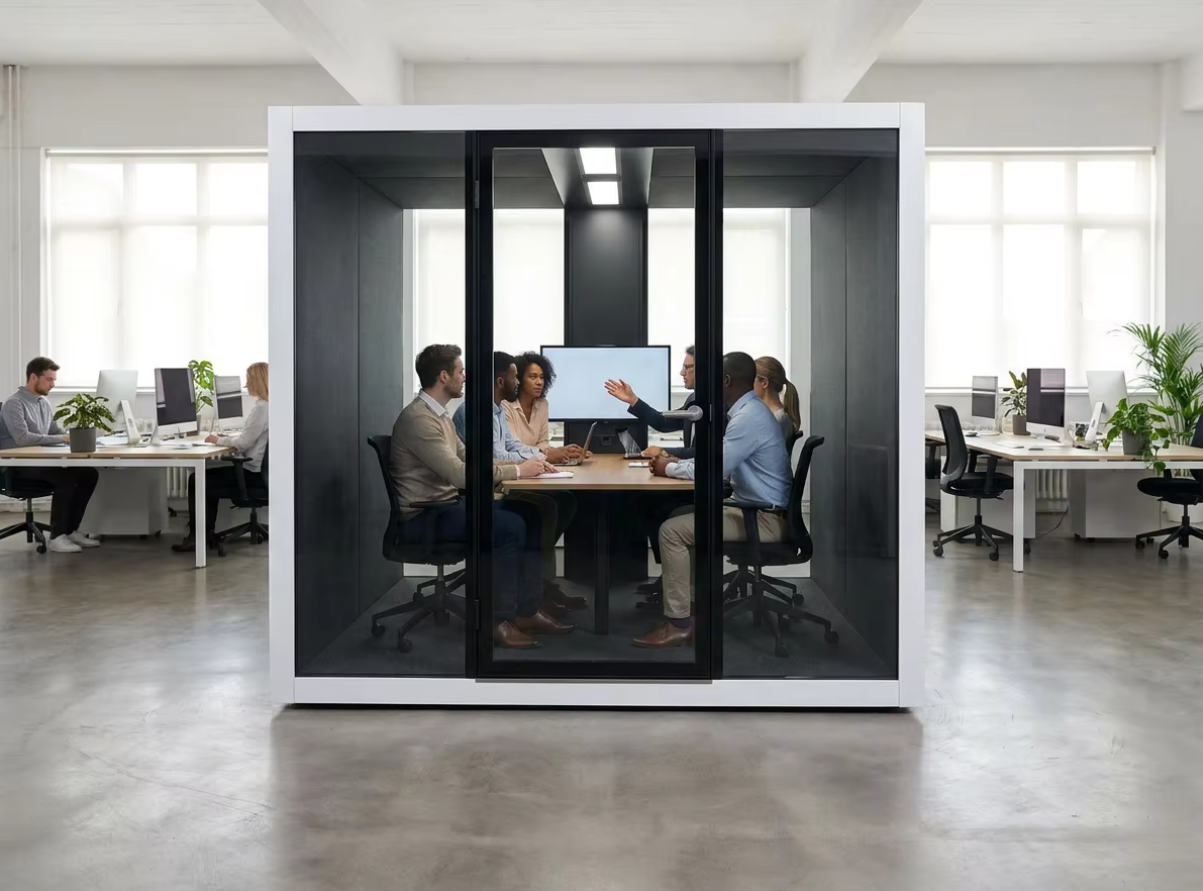
Start With What Members Are Buying Access To
A desk membership with occasional call-space access is different from a team agreement that promises an enclosed place whenever the team needs it. Buying the same enclosure does not make those offers interchangeable. If both promises depend on the same pod during the same period, the proposed service cannot reliably provide both.
Write one plain sentence describing the intended offer before comparing products. For example: “Members can use a shared call space when it is available,” or “This team has exclusive use of a meeting space during its agreement.” These are hypothetical operating choices, not MobileX membership services or recommendations about contract wording. An operator can also reserve defined team-use periods and release other periods to members, provided those periods are genuinely available rather than assumed.
Compare the Allocation, Not Just the Enclosure
Compare how each choice affects the space available to other users and the setup worth buying. A dedicated allocation does not turn a meeting booth into a full-time office.
| Allocation | When It Fits | What Changes in the Purchase |
|---|---|---|
| Shared member amenity | Different members need short calls or occasional discussions and can use a common layout without leaving a personal setup behind. | Prioritize a useful shared mix of single-person and meeting spaces. Team-specific fixed equipment should not make the shared setup unsuitable for other members. |
| Dedicated team space | A team needs continuing access, recurring joint work or equipment that remains arranged for its own use. | Select for that team’s tasks. Count the enclosure separately from member amenities and assess whether the work requires a meeting space or a different office layout. |
| Defined team periods plus shared periods | The team needs particular periods, not exclusive use throughout the agreement, and other users can use the same physical setup. | Choose a layout that works for both groups without frequent furniture changes. Do not count team-only periods as available member capacity. |
| Separate shared and dedicated spaces | Both general members and a team need access at overlapping times, or the team setup cannot be cleared for shared use. | Compare separate enclosures or an existing team room plus shared pods. The additional purchase must solve the competing uses, not merely add seats. |
Shared Does Not Mean One Pod for Every Task
If members mainly step away from open desks for unrelated calls, single-person spaces address that need more directly than a meeting enclosure occupied by one caller. If pairs or teams need to speak together, a shared meeting space serves a different purpose. Do not buy only one format because it is easier to describe as an amenity.
First remove any exclusively allocated rooms from the member supply. Then compare the remaining mix against simultaneous member uses. The separate guide to pod quantities and independent conversations explains that calculation; this article’s decision is which spaces belong in that calculation in the first place.
Keep the shared setup broadly usable for the tasks you intend to offer. A permanent specialist display, furniture arrangement or personal equipment may be useful to one team but restrict another user’s working surface or route through the space. That is a reason to reconsider the allocation, not evidence that the enclosure itself is unsuitable for all coworking use.
Dedicated Access Is Not Automatically a Dedicated Office
An enclosure intended for a joint discussion still provides one shared conversation space. Giving it exclusively to a team does not create separate workstations for unrelated calls. If team members need to work independently at the same time, compare that need with a team office plus access to individual call spaces rather than assuming a meeting booth covers everything.
Likewise, permission to leave equipment in a space does not establish that it has suitable storage, security or continuous-operation conditions. Decide whether the intended arrangement is a meeting layout that stays ready or a workspace for ongoing desk work. The latter needs its own furniture, movement and equipment assessment; a photograph of seats around a table is not that assessment.
A dedicated purchase can justify a team-specific arrangement when that arrangement is actually needed and the enclosure will remain assigned to that use. A shared purchase is better served by a layout that different intended users can use as it stands. Neither route requires buying every available upgrade.
Two Situations That Lead to Different Purchases
Members Need Calls; a Team Already Has Its Own Room
In this hypothetical situation, the team room is not available to general members. Buying another large shared meeting enclosure may leave the shortage of independent call spaces unresolved. Begin with the call-space purchase. Treat any team request for an additional enclosure as a separate requirement rather than counting the team’s existing room as a benefit available to everyone.
A Team Wants Its Setup Left in the Only Shared Meeting Booth
Here, the operator is choosing between keeping a general amenity and allocating it to a particular team. If the setup prevents other members from using the space, relabelling it “shared” does not preserve the amenity. Compare keeping the existing pod shared and providing a separate team space, changing the team’s setup so it can genuinely share, or explicitly changing the member offer. No occupancy forecast, revenue gain or payback period is assumed in this example.
Turn the Access Promise Into a Priced Pod Package
For a shared call amenity, shortlist individual booths before spending on extra meeting seats. For a dedicated team discussion space, shortlist the meeting layout the team needs, then keep that room out of the general member supply. A useful proposal states both the physical package and who can use each part. Otherwise two identical quotations can support very different membership offers.
Consider a hypothetical operator whose members need two separate call spaces while a team needs a two-person discussion space. If the team sometimes meets with four people, the operator must decide whether those occasions use an existing room or justify a larger dedicated enclosure. The following comparison uses MobileX’s reference EXW figures dated July 19, 2026. It is a budgeting exercise, not a current quotation, observed member demand or customer installation.
| Purchase being compared | Reference pod and furniture subtotal | What remains available to members |
|---|---|---|
| Two shared MP1+ booths and one dedicated MP2 | 2 × USD 1,650 + USD 2,380 + USD 380 = USD 6,060. Each MP1+ reference includes a desk and stool; the MP2 amount includes its optional reference seating-and-table set. | Two independent call spaces. The team’s MP2 is not a shared meeting amenity during exclusive use. |
| Two shared MP1+ booths and one dedicated MP3 | 2 × USD 1,650 + USD 3,650 + USD 740 = USD 7,690, including the MP3 optional reference seating-and-table set. | The same two independent call spaces. The larger dedicated room changes the team’s meeting provision, not the shared call supply. |
| The same two MP1+ booths and MP3, all shared | The same USD 7,690 reference subtotal for the same physical configuration. | Two independent call spaces and one shared meeting space, but no promise of exclusive team access when another member is using it. |
The USD 1,630 difference between the first two packages buys a different meeting-booth configuration, not another separate conversation space. Keep the MP2 package on the shortlist if the team’s actual task fits its two-person arrangement and another suitable room reliably handles larger meetings. Compare MP3 when the four-person task genuinely needs its own available enclosure. Neither nominal capacity nor a price difference proves that the proposed furniture, devices and entry arrangement fit; use the selected layout for that decision.
MP1+ is used consistently here to isolate the meeting-room and allocation choices. It is not a universal coworking recommendation. MP1 remains a smaller single-person starting point where its checked working arrangement serves the users; changing that choice requires a revised package calculation. A more expensive solo booth should solve a real layout need, not merely make the amenity sound more premium.
Compare the Cost of the Offer Members Actually Receive
Do not divide the whole package price by the total illustrated seat count and call the result the cost of shared access. In the second package, USD 3,300 of the dated pod reference subtotal is for the two shared MP1+ booths and USD 4,390 is for the team’s furnished MP3. The team allocation may be entirely justified, but it does not purchase four extra member call positions. This is a supply breakdown, not an accounting allocation or a recommendation for membership prices.
Likewise, opening the team room to members for a few agreed periods creates availability only in those periods. Compare those hours with when members actually need a room. A room released in the afternoon does not remedy a morning shortage. If the team’s equipment must remain installed and prevents ordinary member use, a nominally open time slot is not a usable shared offer.
The reference subtotals exclude destination transport, unloading, movement to position, assembly, applicable taxes and site work. For an actual comparison, put each item into the factory, delivery or site scope once. Identify furniture, displays, connectivity equipment and any access or booking equipment separately. Do not assume that purchasing a pod supplies membership software or workspace management.
Keep two totals on the comparison: the cost to make the proposed spaces usable, and any separately justified team-specific additions. For example, a dedicated team may need a particular display while shared callers bring laptops. Charging the display to every shared booth can make a common amenity unnecessarily expensive; omitting it from the team proposal can make that proposal incomplete.
Choose a Package Without Promising Unverified Revenue
Retain the lower-cost package when it fulfils the stated member and team uses. Pay for the larger meeting arrangement when that specific requirement would otherwise go unmet. If only shared calls are short of space, improve the shared call provision rather than upgrading a dedicated room and expecting the shortage to disappear.
An operator considering paid team access can compare its own expected receipts with its own purchase and operating costs, but a catalogue price alone cannot establish payback. Keep uncertain demand separate from committed use. The purchase brief should name each enclosure, its users, the periods in which it is shared or exclusive, the furniture and equipment, and the handover point included in the price. That produces comparable proposals without turning hypothetical membership income into a product claim.
Move From the Offer to a Product Choice
For a shared call-space purchase, start with the MobileX office pod range. For people working together inside one enclosure, start with the meeting booth range. Compare the intended users and work surface with the relevant model information; access allocation alone cannot determine usable internal space or a furniture package.
If a team’s equipment arrangement or the site’s layout cannot be addressed by a standard model, use the custom pod discussion for that specific requirement. Customization is a project assessment, not a promise that any footprint, equipment installation or workspace use can be supplied.
Once the allocation is settled, the existing coworking booking and access guide covers day-to-day operation. It should implement the offer you chose, not conceal a conflict between exclusive team access and shared member availability.
To discuss a coworking pod purchase with MobileX, describe whether each proposed space is shared, dedicated or available in defined periods, then identify the actual work performed inside. Include any team equipment that must remain in place. That gives the product discussion a concrete starting point without assuming that MobileX supplies membership software, workspace operations or local management services.