Office Pod Lead Times: Separate Production, Shipping and Site Readiness
Compare office pod lead times only after every supplier has named the same start and finish points. A production estimate is not an arrival date, and an arrival date is not the date a pod is assembled, connected and ready for use. Build the programme from separate milestones for configuration approval, production, dispatch, transport, receiving, assembly and site completion.
MobileX currently uses a reference of 15-20 days for standard office pod production after order details are confirmed, while customized projects are commonly referenced at about 30 days after specifications are confirmed. These are production references, not fixed door-to-door promises. The formal quotation for the selected configuration and destination should state the applicable start event, scope and date basis.
Ask what the quoted lead time starts from
“Four weeks” is incomplete unless the quotation says when the clock begins. One supplier may count from receipt of an order. Another may count from deposit, approved drawings, finish confirmation or release of a production slot. A buyer comparing those figures without the start event may place the shorter number beside a project that is not yet ready to enter production.
Name the decisions that must be closed before the start date. For a standard model, that may include model, quantity, finish, socket and voltage requirements, delivery basis and destination. A custom project can add a drawing revision, non-standard dimensions, openings, branding, equipment interfaces or another configuration approval. A date should not be treated as committed while the inputs that control it remain open.
The current Hushoffice FAQ, for example, separates an average manufacturing period from the additional time needed for shipping. ROOM publishes a different, product-specific shipping reference on its phone-booth sales page. These vendor statements show why buyers need a common milestone definition; they are not MobileX schedules and should not be transferred to another product, order or destination.
Build one date chain from decision to usable space
Use a sequence that can be read by the buyer, supplier, freight provider, receiving team and installer. Each stage needs an owner, an input and a finish condition. That makes a delay visible at the stage where it occurs instead of hiding it inside one broad “delivery” promise.
Scroll horizontally to compare all columns on a narrow screen.
| Milestone | What it should mean | Evidence to record | Common comparison error |
|---|---|---|---|
| Configuration ready | The model or custom revision, quantity and required options are sufficiently defined for the agreed next step. | Approved scope, dated drawing or configuration schedule, plus the named remaining exceptions. | Starting a lead-time claim while basic selections are still changing. |
| Production release | The contractual and technical conditions for starting production have been met. | Start event stated in the quotation or order record and acknowledged by the responsible parties. | Assuming inquiry date, quotation date and production start are the same. |
| Dispatch ready | The agreed goods and documents are ready for the stated collection or shipment step. | Order-specific packing information, completion status and dispatch or collection notice. | Calling this the delivery date when transport has not begun. |
| Transport and arrival | The shipment moves under the selected route and trade term to the named receiving point. | Transport plan, estimated or confirmed movement dates, receiving appointment and exception updates. | Using a generic transit estimate as a guaranteed site-arrival date. |
| Assembly and connection | The delivered components are placed, assembled and connected within the agreed local scope. | Site-readiness check, installer plan, required services and completion record. | Assuming arrival means the pod is immediately usable. |
| Ready for use | The buyer has completed the agreed handover and any site-side work needed for the intended use. | Closed punch list or accepted exceptions, operating information and responsible owner. | Combining supplier completion with unresolved building or customer work. |
The stages can overlap in planning, but they should not be collapsed in the record. Site power, access and receiving arrangements can often be prepared while production is underway. That does not make them part of the factory production period, and it does not prove that they will be complete when the shipment arrives.
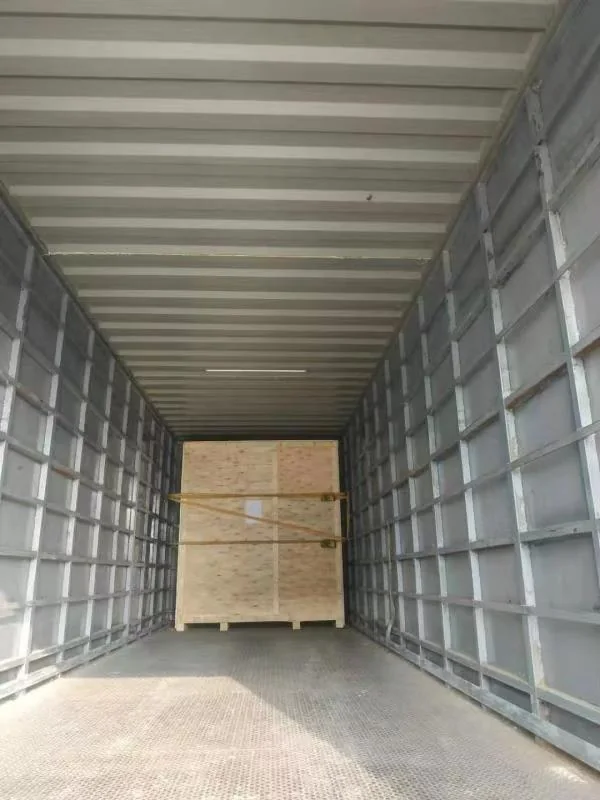
Compare standard and custom orders on different decision paths
A standard starting point can shorten the number of technical decisions, but the quoted period still depends on an agreed configuration and production release. Changing finish, socket, voltage, accessories or quantity after that point can affect the basis of the schedule. Ask whether the supplier will preserve the date, revise it or pause the programme while the change is assessed.
A custom order needs an explicit design-freeze step. “Custom size supported” does not mean that every dimension can be released without review. The required use, structure, openings, selected equipment, finish and site conditions may affect what must be resolved before production. Put the approved revision number and date beside the schedule so a later drawing cannot silently replace the version on which the timing was based.
Use the MobileX custom modular pod route when a standard model does not fit the required task or site. Ask for the custom proposal to separate design development from production rather than presenting one combined duration whose starting conditions are unclear.
Do not compare shipping terms as if they end at the same place
A quotation based on EXW, FOB, CIF, DDU or DDP can assign transport tasks and endpoints differently. The label alone does not show the complete operational result, and a preliminary discussion of a trade term is not a final route commitment. Compare the named collection point, destination point, import and local-delivery scope, receiving appointment and party controlling each movement.
Keep estimates and confirmed bookings visibly different. Production may finish before a planned sailing, flight or vehicle collection. Customs, port handling, final-mile restrictions and receiving-hour limits may add stages that are not part of the factory estimate. Record changes against the affected milestone rather than rewriting the whole history as one new lead time.
The office pod shipping plan explains how to request the actual package schedule, route and receiving scope. Use that article after the commercial route is known; this lead-time guide is for keeping the dates and dependencies comparable.
Make site readiness a parallel workstream
A buyer can lose the apparent advantage of a short production period if the destination cannot receive or assemble the pod. Before release, identify the delivery path, lift or stair constraints, assembly area, supporting surface, power connection, local installation responsibility and any required building review. The pod’s external size is not the same as its packed-piece route, and neither figure proves that the installation area is ready.
Assign a site-ready date to the buyer or project team rather than leaving it inside the supplier’s delivery line. If the site programme slips, decide whether the goods can remain at the factory, require separate storage or need a revised transport booking. Do not assume any storage period or change is included unless the quotation says so.
For the physical checks before arrival, use the office pod installation and site-preparation guide. For final receipt and outstanding items, use the delivery and installation acceptance guide. Those are different controls: readiness prevents an avoidable site delay, while acceptance records the condition and agreed result after work is performed.
Choose the product path before asking for one final date
A single-person call or desk-work requirement should first be compared with the MP1 and MP1+ office pod route. Shared conversations should begin with the MP2 and MP3 meeting pod route. The model decision matters because a quotation should attach its dates to an identifiable product and configuration, not to the general phrase “office pods.”
Current user-provided internal dimensions are MP1 880 x 920 x 2080 mm, MP1+ 1120 x 1080 x 2080 mm, MP2 1880 x 920 x 2080 mm and MP3 1880 x 1520 x 2080 mm, retained in the supplied order. These figures can help shortlist an interior size for the intended task, but they are not net doorway dimensions, furniture working clearances, accessibility clearances or shipping dimensions. All four model families support custom sizes, subject to project confirmation.
If the model and configuration remain undecided, keep the requested date as a project objective rather than a supplier commitment. The office pod price guide helps establish an early budget, while the quotation scope guide helps align the included supply. Neither substitutes for an order-specific schedule.
Use a schedule brief that exposes the real critical path
Send one short brief before asking suppliers for a final date. It should identify the intended model or custom route, quantity, destination, required-use date and the event that makes that date important. Add the current status of configuration, commercial approval, site readiness and transport planning.
- Product and configuration: model or custom revision, quantity, finish, socket and voltage, selected options and open decisions.
- Requested milestones: production release, dispatch ready, collection or shipment, arrival appointment, assembly and ready-for-use date.
- Start conditions: deposit, order confirmation, drawing approval or other event that activates the quoted period.
- Transport basis: proposed trade term, named origin and destination points, route status and party arranging each stage.
- Site status: receiving route, assembly area, supporting surface, services, local approvals and responsible site contact.
- Change control: who can approve a revision, how the schedule impact is recorded and which date remains provisional.
Compare the date chain, not the shortest number. A longer production reference paired with a defined transport and site plan may be more usable than a shorter figure that ends at dispatch. The procurement decision is whether each milestone, dependency and responsible party is visible enough to support the required-use date.
Send MobileX your model, quantity, destination and required-use date. Ask the quotation to state the production start event, reference production period, shipping basis and known site assumptions separately. That gives the project team a schedule it can compare and update without turning a preliminary estimate into an unsupported delivery promise.