Can an Office Pod Work as a Workplace Prayer or Reflection Space?
It can be considered when the workplace needs a private single-user space and an existing suitable room is not reliably available, but a standard work booth should not be relabelled without checking how people will actually use it. Decide whether the need is individual prayer, quiet reflection, group use or a broader multi-faith room, then compare the clear interior, furniture, access and operating plan.
Check the existing-space route first
A dedicated pod is not the first answer when the workplace already has a suitable room that can be made reliably available. A quiet room, unused meeting room or another appropriate space may serve the need without buying a new enclosure. The room still needs an agreed booking or access method, appropriate privacy, cleanliness and a clear plan for returning it to shared use.
Public guidance also shows why the decision should be site-specific rather than reduced to a product label. Acas says UK employers do not have to provide a dedicated prayer room but should consider a suitable space and should not favour one religion or belief over another when providing facilities. US EEOC guidance gives use of a quiet workplace area for prayer as an example of a possible religious accommodation. These sources concern their own legal contexts; they do not approve a pod or create one universal workplace-room specification.
Define the use before choosing the interior
Ask intended users and the responsible workplace team what the space must support. Avoid assuming that all prayer or reflection practices use the same posture, direction, belongings or timing.
Private single-user prayer or reflection
Compare an existing quiet room with a single-person enclosure. Check standing, seated or floor-based use, entry, clear floor area and where personal items go.
Flexible multi-faith room
A larger existing room may work better when different users need different arrangements, when furniture must move, or when several people may use the space.
Group prayer or linked facilities
Use a purpose-planned room when the activity involves a group, washing facilities, substantial storage, a companion or access requirements that a small pod cannot accommodate.
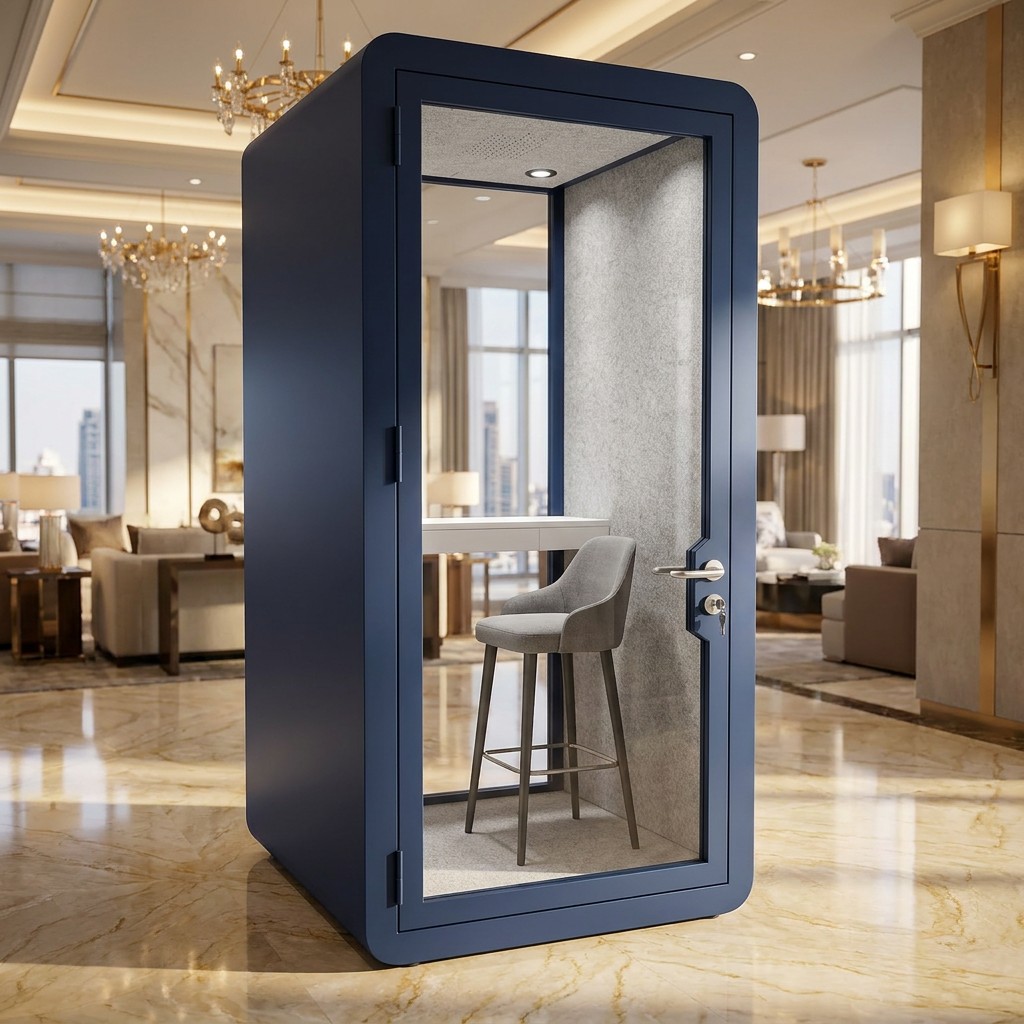
The product image above makes one purchasing issue visible: a desk and stool that support calls may reduce the clear area needed for another activity. Do not choose by external appearance. Mark the intended positions and items on an internal layout and decide which furniture is essential, removable or not required.
Compare the pod with the complete activity
For a single-user space, review the following together:
- Clear interior: allow for the user’s actual posture and movement, not only the nominal person capacity.
- Door and entry: check the door movement, approach and whether bags, footwear or personal items would obstruct the route.
- Furniture: decide whether a work surface, seat, shelf or storage is needed. A standard office setup may be the wrong starting point.
- Visibility: decide what users need from glazing and the surrounding sightlines. Visual screening does not establish acoustic privacy.
- Room conditions: assess lighting, ventilation, temperature and surrounding activity during the times the space will be used.
- Access and assistance: use the workplace’s own accessibility and emergency arrangements; do not infer suitability from a render or external dimensions.
The office pod options guide helps separate required items from optional ones. The glazing and sightline guide addresses what people can see through or around the enclosure. Neither decides whether the workplace has met a religious-accommodation or equality obligation.
Plan shared use without making the space feel owned by one group
If the room is intended for people with different religions, beliefs or no religion, use a neutral operating approach. Decide whether the space is bookable or open, how an occupied session is protected from interruption, and how users know when it is available. Keep any signage and stored items consistent with the purpose agreed by the workplace.
Cleaning and reset should be simple. Define where movable items belong and how a problem is reported without recording personal details about who used the room or why. If the same enclosure also serves calls or focused work, check whether the competing uses make access unreliable at the times it is needed. A room that is theoretically available but repeatedly occupied by meetings may not solve the original problem.
Use two contrasting examples
Hypothetical case A: a workplace has a small meeting room that is quiet, accessible to the intended users and rarely booked. A simple availability rule makes it reliable for individual prayer or reflection. The existing room is the stronger choice, so no pod purchase is needed.
Hypothetical case B: the only meeting rooms are routinely occupied, while the identified need is a short, private, single-user activity. The buyer can compare a purpose-configured pod with another room solution. The pod layout must be checked without assuming that the standard desk-and-stool interior is appropriate. If group use or associated facilities are required, a larger room remains the better route.
This differs from a specialist sensory-space decision. The work booth or sensory space guide separates focused work from low-stimulus and interactive sensory needs. Prayer and reflection require their own use discussion rather than inheriting either label.
Send a use brief, not a room name
If a pod remains under consideration, send MobileX the intended single-user activity, required clear area, posture and furniture needs, belongings, glazing preference, proposed location, access constraints, quantity and destination. State which items the buyer will supply and whether the standard interior should be retained, changed or omitted for review.
Use the office pod range to understand the standard starting points. When the layout needs to change, use the custom project route and send the requirement through the project inquiry page. MobileX can review a product configuration against the brief; the employer and its responsible advisers decide the workplace policy, legal duties and suitability for the intended users.
Sources
Workplace references accessed 22 September 2026: Acas, preventing religion or belief discrimination; US EEOC, questions and answers on religious discrimination in the workplace; and US EEOC, Section 12 religious discrimination guidance.