Powering an Outdoor Kiosk: Mains, Battery or Generator?
Choose the power arrangement alongside the equipment and trading schedule, before fixing a kiosk layout. A site connection, a battery system and a generator can leave very different work and operating costs outside the enclosure quotation. The useful question is not simply whether the kiosk has sockets, but how the selected equipment will run through the actual service period.
For a regular pitch with a suitable available supply, start by pricing the site connection. Where that is unavailable, compare battery and generator options against the same operation. A proposal that cannot serve the required session, or cannot be used at that location, is not an equivalent lower-cost offer.
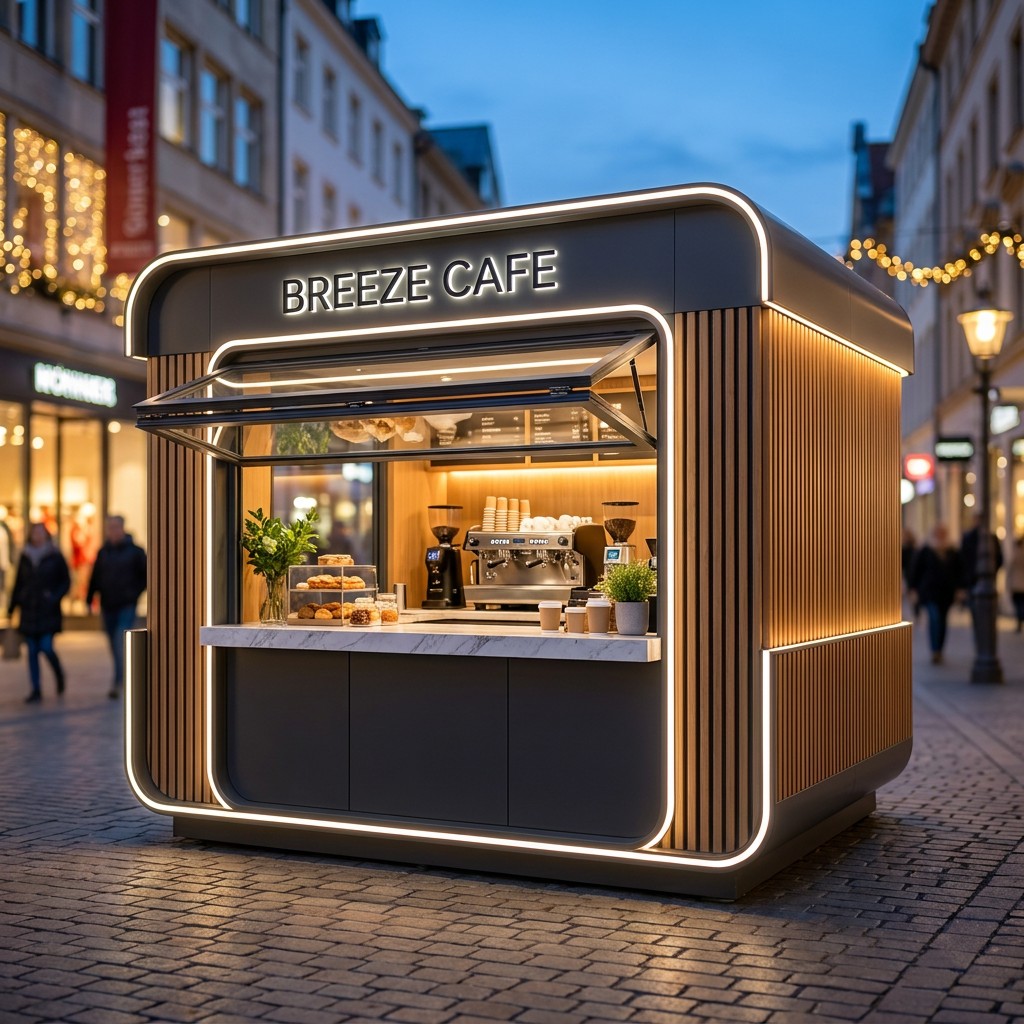
One operation, two different power questions
First establish what must run together during service. Then establish how much energy the whole session needs, including preparation and any powered storage outside selling hours. These are different tests: a source may run the equipment briefly but not for the required duration.
Caffewerks’ coffee-cart power guide highlights a practical purchasing mistake: sizing from the coffee machine alone while overlooking other simultaneous loads. Use the specifications of the actual selected equipment, including relevant starting demands, rather than borrowing a typical coffee-cart wattage.
For batteries, distinguish output in watts from stored energy in watt-hours. A larger energy capacity does not by itself establish adequate output or equipment compatibility. EcoFlow’s mobile-business guide separates these ratings and recharge arrangements. Its product examples are not a performance specification for a MobileX kiosk. Have the equipment and power-system suppliers assess the actual combination.
When each route belongs on the shortlist
Site mains: compare access to power, not just an outlet
A regular connection can be attractive when the operator will trade repeatedly at one location. Price any site work, distribution and ongoing electricity or venue charges alongside the kiosk. Establish when the supply is available: permission to use it during trading hours does not necessarily provide overnight power for equipment left running.
If extending the connection would require work the landlord will not allow, remove that route from the comparison. If the connection is available but the proposed equipment exceeds what can be supplied, compare an approved supply upgrade with a revised equipment plan. Buying the enclosure first does not settle that choice.
Battery: compare a complete session and the next recharge
A battery proposal belongs on the shortlist when its documented output, usable energy and recharge plan fit the operation. Include the period before opening and after the last sale. For consecutive trading days, a plan that finishes one session but cannot be recharged before the next is incomplete.
Compare the quoted system, charging arrangements and any separately priced additional capacity. Do not treat a larger pack as the answer to every constraint: changing energy capacity may not solve an output limitation. Solar charging should not be counted as guaranteed daily energy without a site-specific assessment.
Generator: compare a permitted operating arrangement
Never operate a portable fuel-powered generator inside the kiosk or another enclosed or partly enclosed space, even with doors or service windows open, because of carbon monoxide risk.
A generator proposal needs more than a suitable electrical rating. It also needs an acceptable operating location, exhaust and noise arrangements, fuel handling and an operating plan for the trading period. Include hire or purchase, fuel and servicing in the cost comparison. If the site does not permit its use, a cheaper generator quote does not rescue the location.
The UK HSE’s event electrical guidance treats supply access, operating timetable, generator location, weather protection and cable routes as parts of one site plan. Use a competent local electrical professional for the actual installation; this comparison does not specify wiring, protection or generator placement.
A change in trading hours can change the purchase
Hypothetical example: an operator initially plans a short morning drinks service, then adds afternoon sales using the same equipment. The simultaneous power requirement might remain similar, while the energy needed across the day increases. A battery proposal assessed only for the original session must be reviewed. A mains proposal needs the longer supply-access period priced; a generator proposal needs the longer operating and fuel period considered. No battery runtime or MobileX equipment performance is assumed in this example.
Compare the kiosk and the power package as connected scopes
Keep four amounts visible: the kiosk and agreed internal fit-out; the selected power equipment or site connection; local connection and setup work; and operation over the same trading period. Name who supplies each part and who checks the interface between them. Do not count an excluded item as zero, or compare a battery purchase with one day’s generator hire.
MobileX can customize outdoor kiosk dimensions, appearance and working layout. Equipment may be customer-supplied with agreed interfaces prepared by the factory, or included in a complete package within the agreed scope. That capability does not establish a standard battery or generator package; the project drawings and quotation identify the actual equipment and supply responsibilities.
Explore the MobileX outdoor kiosk range, then start a project enquiry with the operation, trading hours, destination and whatever equipment or site-power information you already have. You can begin before every technical detail is settled.