Reusable Cups at a Kiosk: Wash on Site or Use a Return Service?
A kiosk serving drinks in reusable cups needs to buy a complete circulation arrangement, not just cups and a dishwasher. Decide where used cups return, where they wait, who washes and dries them, and how clean stock reaches the serving position. These choices can change the enclosure layout even when the menu and coffee machine stay the same.
Compare washing inside the kiosk, using an existing washroom elsewhere on the site, and contracting a collection-and-washing service. The right choice depends on available working space, the return pattern and the support operation you can actually use. This guide concerns cups supplied through an operator’s reusable system; accepting a customer’s own cup is a separate service policy.
Washing in the kiosk: buy a working area, not an empty equipment slot
On-site washing is worth comparing when the kiosk must turn cups around without depending on a collection run, and staff can operate the wash area alongside drink service. Include somewhere to receive used cups, prepare the load, open and unload the machine, dry the selected cups as required and protect clean stock. A machine that fits below the worktop may still displace the storage or working position needed to complete those tasks.
Choose the washing system around the actual cup and lid, rather than assuming a general glasswasher will do the same job. Winterhalter’s reusable plastic-cup system combines suitable machines, racks, chemicals and drying equipment; its guidance identifies tipping and drying as particular problems with light plastic cups. Those are equipment-selection factors, not claims about a MobileX package.
Have the selected equipment provider define the installation and operating requirements for that combination. Then compare the occupied layout: one person serving while another loads or unloads, with the equipment open rather than drawn as a closed rectangle. If the work cannot coexist, consider moving washing elsewhere before increasing the shell size.
A central washroom: keep the washing equipment outside, not the return work
An existing cafe, venue kitchen or central washroom can supply clean cups and receive used ones. This may release valuable space inside a small kiosk, provided that the supporting operation has capacity and is available throughout the required service period. Spare floor space elsewhere is not enough if its staff or equipment are unavailable when returns accumulate.
The kiosk still needs separate, practical positions for incoming clean stock and outgoing used cups. Choose containers around the actual transfer route, including carrying or trolley handling and where a full container waits. Decide whether customers return cups at the kiosk or at another managed point. A separate return point only helps if someone collects it before it fills; it should not move the same problem into an unmanaged public area.
Food preparation and cup washing are independent decisions. A kiosk can receive prepared food while washing cups on site, or make drinks on site while a central washroom handles its cups. The food-production location guide addresses the menu; select the return and washing arrangement alongside it rather than assuming both activities must move together.
A contracted return service: compare the actual service area and cycle
A contracted system can move washing and some logistics outside the operator’s own equipment scope. MEIKO’s reusable-system examples include CupStack’s combination of logistics, washing and storage. This establishes that an outsourced arrangement exists, not that a provider serves every destination or that MobileX supplies that service.
Evaluate the actual offer: who owns the cups, where returns are accepted, who supplies collection containers, when they are collected, and when usable clean stock returns. A per-cup wash charge is not equivalent to a complete service price if collection, replacement cups, storage or minimum charges remain outside it. The kiosk layout must accommodate the containers and reserve stock required by that agreed cycle.
Size the buffer around the gap between replenishments
Peak drink sales and the return of used cups need not happen together. Customers may bring several cups back after a meeting or event, long after the original sale. Do not assign the same small counter space to handing out drinks and accumulating returns.
Hypothetical comparison: an outlet plans 60 reusable-cup drinks per hour and receives clean stock every four hours. Before allowing for any additional reserve, it needs 240 clean cups to serve that interval if none becomes available again sooner. An hourly replenishment arrangement reduces that interval requirement to 60, but adds more transfer work. These are planning assumptions, not a demand forecast or a cup-stock recommendation. Cups still with customers, being transported, washed or dried, and losses must be accounted for separately; returned dirty cups are not clean stock.
Compare the space occupied by the actual stacked cups, lids and containers for each option. A larger clean-stock reserve may be preferable to a washing installation in one kiosk, while a frequent return service may be impractical at another. A short machine cycle alone does not establish the complete return-to-ready time: handling, loading, drying and staff availability also affect it.
Price the same service, including the work outside the shell
Use the same trading period and drink demand for each proposal. For on-site washing, include the equipment, racks, required provisions, working area, staff time, consumables and maintenance. For a central washroom, include its additional capacity and labour, transport containers and repeated transfers. For a contractor, use the actual service schedule and charges, including any minimums, losses or replacement terms that apply.
Separate initial purchases from recurring costs and refundable deposits. Keep the cup stock and replacement responsibility visible under every option. Avoid counting existing staff time as automatically free, or treating an unpriced collection service as zero. The least expensive enclosure is not necessarily the least expensive functioning outlet.
The operator and equipment specialists should establish a food-safe handling and cleaning process under the requirements applicable at the destination. The comparison here decides where the work and equipment belong; it does not prescribe wash temperatures or certify a kiosk as a food establishment.
Build the kiosk around the selected return arrangement
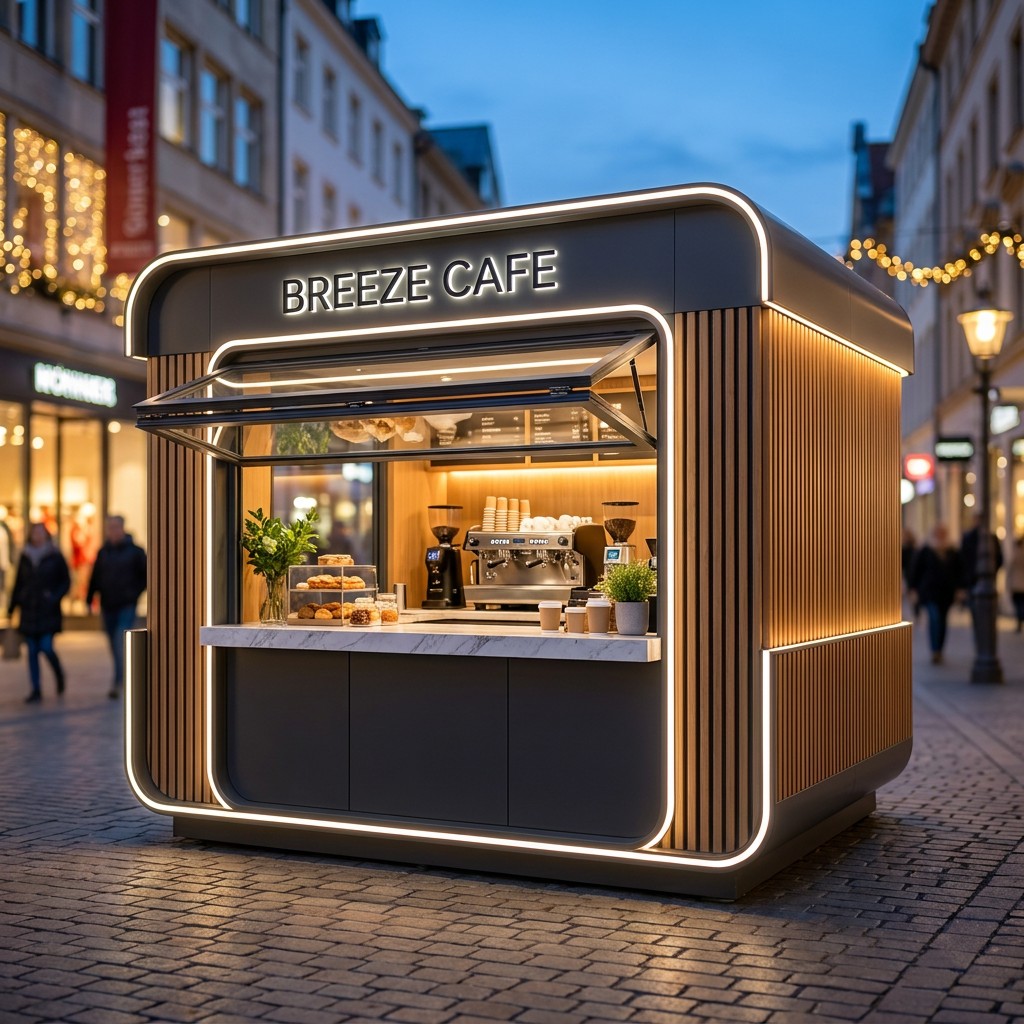
MobileX can customize an outdoor kiosk’s dimensions, exterior and working layout. It can prepare agreed interfaces for customer-supplied equipment or supply a complete agreed package. The project drawings and quotation identify that package; an appearance image does not establish a particular washer, cup system or collection service.
Start with the outdoor commercial kiosk range. In your project enquiry, describe the drink service, known cup or container choices, possible washing location, site and destination. You can begin before selecting a machine or contractor. The useful first decision is whether the kiosk needs a working wash area or a return-and-stock area, so the enclosure and equipment scopes can be compared on the same basis.