Office Pods for Calls, Focus and Meetings
Compare MobileX office phone booths for one-person calls and focused work, and meeting pods for two to four people. Manufactured in China, the MP1, MP1+, MP2 and MP3 range is available from one standard unit, with project-based customization.
Reference EXW pod prices: USD 1,380-3,650, dated July 19, 2026. MP1 and MP1+ include a work desk and one seat; MP2 and MP3 seating-and-table sets are quoted separately. These are planning references, not current delivered offers.
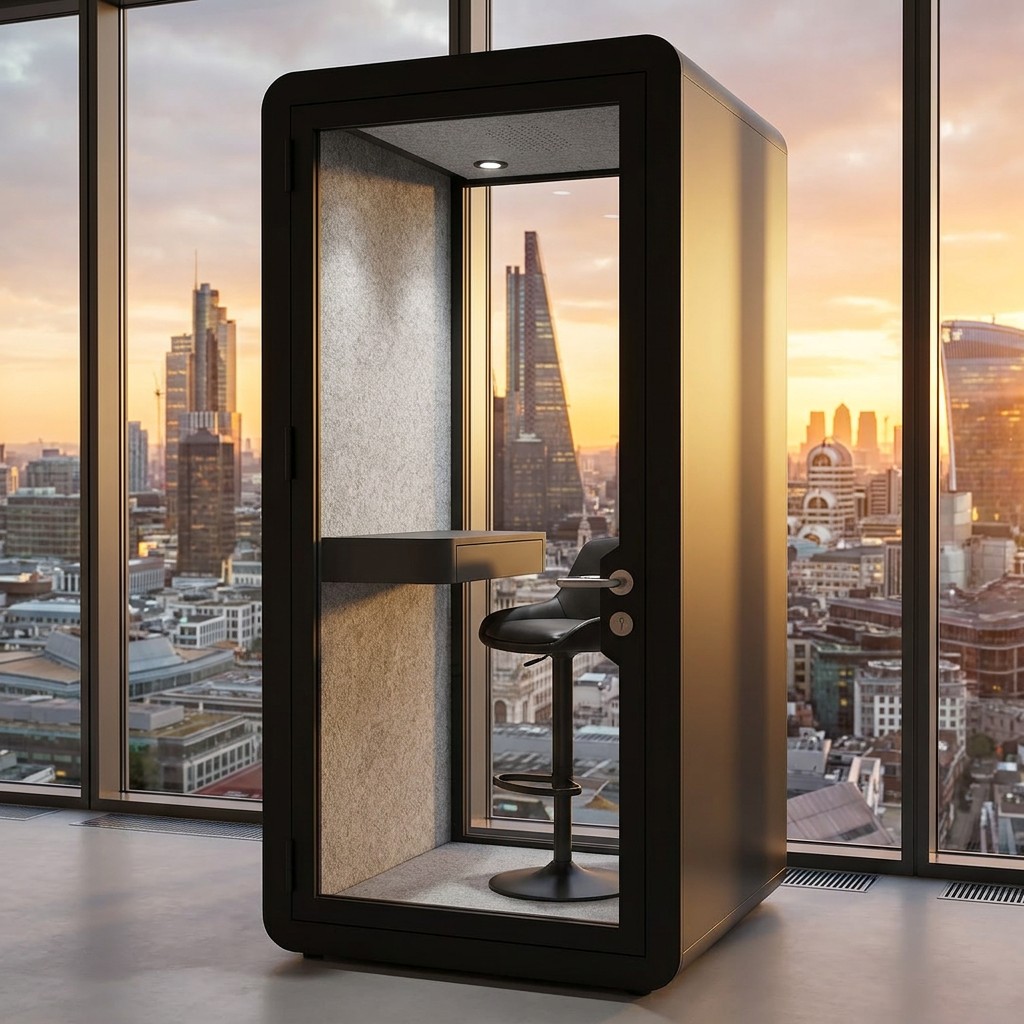
Choose Your Office Pod: MP1, MP1+, MP2 or MP3
Four practical sizes cover private calls, focused work, two-person meetings and four-person discussions. MP1 and MP1+ are single-person office phone booth options, while MP2 and MP3 provide space for short meetings. Compare the exact external size, intended occupancy, internal layout, packing volume and site access before choosing a model.
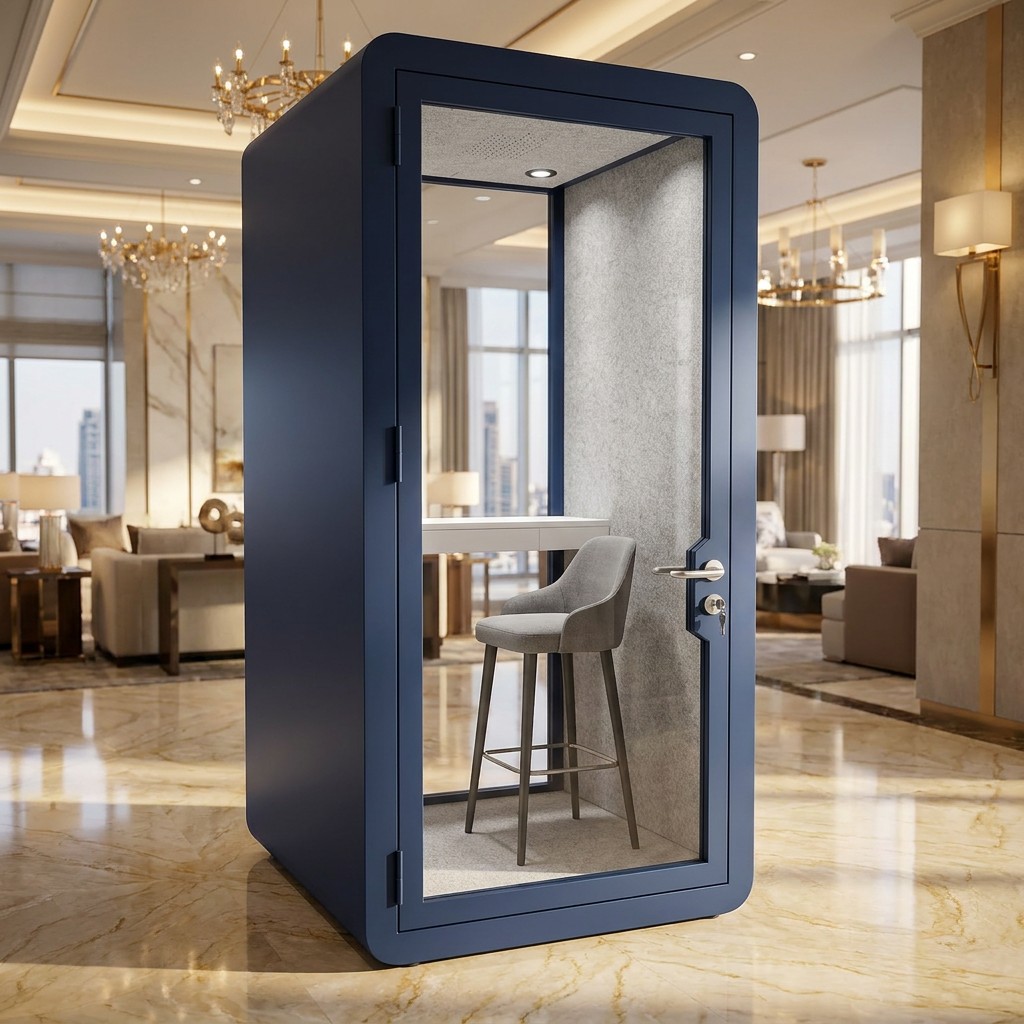
MP1 Office Pod
Single-person booth for calls, online meetings and private focus work.
Furniture scope: One work desk and one seat included.
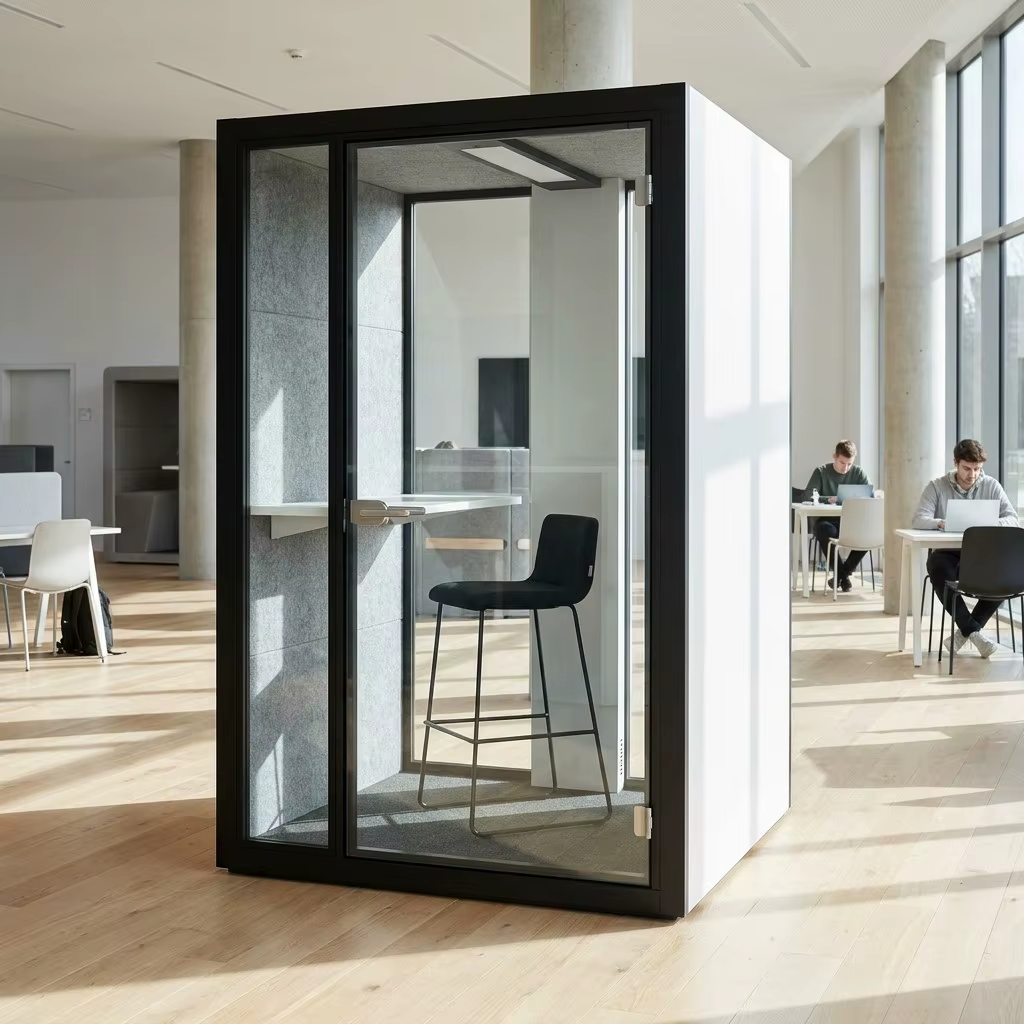
MP1+ Phone Booth
Wider single-person pod with more comfortable standing or seated use.
Furniture scope: One work desk and one seat included.
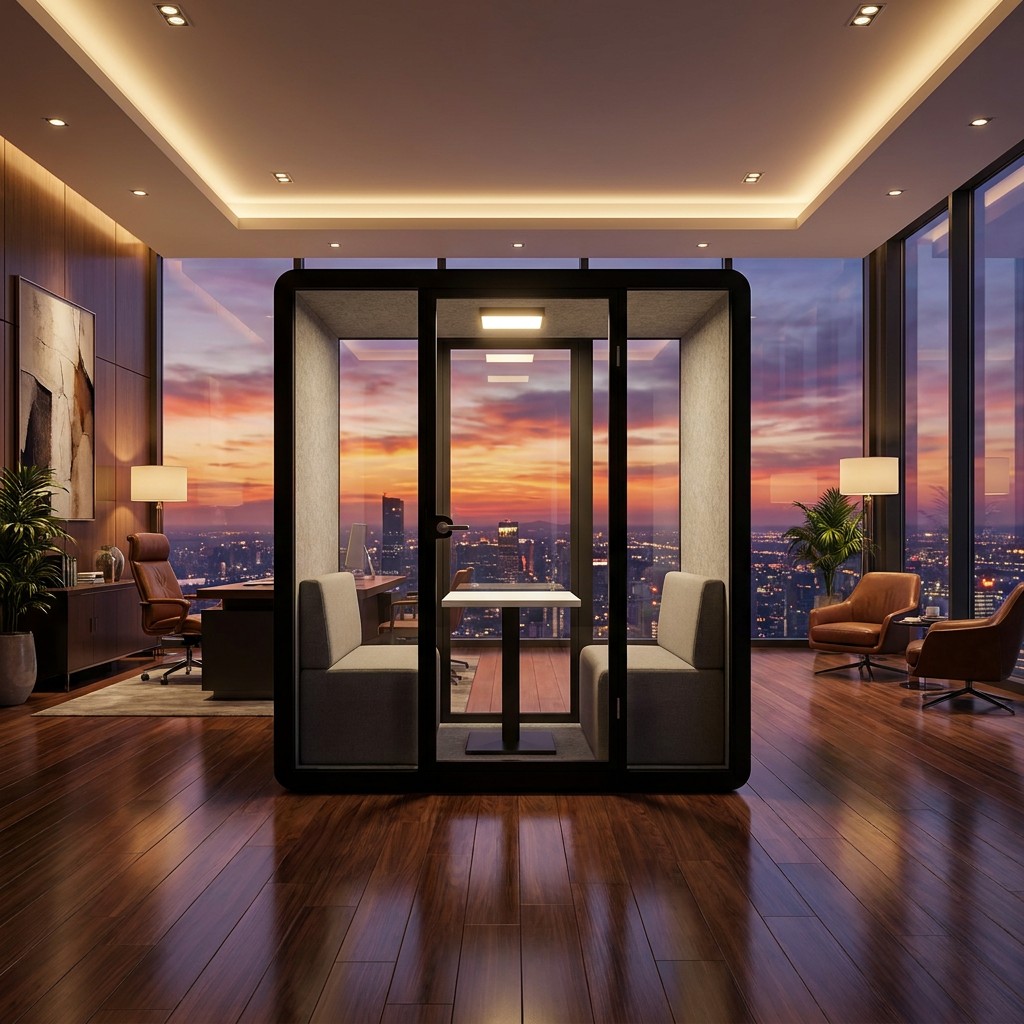
MP2 Meeting Booth
Two-person acoustic space for quick meetings, interviews and video calls.
Furniture scope: Seating-and-table set optional; quoted separately.
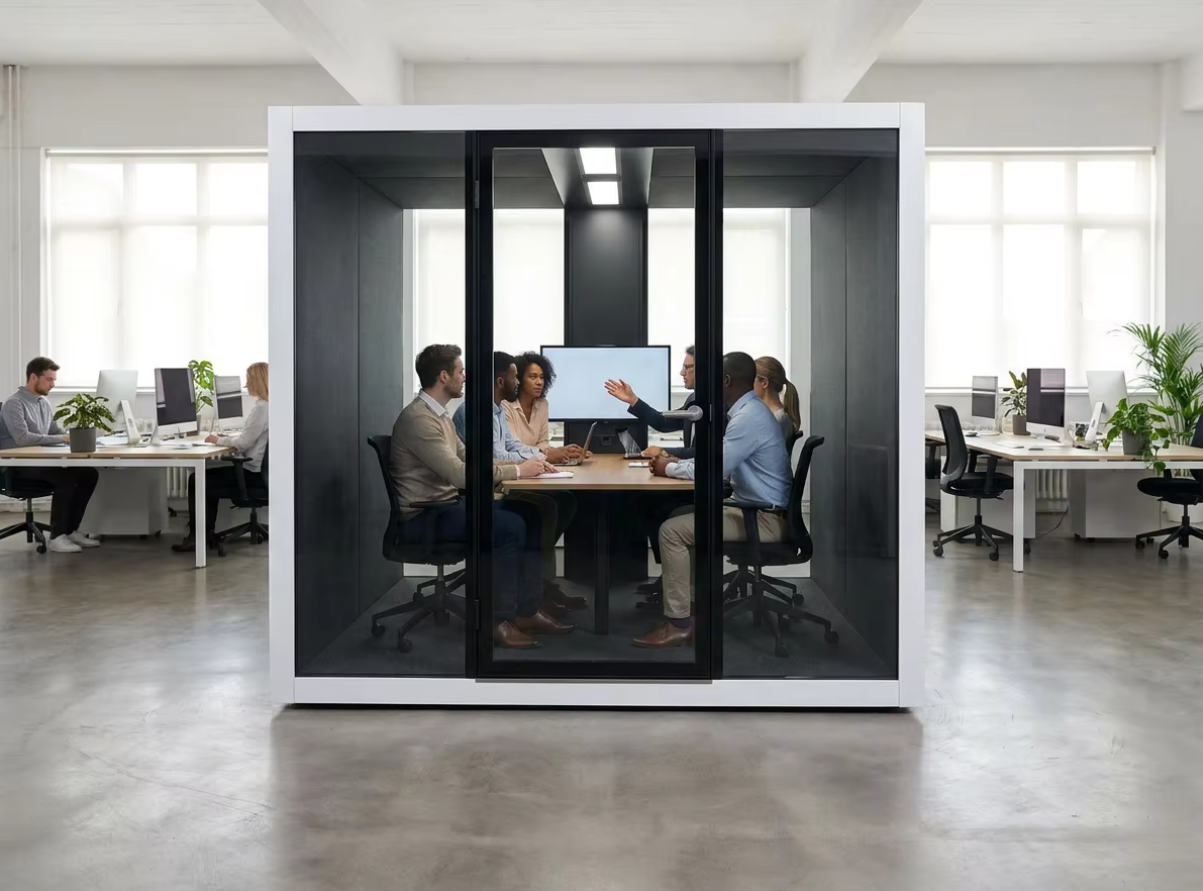
MP3 Meeting Booth
Four-person meeting room pod for offices, coworking spaces and public projects.
Furniture scope: Seating-and-table set optional; quoted separately.
Compare the space each pod occupies
External width x depth, shown at the same scale. All four standard models are 2200 mm high.
MP2 has the same external depth as MP1, with twice the width. MP3 keeps MP2’s width and adds 600 mm in depth.
Top-view size comparison only, not an internal layout or installation drawing. Door movement, access and installation space are additional to these footprints.
Choose a pod for the work
Individual calls and focus
Choose MP1 for one-person calls and focused work. Compare MP1+ for a larger single-person workspace around the proposed desk, chair and equipment.
Shared conversations
Compare MP2 for two-person meetings and interviews, or MP3 for discussions with three or four people.
A project-ready configuration
Name the model, furniture and electrical options together, so a project or dealer proposal describes the complete setup being quoted.
Illustrations show possible setups. Compare the model furniture scope to see which seats and tables are included or quoted separately.
Technical Specification
Use this table to compare standard models before sending your project quantity and destination port. Ask for the airflow basis, fan count, operating speed, noise context, air path and maintenance access for the quoted model. First-party or component records should not be presented as independent whole-pod laboratory certification. Review the ventilation evidence for office pod buyers.
Reference prices below are dated July 19, 2026 and are EXW, not delivered-and-installed totals. Gross weights include packaging; packaging volume is not the usable internal space.
| Model | Use | Product Size (W x D x H) | Gross weight (including packaging) | Packing Size (W x D x H) | Packaging volume (CBM) | Reference EXW |
|---|---|---|---|---|---|---|
| MP1 | 1 person phone booth | 1000 x 1000 x 2200mm | 360 kg | 1150 x 760 x 2380mm | 2.0 | USD 1,380 |
| MP1+ | 1 person focus booth | 1200 x 1200 x 2200mm | 410 kg | 1350 x 760 x 2380mm | 2.5 | USD 1,650 |
| MP2 | 2 person meeting booth | 2000 x 1000 x 2200mm | 520 kg | 2150 x 760 x 2380mm | 4.0 | USD 2,380 |
| MP3 | 3-4 person meeting booth | 2000 x 1600 x 2200mm | 650 kg | 2150 x 760 x 2380mm | 4.0 | USD 3,650 |
For an early project budget across MP1, MP1+, MP2 and MP3, use the office pod price guide to compare included configurations, freight and site costs alongside the reference EXW figures.
If the task requires a two-person conversation or a four-person team discussion, use the meeting booth buying page to compare MP2 and MP3 by capacity, room size, layout and quotation scope.
MP1 and MP1+: model information for your quotation
Start with the MP1 model page, MP1+ model page and four-model comparison. The sizes above describe the outside of each pod, not its clear internal space or door opening.
For the version you are considering, ask which model drawings and configuration documents are available for your project: an internal layout with clear dimensions, the door opening and furniture positions, and the quotation’s desk, seating, electrical and interface schedule. Drawing availability, revision and permitted sharing need to be checked for that model; this page does not offer a downloadable engineering drawing. Use the quotation scope guide to read the agreed supply list.
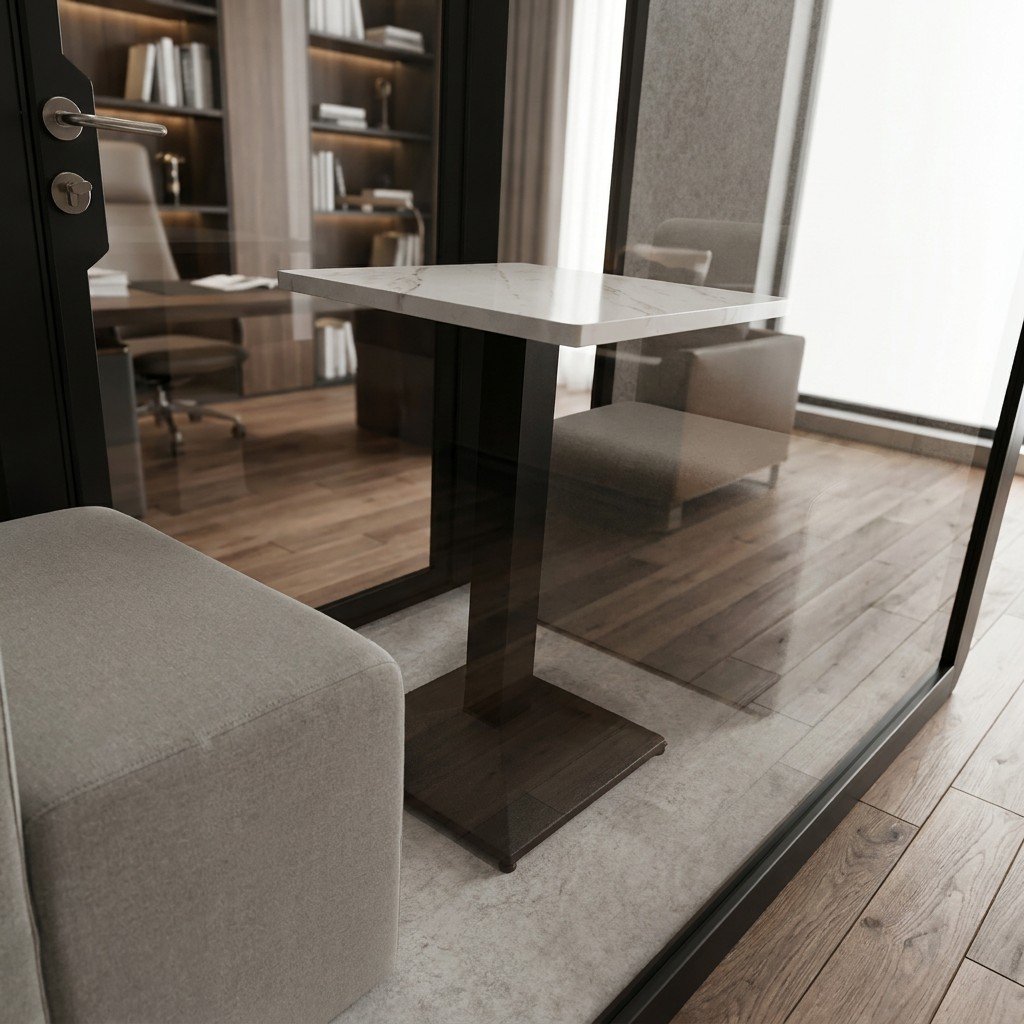
Compact Layout for Two People
Facing seats, a small table, lighting, ventilation and socket options for interviews, calls and short project discussions.
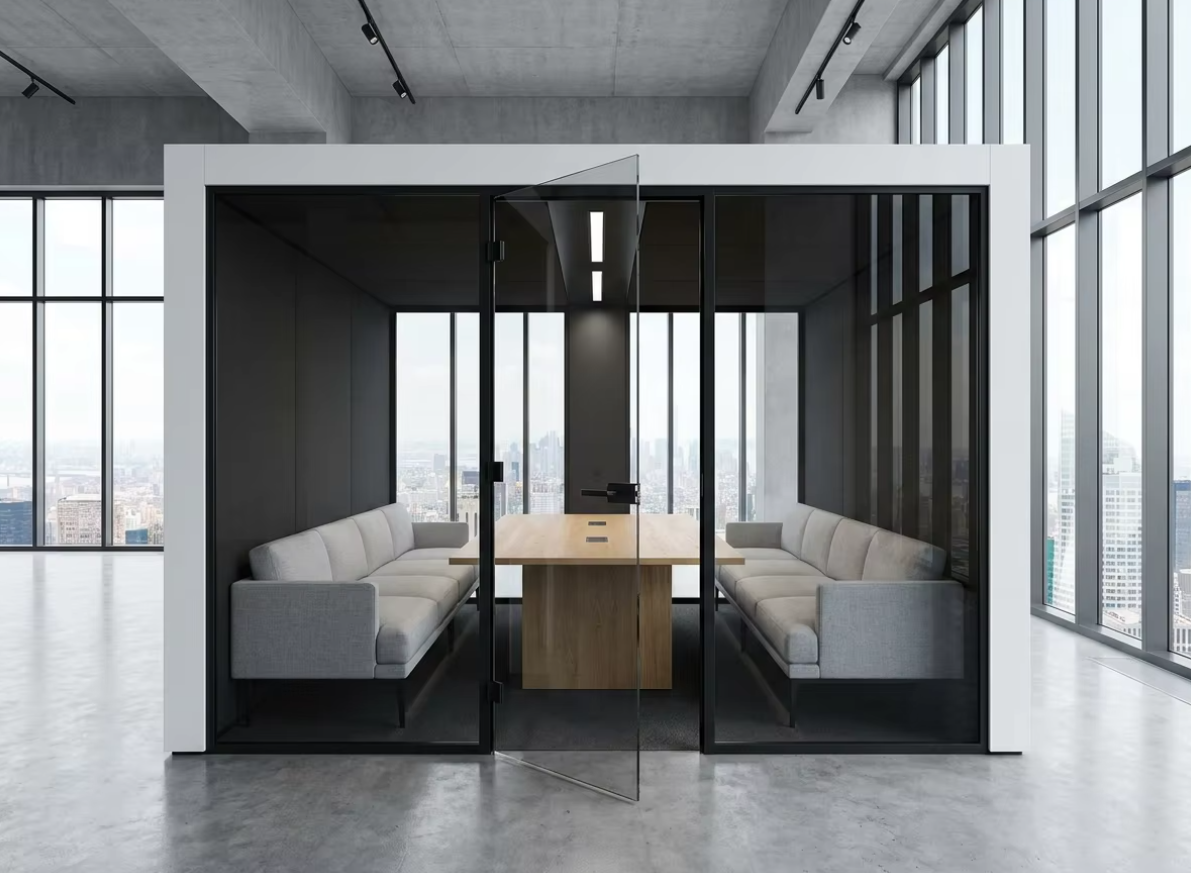
Built for Quiet Daily Office Use
Aluminum alloy frame, galvanized steel panels, tempered glass, ventilation, LED lighting and electrical options with up to about 35dB noise reduction; performance depends on site noise level, floor conditions, door use, installation details and exact pod configuration. “Soundproof phone booth” is a common buyer term, but an office pod should not be assumed to block all sound. Compare the test method and exact configuration rather than relying on one decibel figure.
Where Buyers Use Office Pods
One product family can serve many B2B project scenarios, from private phone calls to distributed meeting spaces.
Open Offices
Create private phone and video call spaces without building permanent rooms.
Coworking Spaces
Add rentable meeting and focus rooms for flexible workspace operators.
Universities and Libraries
Provide quiet spaces for online classes, interviews and study meetings.
Showrooms and Retail
Use pods for sales consultations, staff meetings or customer service points.
Hospitals and Public Facilities
Support temporary private conversations in busy public environments.
Distributor Projects
Customize appearance, packaging and logo for local dealers and project tenders.
Choose by the Work Around the Pod
Use these guides to compare the task, people, layout and handover before choosing a model. A guide does not certify a model for that industry or establish that MobileX has delivered the pictured scenario.
Interviews and candidate calls
Decide whether the recruiter, candidate or both need the enclosed space, then account for screens, waiting and handover.
Remote training
Separate solo learning, presenting and two-person practice before choosing a work surface and capacity.
Airport short work sessions
Compare a short passenger call with lounge seating or an existing room while keeping luggage, companions and circulation in the brief.
Furniture showroom trials
Plan a repeatable customer task and separate the display setup from the quoted configuration and custom scope.
Customization and Export Support
Standard models are fast to quote. Custom projects can be adjusted for size, color, logo, voltage and project installation requirements. Modular Construction and Relocation Considerations. MobileX office pods use modular construction and knock-down export packing. “Portable” should not imply a lightweight booth that can be carried without considering disassembly, weight, floor conditions and site access. For future repositioning, whole-unit movement or a move that may require disassembly, use the movable office pod guide to compare the complete route, handling, reassembly and handover before selecting a model. Any relocation should be reviewed for the actual model and project conditions.
Custom Finish
Exterior and interior colors can be selected by RAL color code when the project requires a custom finish.
Custom Size
Adjust width, depth and function layout when the project needs a non-standard pod.
Electrical Options
Socket, voltage, USB, network and lighting options can be configured by market.
Branding
Logo and OEM project support are available for distributors and project buyers.
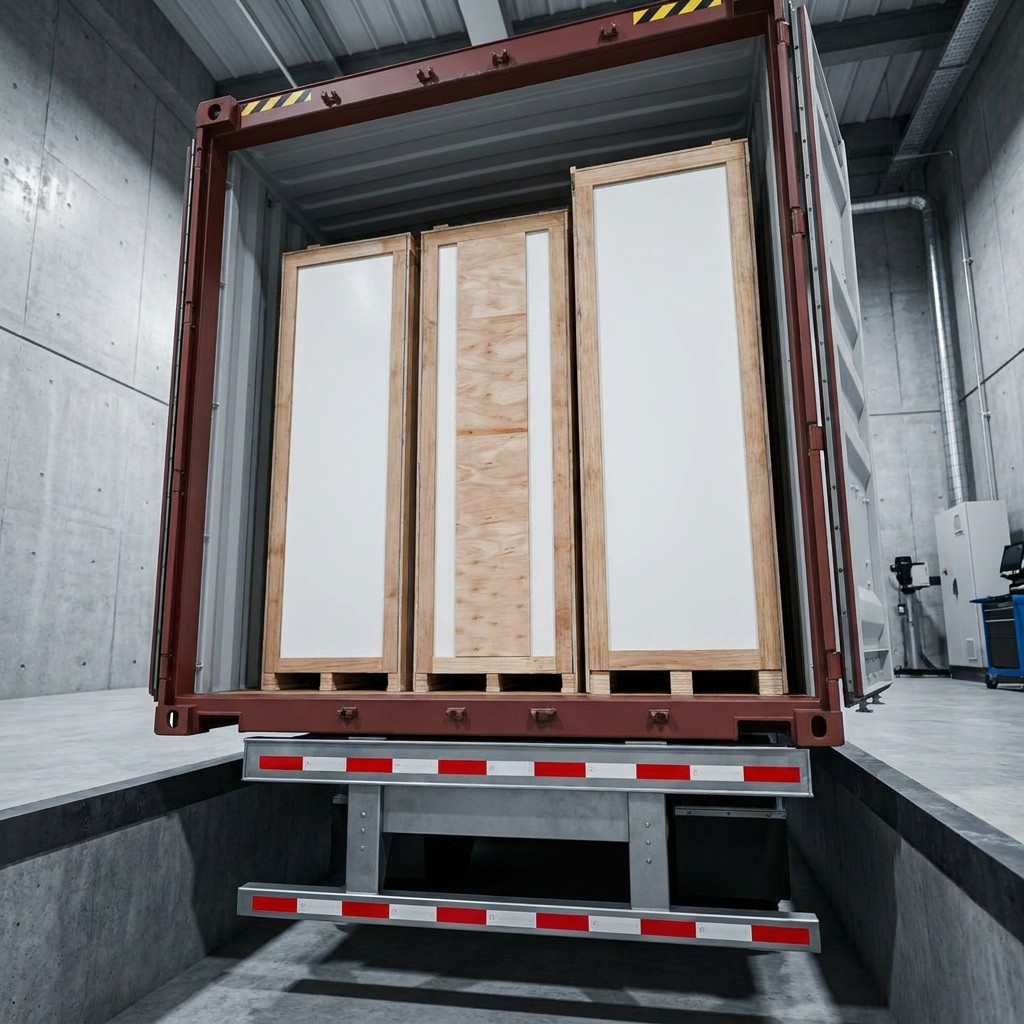
For factory packing photographs, standard-model gross weights and volumes, and the information needed before receiving a shipment, read the office pod shipping and packing guide.
Plan the supply package for your destination
MobileX supplies office pods from China. For your destination project, compare quotes for the same configuration across three cost groups:
- Product: model, included or optional furniture, finishes and electrical options.
- Delivery: packing, freight, import costs and final delivery under the agreed trade term.
- Site work: unloading, internal movement, assembly and building electrical work.
An EXW reference is not a delivered-and-installed total. Keep included work and separately quoted work distinct.
When comparing suppliers or destinations, use the cross-market office pod comparison guide to keep product configuration, site work, delivery scope and approval responsibilities on the same comparison sheet.
MobileX provides knock-down export packing, installation drawings, video guidance and remote support for the confirmed project. Local or on-site installation service is confirmed separately. Typical standard-model production is 15-20 days after order details are confirmed, excluding transport time.
Manufacturer evidence
Review manufacturer model data and factory and quality evidence for specifications, assembly and export preparation.
Factory acoustic tests
Factory test data for MP1, MP1+, MP2 and MP3 indicates noise reduction of up to 35 dB. Actual on-site performance depends on the configuration and installation conditions.
Prepare your quotation
Send the task or model, people per pod, quantity, furniture choice, available space, destination country and postal code, target date, electrical requirements and requested delivery scope.
How Your Office Pod Order Works
A clear process helps overseas buyers move from model selection to production and export delivery.
Send Requirements
Model, quantity, destination country, socket and customization needs.
Confirm Solution
We recommend standard or custom size with material and layout options.
Quotation
EXW price, packing details, lead time and export information are prepared.
Production
Typical 15–20 days for standard models; custom projects are often about 30 days, subject to project scope and formal quotation confirmation.
Export
Common ports are Shenzhen and Guangzhou, with packing support for overseas shipment.
Need a quote for MP1, MP2 or MP3 office pods?
Send your quantity, destination country and customization requirements. We can quote one sample unit or project quantities.
Office Pod FAQ for Export Project Buyers
Direct answers for buyers comparing office phone booths, focus pods and small meeting booths before requesting a quote.
What are the standard MobileX office pod prices?
Reference EXW prices are USD 1,380 for MP1 Office Pod, USD 1,650 for MP1+ Phone Booth, USD 2,380 for MP2 Meeting Booth and USD 3,650 for MP3 Meeting Booth.
Is MOQ 1 accepted for office pods?
Yes. MOQ 1 is accepted for standard office pod models, which is useful for samples, showroom testing and small project orders.
What acoustic performance can buyers expect?
Factory test data for MobileX MP1, MP1+, MP2 and MP3 indicates noise reduction of up to 35 dB. Actual on-site performance depends on the configuration and installation conditions.
Can socket type, voltage and electrical options be customized?
Yes. Socket type, voltage, USB / Type-C, network port, lighting and electrical position can be configured for the destination market and project requirements.
Can MobileX support EXW, FOB, CIF, DDP or DDU shipping terms?
MobileX uses EXW as the default reference quotation basis. FOB Shenzhen / Guangzhou, CIF, DDP and DDU discussion depends on the confirmed quantity, packing, destination country, delivery address and project conditions.
How are MobileX pods installed overseas?
Pods are normally supplied in knock-down export packing. Installation drawings, video guidance and remote support can be discussed for the confirmed project scope; any local or on-site installation service must be confirmed separately.