Office Pod Furniture: Factory-Supplied or Buyer-Supplied?
Choose factory-supplied furniture when the pod layout depends on fixed seats, a fitted work surface or a repeatable configuration that should arrive under one clearly defined scope. Choose buyer-supplied furniture when your office already has an approved seating range, local replacement matters, or you want more freedom to change movable items. A mixed route is often practical: the factory coordinates the parts that attach to or define the pod, while the buyer sources movable chairs locally.
Do not decide from the product photograph alone. The useful comparison is not simply “furnished” versus “empty.” It is which party selects, checks, packs, installs and replaces each item, and whether the finished arrangement still supports the intended work.
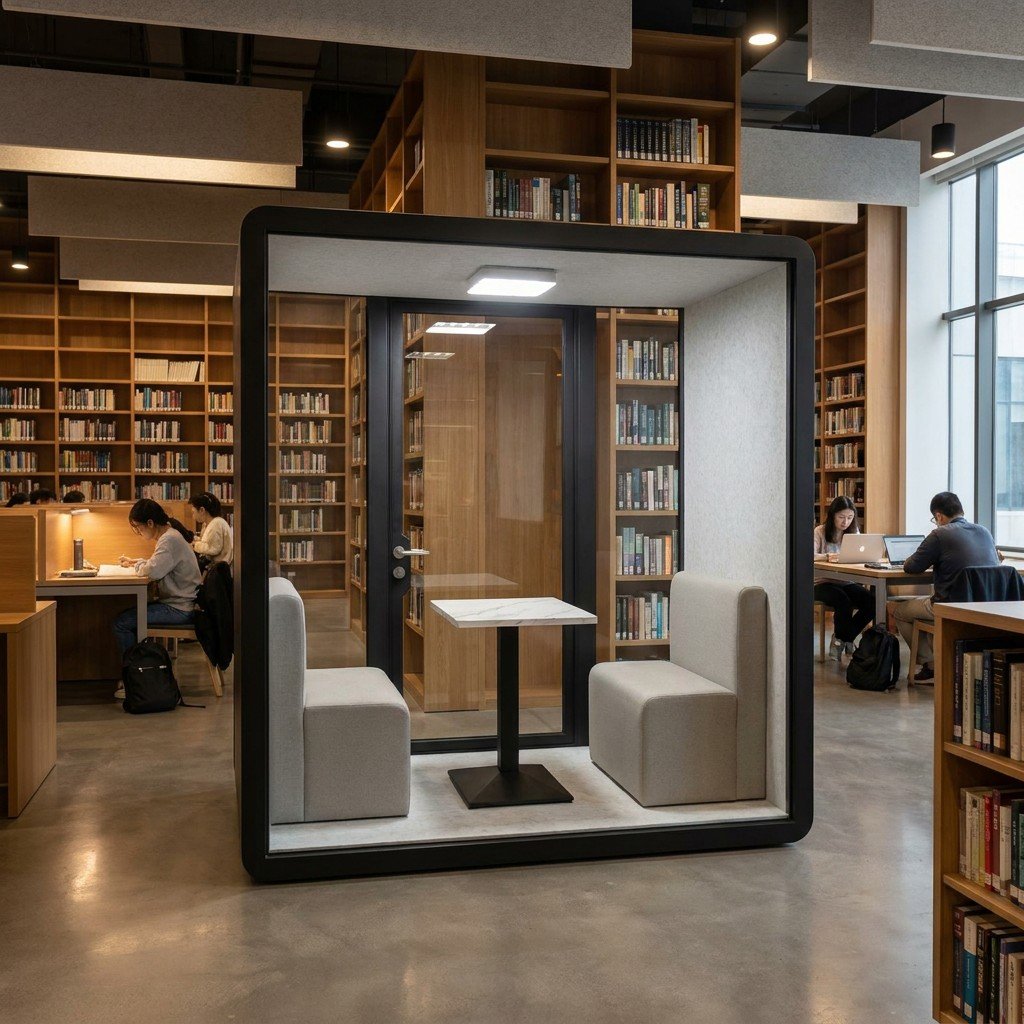
First decide whether furniture is the problem
An office pod is not required merely because a team needs another chair or table. If an existing room is available for the conversations that need separation, or an open collaboration area already supports the work, improve that space first. A pod becomes relevant when the buyer needs a separate enclosed place for calls, focused work or meetings and the existing rooms cannot reliably provide it.
After that decision, choose the pod by the activity and number of users. Then decide how the furniture should be supplied. This order prevents an attractive furniture package from driving a purchase that does not solve the original space problem.
Compare three supply routes
Factory-supplied set
Usually suits: Fixed or closely coordinated seating and tables; repeated units that need the same arrangement.
Main trade-off: Less local selection freedom; the exact furniture still needs to be defined.
Quote clearly: Each item, quantity, finish, mounting or loose status, packing and installation responsibility.
Buyer-supplied locally
Usually suits: Existing furniture standards, local ergonomic choice or locally maintained movable seating.
Main trade-off: The buyer must prove the selected items fit and can be brought into the finished space.
Quote clearly: Which pod interfaces remain, what furniture is excluded and what information the supplier needs for the layout review.
Mixed supply
Usually suits: A factory-coordinated work surface or support combined with locally sourced chairs or accessories.
Main trade-off: Responsibilities meet at the interface, so sequence and dimensions must be explicit.
Quote clearly: Factory items, buyer items, attachment points, working positions and who installs each part.
None of these routes is automatically cheaper. A lower factory furniture line can be offset by freight or local work; a lower local purchase price can be offset by a failed fit, a delayed selection or extra installation coordination. Compare the complete stated scope for the same pod and task.
When a factory-supplied set is useful
Factory supply is most useful when furniture position is part of the pod configuration. A fixed bench, table support or work surface can affect entry, seating position, cable access and the order of assembly. Keeping those connected decisions in one configuration can reduce handoffs between the pod supplier and a local furniture contractor.
It can also help when several pods need the same appearance and arrangement. Repetition only works if the reference is precise, however. The quotation should name the furniture and finish rather than using a photograph as the specification. A picture showing seats and a table does not establish that they are included.
Ask whether the furniture is attached, installed during pod assembly or placed after the enclosure is complete. The answer affects packing, access and local labour. It should be part of the agreed supply scope, not an assumption left until delivery.
When buyer-supplied furniture is the better route
Local sourcing can make sense when the buyer already uses an approved chair family, needs local replacement support or wants users to select among familiar ergonomic options. Movable chairs can also be changed without redefining a fixed pod component, provided the alternatives stay within the approved working space.
The buyer still needs to check more than nominal width and depth. Review the chair base, arms and adjustment range in the positions used to sit down, work and stand up. Check that the item can reach the pod through the delivery route and the agreed door opening. If it will be placed after the pod is assembled, make that sequence explicit.
The furniture working-envelope guide covers those movement and fit checks in detail. Use it with the actual proposed item rather than a generic chair symbol.
A mixed route can keep the useful boundary
A mixed scope can separate the parts that need factory coordination from the parts the buyer wants to source locally. For example, a buyer may ask the pod supplier to review a fitted work surface and its position while naming a locally selected chair as a buyer item. That is a proposal to evaluate, not a promise that every standard configuration can be split in the same way.
Mark the boundary on the layout and quotation. If the factory supplies a support but not the top, or provides a table but not the chairs, identify the finished dimensions and installation responsibility. If a local item needs an attachment point, power connection or structural support, it is no longer just loose furniture and needs a specific interface review.
Compare two quotations without hiding the difference
Put the same lines into both comparisons: pod configuration, fixed furniture, movable furniture, mounting hardware, packing, assembly sequence and local installation work. Mark each line as included, optional, buyer-supplied or unresolved. The MobileX meeting-booth price guide explains why a product image or model reference is not a complete bill of supply.
Consider a hypothetical four-pod purchase. Office A wants identical small visitor-meeting settings and has no local furniture programme. A defined factory furniture set may make the four arrangements easier to repeat. Office B already maintains an approved chair range locally. It may compare a pod with a factory-coordinated table and buyer-supplied chairs, after submitting the chair dimensions and working positions. The two routes should be quoted as different scopes, not treated as equivalent because the shell model is the same.
Send MobileX a furniture decision, not a mood board
For a standard meeting booth or a custom modular pod, send:
- the activity, usual number of users and typical session;
- the proposed pod model or available site space, quantity and destination;
- which seats, tables or work surfaces you want the factory to quote;
- which items will be sourced locally, with product references and dimensions where available;
- any equipment, cable or mounting interface that affects the furniture position; and
- whether you want factory-supplied, buyer-supplied and mixed alternatives priced separately.
Use the custom drawing and quote guide when the furniture changes the pod layout or interfaces. Include the delivery route and intended installation sequence if local furniture will enter after assembly. Then contact MobileX POD with the proposed boundary so the quotation can show what the factory supplies and what remains with the buyer.