Office Pod RFQ: Specify Buyer Needs and Compare Equivalent Offers
An office-pod RFQ works best when it states the work the pods must support, the site limits they must fit and the evidence bidders must supply. Mark genuinely essential requirements separately from preferences. Then ask every supplier to identify the exact offered configuration, any deviations and the same delivery boundary. That makes a compact booth, a larger meeting pod and a customized proposal comparable without pretending they are identical.
This is the step after a buyer’s general office-pod specification checklist. A checklist tells you what to investigate; an RFQ must tell bidders what will count as an acceptable answer.
Start with the work, not a model number
Describe the people, tasks and equipment first: one person taking calls, a seated video meeting, or two people reviewing a screen need different usable space. State how many pods are needed and whether the same configuration must serve every location. Then give the measured floor footprint, room height, access route and the agreed power arrangement. Compare MobileX’s MP1, MP1+, MP2 and MP3 as possible responses to those needs, rather than writing a preferred model into every requirement.
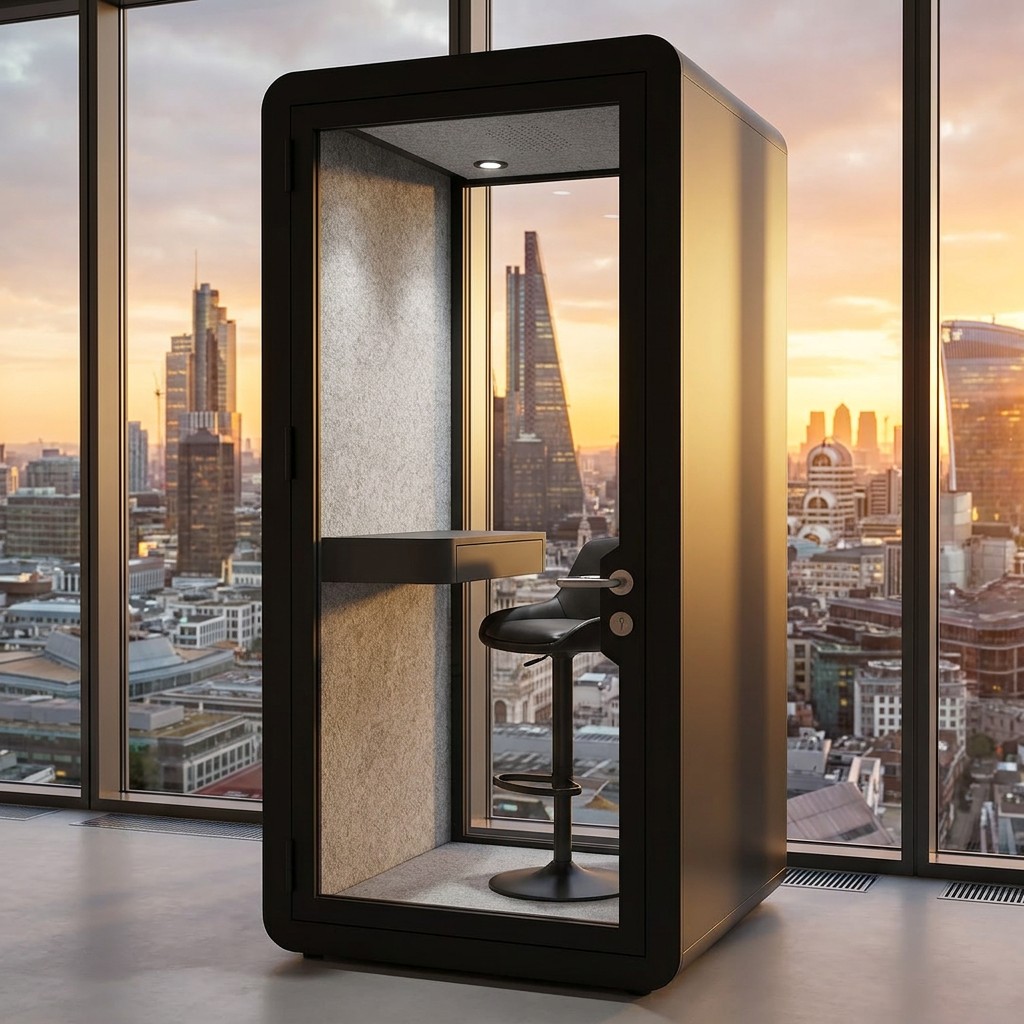

A designer may have a CAD planning block while the ordered pod still needs an approved configuration drawing. The CAD and drawing guide explains which file is useful at each stage.
Separate pass-or-fail needs from preferences
Write a requirement as something a bidder can answer and the project team can check. The exact limits depend on the site; the examples below are hypothetical RFQ wording, not a MobileX product specification or a universal procurement rule.
| Buyer need | Comparable request | Useful response |
|---|---|---|
| Essential use | One seated caller and a laptop must fit; show an alternate offer if a larger pod is proposed. | Offered model, layout drawing and included work surface. |
| Site fit | State the measured available footprint and height, plus the delivery route. Flag any dimension that cannot change. | External dimensions and the route/package information for the quoted version. |
| Electrical scope | Identify the destination voltage, socket type and required device connections. | Configuration sheet showing what is included and what changes the offer. |
| Acoustic evidence | If speech reduction matters, name the use case and ask how the offered configuration was assessed. | Applicable factory test information and any configuration differences, rather than an unsupported headline number. |
| Preference | Give a desired finish or furniture layout, but allow a priced alternative if it performs the same work. | Base offer plus clearly priced option or deviation. |
For the four MobileX standard models, the factory has confirmed noise-reduction testing of up to 35 dB. If an RFQ scores acoustics, ask which model and configuration the evidence applies to and how a changed door, glazing or other customization would be handled. This is a factory-test result, not a guaranteed reduction at every installation site. The document guide helps distinguish model information, factory records and local project approvals.
U.S. federal brand-name-or-equal wording illustrates why an offer should identify the make/model, the essential characteristics and any proposed modifications. Its legal application is specific to that procurement system; buyers elsewhere can still use the practical idea of stating what matters and asking bidders to show how they meet it.
Compare equivalent offers without hiding deviations
Ask for one line per offered model or configuration, with a clear meets / alternate / does not meet response to each essential requirement. An alternate is useful only when the bidder explains the difference and its effect on the task, site or price. A catalog photo by itself does not identify included furniture, electrical fittings or the exact version to be built.
Hypothetical comparison. A buyer needs two private call positions in a room with a measured access route. Supplier A quotes two compact booths that fit the route and includes the specified work surface. Supplier B quotes a larger shared booth, with a different furniture arrangement and a revised delivery plan. Supplier B may offer value, but it is not a like-for-like response to two simultaneous private calls. The team should record that functional difference before comparing prices, not treat the larger booth as automatically better or worse.
For a customized option, request a drawing or marked change list against the standard offer. MobileX can review dimensions, finish and other project-specific configuration needs; the agreed drawing and quotation should identify what is actually included. For broader custom projects, the custom-quote scope guide explains how to keep base work and options separate.
Compare the delivered scope after the technical fit
Keep a technically suitable offer separate from its total delivered cost. Ask each bidder to price the same quantity, configuration and named endpoint, and show whether packing, international transport, import work, unloading, inside movement and assembly are included or excluded. An EXW reference and a delivered offer cannot be compared as if they cover the same work. The EXW/DDP delivery-terms guide explains the handover boundary; the final quotation should state the order-specific scope.
Send MobileX the intended tasks, pod quantity, measured site limits, preferred layout, destination and required delivery scope. Ask for a model-specific offer with drawings or product information and any alternatives marked clearly. Send the RFQ to MobileX once those decisions are set.