Office Pod Assembly Photos: What Buyers Can Verify Before Shipment
Direct answer: an assembly photograph should close one defined purchasing question. First identify what is visibly present. Then ask for the missing angle or detail. Finally, connect the image to the drawing, configuration record or inspection evidence that allows a decision.
This guide helps buyers review factory photographs for an office pod or meeting booth. It is not a substitute for order-specific drawings or agreed checks; it is a method for deciding what evidence to request next.
Use one evidence rule for every assembly photograph
These photographs show dark-colored shells and components at different assembly states. They should not be read as a continuous production sequence or as evidence of one order.
Judge only the visible condition. Use the approved drawing or configuration record to identify the part, and use the relevant measurement, functional check or packing record to close the purchasing decision.
Scroll horizontally to compare all columns on a narrow screen.
| Question to answer | Useful photograph | Record that closes the decision |
|---|---|---|
| Is the intended component present? | Overview plus a close-up of its visible form, opening or interface | Approved drawing or labeled component reference |
| Does the visible arrangement match the selected configuration? | Angle showing the relationship between frame, panel, glazing or work surface | Current configuration sheet and drawing revision |
| Is an installation or adjustment complete? | Before-and-after views of the same identified item | Relevant fit, measurement or operation check |
| Is the pod ready for shipment? | Final overview and packing-stage photographs | Final configuration record, agreed checks and packing list |
Open frames: review component relationships
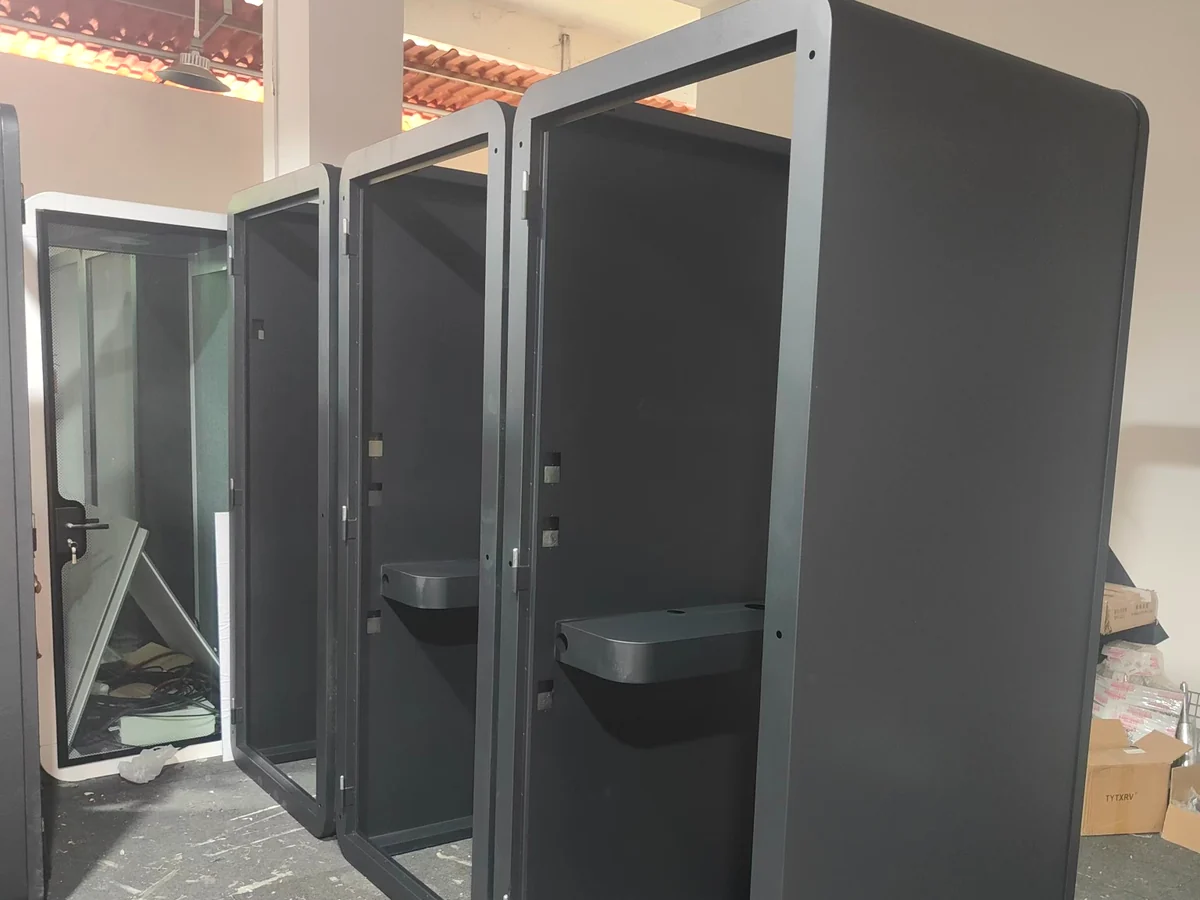
- What is visible: several open front frames, dark side shells, installed work surfaces and a separate glazed frame or door.
- What the buyer should ask: which photographed unit and drawing revision correspond to the proposed configuration, and which frame, door or interior items remain open.
- What closes the decision: an identified configuration drawing followed by the agreed fit or operation record for the completed front assembly.
Separated components: confirm identity before quantity
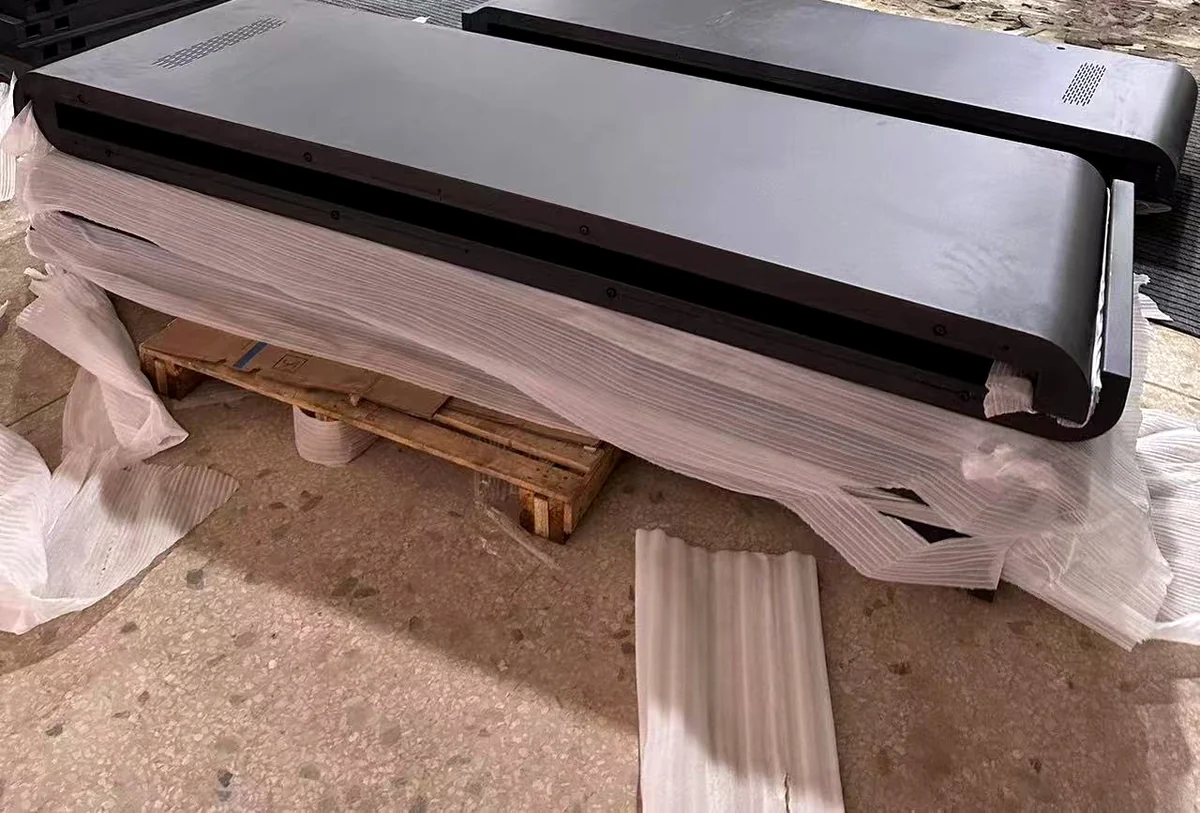
- What is visible: detached components with surface faces, edge returns, openings and a line of fasteners.
- What the buyer should ask: the component name, its drawing reference and where it belongs in the selected pod configuration.
- What closes the decision: a labeled part or drawing reference; use the production or packing record, rather than this photograph, when quantity matters.
If the question is color or surface appearance, move that decision to the custom office pod finish approval process. A component photograph can show the visible surface, but the approved physical reference and finish schedule should control the decision.
A near-enclosed shell: separate appearance from function
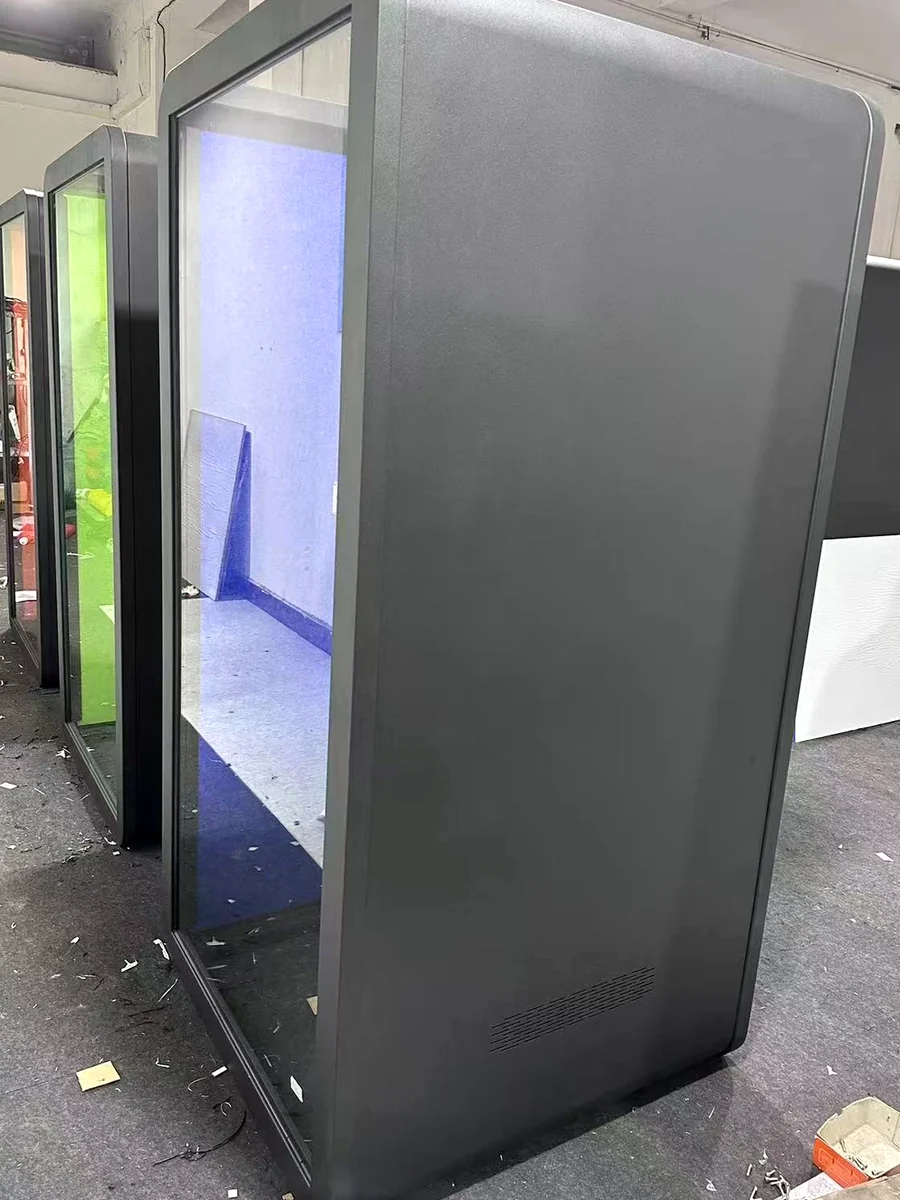
- What is visible: the exterior shell, front glazing relationship and a lower perforated opening.
- What the buyer should ask: whether the photographed front assembly is complete, which hardware or internal equipment remains, and what test or adjustment is scheduled next.
- What closes the decision: use a door-operation record for movement and fit, the confirmed configuration plus functional check for equipment, and the applicable report and stated test configuration for any acoustic claim.
Copy this photo-review request
Send a focused request instead of asking for “more factory photos.” The following template ties each image to the purchasing decision it should support:
Drawing or configuration revision: [revision and date]
Component to confirm: [name and reference]
Question to close: [state one decision]
Required photograph angles: [overview / front / side / interface close-up]
Please identify what remains incomplete: [open items]
Next verification record required: [drawing mark-up / measurement / operation check / packing record]
Please label each photograph with: [project reference, component, date and status]
Keep confidential customer data out of the image label. A project reference and component description are usually enough to connect the photograph to the record.
Move from assembly evidence to shipment evidence
Once the visible assembly questions are closed, the evidence should move to the final configuration, agreed functional checks, packing and logistics handover. The delivery acceptance guide explains why factory loading, warehouse arrival, final-destination delivery and customer acceptance are separate checkpoints.
For broader supplier evidence, use the Factory & Quality page. For customer-site assembly and external electrical responsibility, use the office pod installation requirements guide.